Tag: Sherrie Palm

  • APOPS-What’s Wrong With This Picture?

    APOPS-What’s Wrong With This Picture?

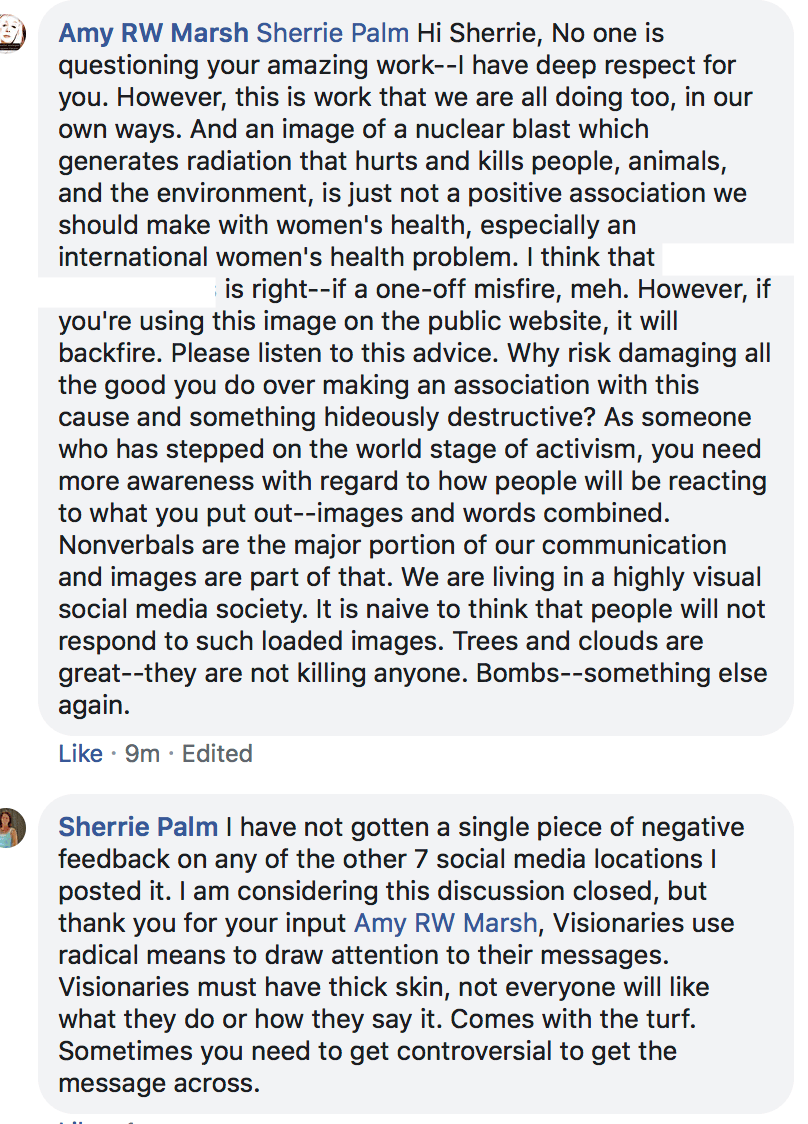
    In the U.S., we trivialized and commodified the catastrophic nuclear tests in the Marshall Islands by naming a swimsuit after the tests at Bikini Atoll. (A real “bikini body” is sickened by radiation and if female, has a greater chance of giving birth to children with birth defects…) So why should I be surprised or outraged by this use of this picture below? It’s a recent tweet from the founder of the Association for Pelvic Organ Prolapse Support (APOPS) and until this morning, I’ve been a fan.

    This is the picture I ask you to consider, below.


    Screen Shot 2020-01-03 at 6.13.21 AM


    Let me add two other screenshots here, before I get on with my story. The one on the left is from a story about the Marshall Islands, published by The Guardian five years ago. The one on the right is from the Atomic Veterans Cancer Benefits Center. My maternal grandfather was an “Atomic Vet” and the VA gave him no medical help at all when he developed a brain tumor. My family was impoverished as a result, paying for his care.

    As for the fate of the Marshallese, see these links: Project 4.1 and the documentary, Nuclear Savage. The immense damage to human beings, animals, and the islands continue. Trailer: https://youtu.be/13i09gV7HRk

    I’m also boggled by the juxtaposition of a quote from Oprah–a woman of color–on top of an image which has brought doom and destruction to other people of color, all in the name of “vaginal health.”

    Plus, do I want that thing (an exploded atomic bomb) anywhere near my “lady parts?” I think not.

    Based on the above, I do not believe I was being overly sensitive about “stuff” when I alerted APOPS founder Sherrie Palm about the inappropriateness of this image. I know that Pelvic Organ Prolapse is an enormously ignored medical condition, internationally, and until now I’ve had nothing but respect for Sherrie Palm for all her tireless activism. And so…

    …I began by gently pointing out that this was not the best image to use in supporting “vaginal health and intimate wellness.”
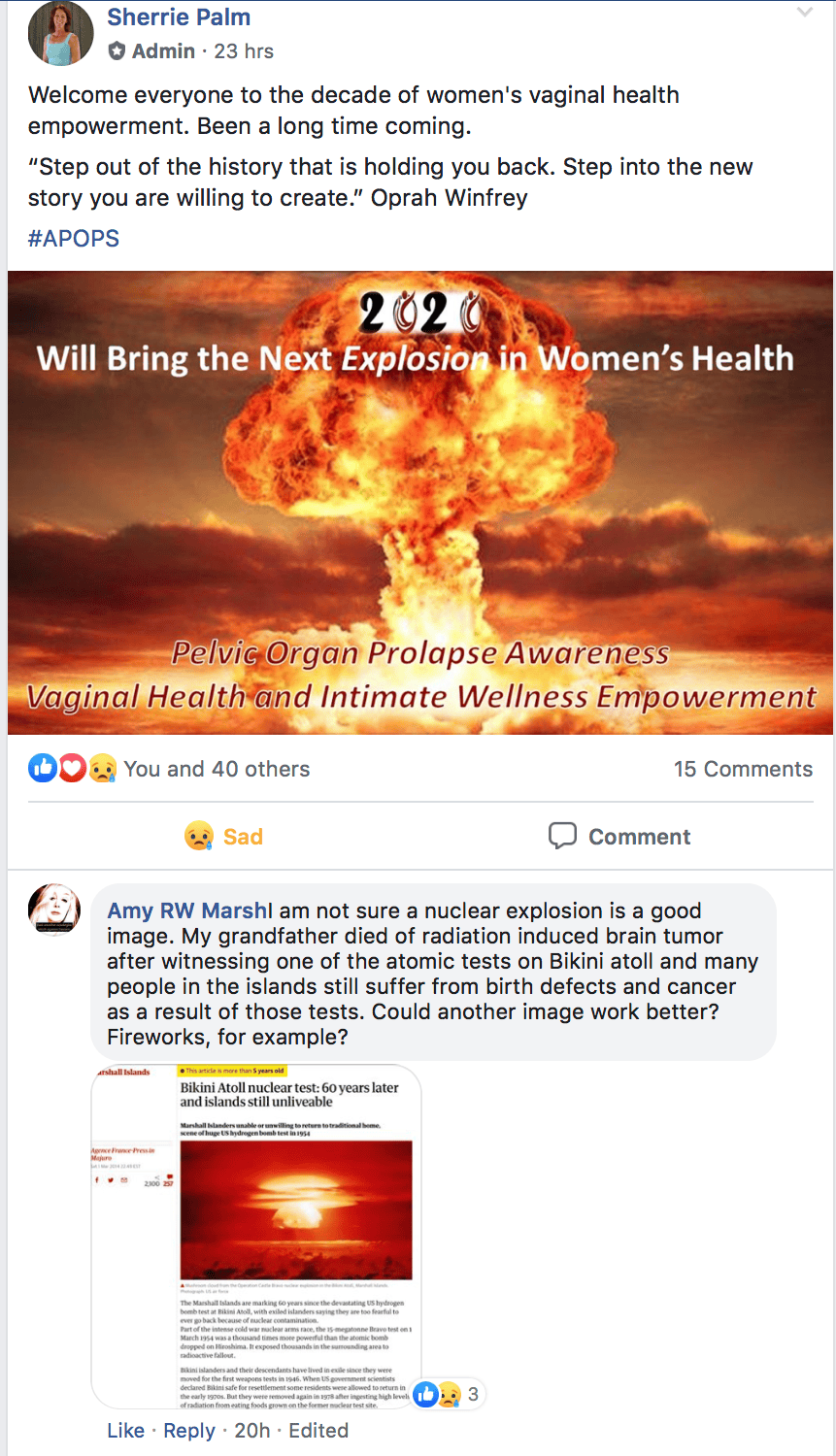
    Screen Shot 2020-01-03 at 7.46.08 AM

    (My first post did not include the image of the Guardian article. I added that later because someone–in an attempt to be funny–said that fireworks wouldn’t work as someone had recently died from one.) The founder responded like this (comments from others are deleted):
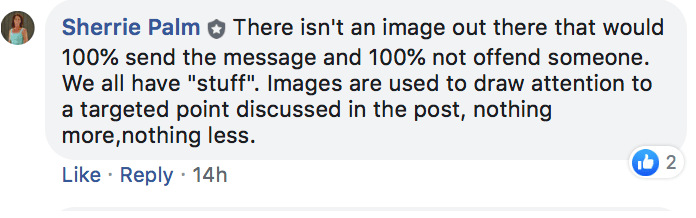
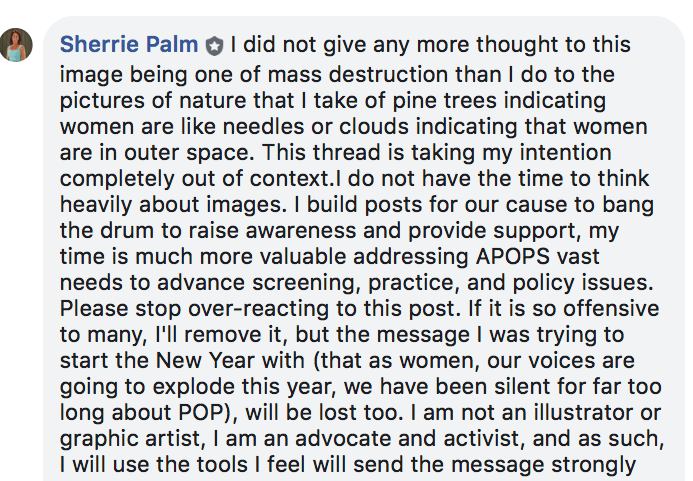
    Screen Shot 2020-01-03 at 7.46.33 AM

    Screen Shot 2020-01-03 at 7.46.33 AM copy 2

    Screen Shot 2020-01-03 at 6.10.34 AM

    I feel strongly about this. It’s important to have some modicum of multicultural sensitivity and awareness when advocating for a health cause that affects people internationally. Yeah, I’m not anybody’s media police, but I’ve put public endorsements of APOPS on my website and talked this organization up to my colleagues. However I can’t endorse someone in a leadership position who persists in such insensitive cluelessness–to the detriment of the cause itself and her ability to further it on a wider world stage.

    So until Sherrie Palm withdraws the image and apologizes for its use, I cannot in good conscience recommend this organization as one having the best interests of ALL women at heart. And that means women of the Marshall Islands too.

    I’ll be removing links to her website from my website as soon as I post this blog.

    ####



  • POP Culture – Pelvic Organ Prolapse

    POP Culture – Pelvic Organ Prolapse

    These last few days I’m not just dealing with “POP” (pelvic organ prolapse, a chronic condition), I seem to be in danger of succumbing to “POPO” – pelvic organ prolapse obsession! Just what I need, another consuming special interest…

    Did you know that Albert Kinsey’s 1953 book, Sexual Behavior in the Human Female, doesn’t mention prolapses, urinary incontinence, or painful intercourse, but it does contain a reference to the ancient Roman poet, Catullus (in a footnote to do with “petting” I think)? Or that the eleventh edition of Our Sexuality by Robert Crooks and Karla Baur (2011, a college textbook) doesn’t mention prolapses per se, though it does mention intercourse pain due to torn “ligaments that hold the uterus in the pelvic cavity.” On the bright side, Our Sexuality does include a helpful reference to the necrophiliac formerly known as Jeffrey Dahmer. Another textbook, Human Sexuality, authored by Masters, Johnson, and Kolodny (1995), doesn’t mention anything resembling a prolapse at all, but at least I can find entries for “shingles,” “Buddhism,” and “castration anxiety.” By its inclusion, should I presume castration anxiety is more prevalent than pelvic organ prolapses, which is estimated to affect at least 50% of all cis-gender women (and people of other genders besides)?

    Honestly, I don’t know whether to be more amazed at what’s left out of books on human sexuality or by what’s included.

    Perhaps I should respond by altering one of Catullus’ poems:

    I hate and love. If you were to ask how

    I got this way, I’d have no answer;

    but since my uterus dropped, I have suffered

    –I have felt this torment.

    None of the above is particularly helpful to people who suffer from POP. However, writing it made me feel better. Am I frustrated? Hell, yes. Do I have anything remotely helpful to express? Actually, I do. Go to that Pelvic Organ Prolapse page of mine and you’ll see a thing or two.

    In the meantime, here’s a bit more of what I’ve gleaned from my foray into “POP culture.”

    • Forget the “feet in the stirrups” thing–have your digital pelvic exam standing. Prolapses are more easily detected this way. (This info courtesy of this podcast interview with Sherrie Palm.)

    • One of the most successful surgeries to treat POP involves shortening and closing the vagina by sewing it up inside (not by sewing the labia together!). Yep. It’s called colpocleisis and has a 90-95% success rate and is a quicker surgery with a much shorter recovery period. But many doctors won’t offer or approve this surgery even for the women who want it. It’s a shame because for those who have a sexual repertoire beyond P/V intercourse, or who no longer wish to be sexually active with a partner, colpocleisis could be an option.

    • It is better to see a urogynecologist than a regular gynecologist for evaluation for this condition.

    I’ll leave you now with a painting of Catullus at Lesbia’s. He looks irked. Has he only just now heard of the FDA’s command to manufacturers to stop selling surgical mesh products indicated for the transvaginal repair of pelvic organ prolapse?

    Catullus_at_Lesbia's_by_Sir_Laurence_Alma_Tadema
    Catullus at Lesbia’s by Sir Laurence Alma-Tadema. Public domain.

    ####