Probably my favorite memory of this last weekend’s Gender Spectrum conference (besides a really nice lunch-time conversation with a sexology colleague and her husband) was the “slap-bracelet” incident. Let me explain.
I was doing something I’ve never done before. I presented three times in one weekend! Twice for the teen conference (back to back sessions on Saturday) and once for adults (first thing on Sunday morning). For those who don’t know, the Gender Spectrum Family Conference, which is by and for people who are transgender or otherwise gender variant (and their parents and allies), is probably one of the most awesome annual occurances on the planet – for me, far more significant than Burning Man – because a new world really is being birthed by GS conference attendees and organizers, throughout the year, 24/7, parent by parent, child by child, activist by activist, teacher by teacher, and so on. When I’m at this conference I’m living briefly in a world almost entirely without hate, though hate and fear knocks on all our doors.
Gender Spectrum includes Kids Camps and a Teen Conference. And I’ve always loved the fact that the kids are there, wandering shyly in search of their parents or friends, or swirling through the corridors with their pals. They are all free to be themselves in an accepting environment that should exist naturally for them (and all children and youth) all the rest of the year. And so they dodge past the grownups in the halls with computer cases and tote bags, and race after their group, eager for the next activity or adventure. And the teens – serving as panelists, speaking truth to adults – and otherwise making their presence felt… I always feel in awe of them. They know so much.
So, though I’ve presented before at the Gender Spectrum Conference, I’ve never been honored with presenting a program to the teenagers. I must confess I was a bit nervous! I even had my younger kid (age 16) check out my slide show beforehand, and give me some tips on what works for his age group, and what doesn’t. After that, I figured that if I flopped I could blame it on him!
So, the first session was packed with the older teen group, at least 20 kids! A lively, amazing bunch. I couldn’t have asked for a better, more engaged, fun and funnier group. The topic was “Beat Stress with Easy Mind-Body Self-Help Skills,” and so it was pretty interactive. The kids were intrigued with hypnosis too – and because several of them really wanted to be hypnotized, I did a short, progressive relaxation induction at the end, with a few suggestions for feeling great, empowered, and so on. I had a wonderful time. I hope they did too.
After lunch, a quieter experience though again, quite delightful! Only three girls – younger teens – and two camp counselors in attendance. It was nice to go through the same program again, in a more conversational way, and to also bring the counselors into the dialogue. All three girls had very different fashion styles. I really enjoyed seeing how they were bringing their personalities into the world in such individual ways. One of the girls mentioned that she had several nervous habits, and toward the end, she began rolling and unrolling her slap bracelet, and slapping it back into shape. Now I am easily distracted by repetitive noises. I lose my focus. It’s kind of weird, actually. And so I had to ask her to stop. She was too apologetic when I mentioned my predicament. I regretted having to say something, because there seemed to be a delicacy in our rapport. I felt like she may have been admonished too often, too many times, by teachers. I didn’t want to be just another grown-up stepping on her expression.
Anyway, I think well of her, and of all the youngsters who attended my two presentations. What they went home thinking and feeling about my sessions, I’ll never know. I hope some of what I taught will be useful for them. I am not sure why I feel that this is one of my favorite memories, but it is. There’s some lesson for me, perhaps, that I haven’t fully realized.
I enjoyed the next day’s session with the adults – another great bunch, another great learning experience. The handout I used is here, at the link below.
I have one other experience to share. My experience at the conference was marred by quite a lot of exposures to fragrances, both in other sessions and in corridors between sessions. I left early both days, in order to take care of myself – and so I really didn’t get my “money’s worth” from the conference in terms of being able to attend all sessions. And I am sorry to say that one woman was quite snippy with me in response to the sign I posted, asking for fragrance-free attendees in my Sunday workshop. That encounter left an ugly taste. But – really – shared air space is important. That’s why we don’t let people smoke inside anymore. And though I was probably the only person with environmental illness in attendance, I can’t have been the only person who suffers from asthma. They too, must have found this challenging!
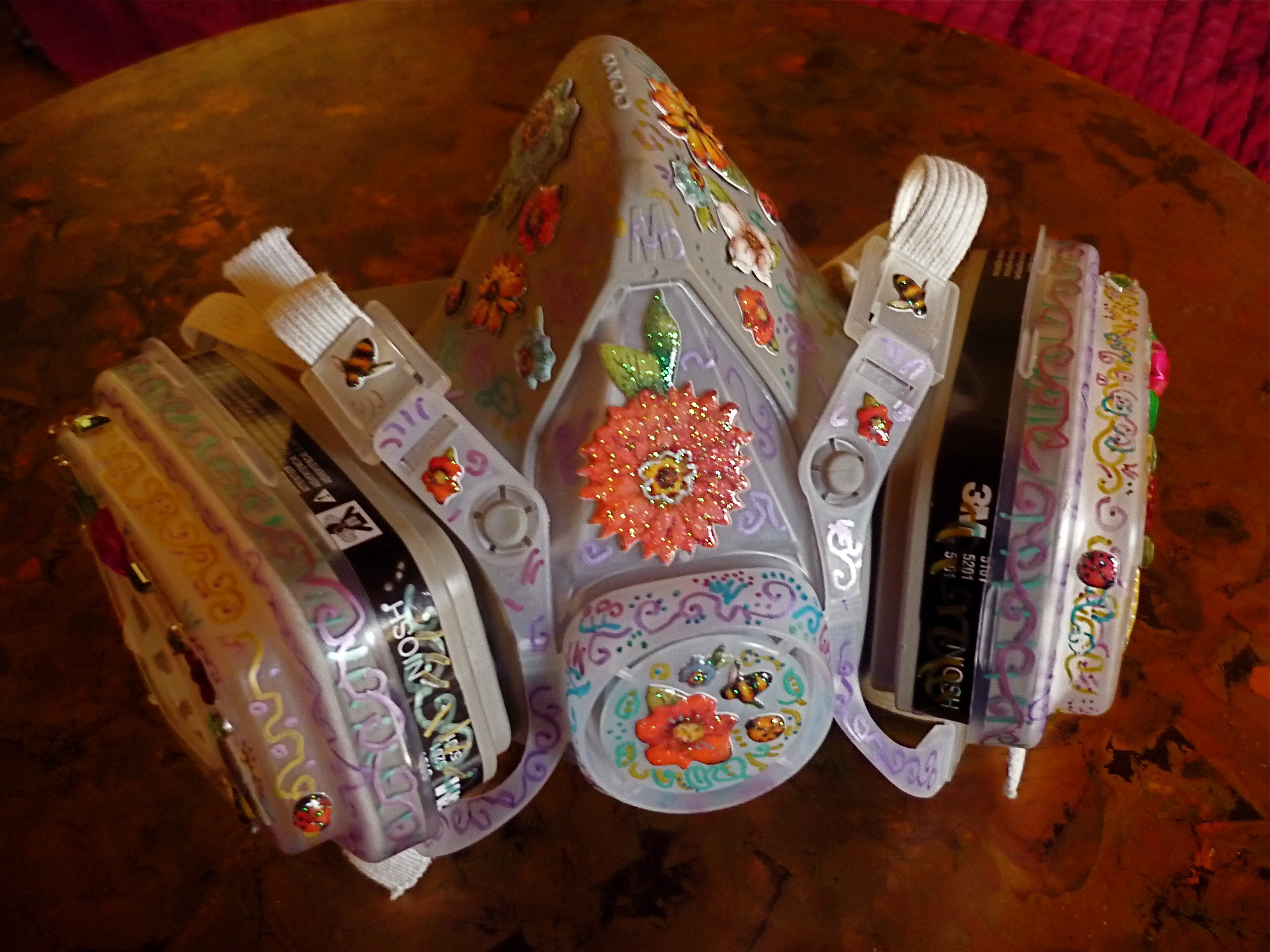
I attended the last session in a face mask, unfortunately sitting in the front row and hopefully not unnerving the speakers. Usually I sit way at the back, as far away from other people as I can manage (for air space), but my sexology colleague wanted to be right up front and I wanted to sit with her. Next year, I’ll be asking the conference organizers for a fragrance-free sentence added to my workshop description, should they accept a presentation proposal from me.
Mostly, though, I am just so grateful to have had the chance to participate once again in this amazing event. It means a lot to me to participate. I live in such an isolated manner. Kudos to all who organized, spoke, and attended!
I used to have a hat with this logo, purchased from the Environmental Health Network of CA
The short answer is: it’s another part of my sexological “bag of tricks.” But I think this question also requires a longer explanation.
All sexologists, sex counselors, sex coaches, and sex therapists develop a menu of therapeutic strategems, tips, techniques, and recommended products, books, and media to share with our clients. Most of us give classes and workshops on everything from orgasms, oral sex, erotic massage, tantra, coping with pelvic pain, aging and sexuality, and so on. We’re always looking for new, effective ways to assist our clients and students with their sexual concerns.
We also often give our clients “homeplay” exercises to do between sessions. For couples, there may be a sensate focus series, non-demand touch exercises for building trust and somatic awareness, first used by sex therapy teams like Masters & Johnson and Hartman & Fithian, and still in wide use today. For a man with rapid ejaculation, there may be a program of mindful masturbation exercises designed to build his capacity for “lasting longer.”
As a sexologist, I often use hypnosis in my practice, and I teach self-hypnosis and other mind-body skills to my clients. And this is good. But there’s more that can be done!
For the last couple of years I’ve envisioned a well-designed mini-course in erotic hypnosis techniques which could be just as helpful as many of my other sex counseling staples. I’ve been working on the design of this course and have now refined it so that it is user friendly, based on wisdom culled from both the hypnotic world as well as the sexological one.
I am convinced of the value of this endeavor. Hypnosis is so versatile! For example, lovers could use hypnosis to:
• help each other relax before lovemaking (especially helpful in dropping the stresses of the work day or family life);
• restore and renew that new relationship sensation of being entranced with a lover; and
• to shower each other’s subconscious with ego-strengthening, affirmative, appreciative suggestions that promote confidence in each other and in the relationship. Can you imagine anything more nourishing than relaxing in a light trance state while being showered on a daily basis with words of love and appreciation, pouring right into your mind and heart?
I suggest that these are great additions to an expanded erotic hypnosis repertoire – which includes the ability to heighten sensation, enjoy “hypno-gasms,” create variety through hypnotic fantasy, explore power play, and so on. In other words, lovers can empower themselves and their relationships through the skillful, consensual use of erotic hypnosis.
Erotic hypnosis can also be a valuable tool for people who have some kind of physical impairment or disability, but who’d like to enjoy the fullest possible sex life. Think about it!
I believe too that erotic self-hypnosis is a powerful tool for understanding one’s own erotic nature and core themes. Too often people are as disconnected from this awareness as they are from their own, and their lover’s, bodies. Why not explore your own eroticism through a combination of self-hypnosis and self-pleasure, for example?
This is the potential I see – and I would like to alert my colleagues in the sexology field about this. I am launching my extended Erotic Hypnosis for Lovers courses (first one on August 17th), and am hopeful that people will realize their value. Yes, there are plenty of people exploring and enjoying erotic hypnosis and doing very well on their own – but I’d also like this modality, as a structured program, to make its way into the hands of sexologists, counselors, and therapists – as well as clients.
Why is this so hard to understand? Toxic chemicals damage the body, sometimes to the point of dysfunction, and people who live with this as a chronic condition are often significantly impaired in how they are able to perform their activities of daily living. Furthermore, they lack access to “safe (i.e. nontoxic) paths of travel” into and out of stores, clinics, schools, hospitals, churches, recreational facilities, yoga studios, cafes and restaurants, public restrooms, government offices – you name it!
Participating in community, attending a civic meeting, or simply hanging out in hopes of conversing with someone who is NOT a solvent-based life form is often next to impossible! Even playgrounds can be hazardous. When my kids were little, I had to haul them off the climbing structures and away from the fragrance wafting moms more times than I can count. Mass transit can be a disaster. Mass anything with people in it can cause me to lose (1) airway function, (2) energy, (3) my ability to use words or think clearly, (4) coordination, (5) one or more days of being able to do much of anything. I cannot consider simple actions like attending a business networking meeting, taking classes at the local city college, getting my hair cut, going to the doctor, shopping for groceries, giving a bunch of teenagers a ride in my car, going to a job interview, or participating in civil disobediance without first considering how much it will cost me and how much am I willing to pay.
Why? Because common consumer, personal care, and industrial toxins are ubiquitous in our modern environment and they form a significant, real, physical barrier to people like me – who may crumble at any contact with their molecules. And because the average consumer has been gulled and lured into participating in their own internal poisoning – and that of others! – by using and wearing products which are NOT proven to be safe. And doing this in public spaces. The commons of our air (not to mention food, soil, water, etc.) is profoundly polluted.
We hear a lot of talk about food justice. It’s important. But I also want AIR JUSTICE. I’d like to go somewhere – anywhere – and not be at risk.
As for sex – finding and keeping sexual partners who are willing to give up their cherished signature fragrances or hair products is easier said than done. A polite request for accommodation is often perceived as an offer to violate constitutional rights! No ma’am – these folks will give up their Obsession and Eternity bottles only when you can pry them from their cold, dead hands! Three cheers then for the Chemical Manufacturers Association and the flavors and fragrances industries for the ultimate in recycling: adding hazardous chemical wastes to perfumes, cosmetics, and food additives and getting away with it! When it comes to pricey, relentless lobbying, the NRA ain’t got nuthin’ on them!
Oh, but I was talking about sex. What got me to this rant – erm, blog! – today was that once again I encountered a respected colleague addressing the topic of disability and sex who had no interest whatsoever in including people with environmental illness/multiple chemical sensitivity (EI/MCS) in her disability views.
Sigh.
Dismissed. Invisible. Denied. And dissed. The EI/MCS crew has been fighting this battle for years, on every front you can imagine. Even the disability community was against us for quite a long time as we often appear to be perfectly fine – unless we’re wearing a mask, respirator, or oxygen tank. Acceptance of EI/MCS as a disability (also called TILT – toxin induced lack of tolerance, thanks to Dr. Claudia Miller – or chemical injury) has been slow, grudging, and is still woefully incomplete in just about every area you can name. Part of the problem is not just that we fall into the “invisible disability” category, but that we also need something quite different from many other people in the disability movement.
We don’t need integration into society – we actually need a profound systems change in which these toxic chemicals are no longer manufactured or at the very least are not allowed into public spaces (like cigarette smoke) before we can even consider inclusion! And because we are not likely to get this, at the very least, we need our own toxin-free housing, clinics, classrooms, jobs, grocery stores, dance clubs, hula classes, art museums, laundry facilities, etc. And we are not likely to get those either. (I have been more active in the past on these issues, as a former president and board member of the Environmental Health Network of Northern CA.)
And we are not even likely to get SSI – as the condition of TILT or EI/MCS or whatever you call it is still debated in public assistance circles. My chemically injured mom – because she can still actually work – only gets a 10% disability rating. Yeah, even after her occupational injury she can work fine! But only in a toxin free workspace! That’s my problem too. I can work brilliantly, as long as I am not exposed to junk in the air. “Junk” being fragrances, air fresheners, hair care products, synthetic carpet, paint, cleaning products, particle board furniture, pesticides… da kine! Non-toxic jobs – and job settings – are all but impossible to find. They don’t exist. Even in a bastion of non-toxicity, like a health food store, you’re always going to find some nitwit hooked on organic, biodynamic produce who is also wearing more volatile petrochemicals on her skin than you’d ever spread on a strawberry patch – and is mindlessly off-gassing all over the entire store.
My adaptive technology.
Oh, but I was talking about sex… So, the disability activism mantra used to be, maybe still is, “self-advocacy.” Yeah. Easier said than done when you’re brainfogged from a sudden toxic onslaught and can’t even put a sentence together or contain your chemically-triggered rage response. So, just picture some enchanted evening. You see a stranger across the room. You catch his/her/zir eyes and you begin to move forward, hearts beating as one… Then, it hits you! It’s no longer love at first sight – it’s chemical warfare at 50 paces! You have no choice but to get away as fast as you can. You can’t even get close enough to say why you can no longer afford to be interested, assuming you’d even retain the power of coherant speech. No one, I don’t care how georgeous or charismatic they are, is worth the risk of a fatal asthma attack.
I recently took my own sweetheart, who is wonderfully non-toxic, to a tantric puja at a temple with a strong, fragrance-free policy. I even booked accommodations for the night, a room in a guest cottage with a shared bathroom. I felt safe, secure, healthy – ready for a wonderful evening with my love. Wouldn’t you know, but in the 45 minutes allowed for dressing up puja style, a man I’d never seen barged into the shared bathroom as I was sprinkling myself with body glitter, and began to apply strongly scented hair gel! I said something like “fragrance, help!,” staggered to the door, slammed it shut, and fell gasping into our room (okay, I am exaggerating slightly…but not much!). Later, this man did nothing but give me stink eye over breakfast. For heaven’s sake! He’s the one violating temple policy and I’m the one to get the dirty looks?
Sadly, I no longer feel safe at the temple. And I’m not yet up to talking to the tantra teacher (a person I adore). It’s just too painful. But I will, after I process my feelings more completely.
I remember another time, enroute to another tantra retreat, when a fellow “goddess” wanted to carpool with me. When I explained that she’d have to be willing to ride unscented, she decided her scented haircare products were just too much a part of her life to give up, even for a couple of hours with me and the promise of a free ride. I was so sad to find I was much less important than a bottle of shampoo.
I am not exaggerating. As a person with EI/MCS I see a sort of madness in this world. People are so addicted to their cosmetics, personal care products, and other inhalants that they chose them over the people in their lives. If this is not a chemcial dependency, what is? In fact, inhalants – common household products huffed by teenagers – can be deadly. Really – deadly!
People who have experienced the lasting effects of toxin-induced loss of tolerance can see this clearly. They experience the heartbreak of suddenly being disbelieved and dissed by spouses, lovers, family members, co-workers, bosses, teachers, medical and mental health professionals, social service agencies (ad infinitim), and becoming social pariahs, deviants, outsiders unworthy of love, friendship, or the ordinary necessities of human life.
Even the “ecosexuality” movement leaves us behind – preferring instead to talk about “green sex” on undyed cotton sheets, with tempered glass dildos and eco-friendly lubes. The sexual health and difficulties of people who desperately need to benefit from this kind of sensitivity are simply not considered to be of interest. Perhaps it is easier to talk about eco-products with other yoga buffs while sipping a non-GMO almond milk vegan protein shake, than it is to meet the glance of an uncool freak in a respirator. The environmental justice communites don’t quite get it either – they haven’t yet put consumer toxins, and their effects, into the mix.
Is it any wonder that suicide rates are high among the chemically injured? Though we do our best to maintain and create relationships and community, our energy is often low, our ability to commit and follow through may be spotty, and we are wounded to the core by being treated as pariahs, freaks, hypochondriacs, and worse. But if someone seems to understand our strange plight, they become golden in our eyes!
Finally, I want to mention a mass event I did attend this last weekend. Moana Nui, an event organized by and for Pacific peoples in collaboration with the International Forum on Globalization, Pua Mohala I Ka Po, and the Oceanic Coalition of Northern California. I sat at the back, or far away from others, as I usually do – in search of fragrant-free “air space” – but stayed the whole time. I was deeply exhausted by Sunday evening, but I did stay. It was a life transforming experience. And this is what I learned.
The people of Pacific nations and islands are my kin in the struggle against toxic exposure. I knew this already, of course, being the granddaughter of an atomic veteran who had witnessed the tragedy of the bombing of Bikini Atoll and died of a radiation-induced brain tumor. And I knew it, of course, being the partner of a man who fights against GMOs and depleted uranium and other toxic conditions in Hawai’i. But at Moana Nui I began to understand just how widespread toxic activities are in some of the most beautiful and fragile places on the planet – thanks to factors like colonization, globalization, American military base building and activities, and environmentally destructive resource extraction by multi-national corporations. As a result, every Pacific Islander is at risk for toxin-induced loss of tolerance – not to mention the dangers of radiation exposure – as the people of the Marshall Islands know so well and so tragically.
They already know – and will know still more – the corrosive effects that toxic chemicals have on their bodies, families, and lives. I hope that their societies are more merciful, more loving, and less inclined to cast out the sick than this one is. I know this madness has to stop.
I thought I was talking about sex… but I guess this blog is really all about love.
I used to have a hat with this logo, purchased from the Environmental Health Network of CA
P.S. As a clinical sexologist, here are classes and information I’ve produced which may be of interest:
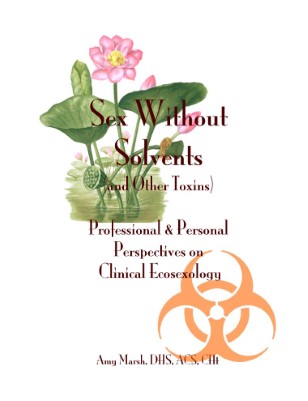
The booklet addresses the impact that toxic chemicals may have on people’s sexual feelings, behavior, health, and function. This is a little-addressed topic, and one I think that should be familiar to every sexologist (and others doing clinical work).
I have personally suffered much illness and partial disability from occupatoinal exposure to chemical toxins – and the booklet includes reprints of three of my Carnal Nation columns which touch on this.
In a related topic, I’ll be speaking on a panel at the EcoSex Symposium on June 18th, created by Beth Stephens and Annie Sprinkle. I’ll be on the EcoSex Activism panel, which takes place 7:30-9:00 PM. The panel will be moderated by Naomi Pitcairn and features the following line up:
Amy Marsh, DHS, ACS, CHT: Toxins Ate My Sex Life
Scott Catamas: NonViolent Communication for the EcoSexual Movement
Travis Williams: Environmental Justice in Silicon Valley
Amy Champ: Absolutely Free and Radically Wild—Living Radical Ecology at the Berkeley Tree Sit