https://creativecommons.org/publicdomain/zero/1.0/deed.en Intersex-inclusive Progress Pride flag, designed by Valentino Vecchietti in 2018.
https://creativecommons.org/publicdomain/zero/1.0/deed.en Intersex-inclusive Progress Pride flag, designed by Valentino Vecchietti in 2018.

AASECT stands for American Association of Sexuality Educators, Counselors, and Therapists. As a sexuality counselor, I have been certified by AASECT since 2012. The organization holds annual conferences which are important to those of us who want to present our findings, take workshops from other professionals, socialize with peers, and/or gain valuable continuing education credits to renew our certifications.
Last year, in 2020, the conference in Palm Springs was cancelled due to the pandemic. This year the AASECT conference will be online. But they are planning for 2022 to take place in Tampa, Florida.

This is a terrible idea given that Florida has just passed (HB) 1475, the Republican-sponsored “Fairness in Women’s Sports Act” which would allow for genital exams of high school athletes.
This bill discriminates against trans, non-binary, and intersex students.
From the news link above: <<Some Democrats took issue with part of the bill requiring examinations of students whose sex is called into question.
Rep. Michele Rayner, D-St. Petersburg, likened the requirement to “state-sanctioned sexual assault against children.”
Under the measure, students’ schools would have to resolve disputes “by requesting that the student provide a health examination and consent form or other statement signed by the student’s personal health care provider which must verify the student’s biological sex.”
The measure provides that a student’s sex would be determined by their reproductive anatomy, genetic makeup or “normal endogenously produced testosterone levels.”>>
It is my opinion that AASECT and other organizations that provide counseling and services to LGBTQIA++ people should boycott states which have passed discriminatory legislation. I have already emailed AASECT to ask that they make a change in conferrence locations.
Besides Florida, the following states have passed anti-trans legislation. Source of the lists below, from “Anti-Transgender Bills Filed In 28 States Since Start Of 2021,” Tim Moran, 3/31/21. Patch.com.


If you are an AASECT member, please consider contacting conference@AASECT.org to ask that the conference be moved to a transgender and intersex-welcoming state.
Thank you.
The author of the following wishes to remain anonymous. I am sharing it because it is so vitally important. In case you don’t know, “cis” and “cisgender” refers to people whose gender identities are congruent with the gender they were assigned at birth: an example of congruence would be someone born with “average” female genitals who has a corresponding internal sense of female gender. “Cis” is rooted in chemical terminology, and is not a perjorative. The use of cisgender and transgender is more polite, as it helps to reduce the “othering” of trans people in dialogue, and reduces the persistent positioning of cisgender as “the norm.”
P.S. The binary-esque categories of transgender and cisgender do not necessarily include people who are intersex. And some people are “gender diverse” without considering themselves trans, though “trans” has become something of an umbrella term.
Content warning: strong language, swearing.
OK so here’s the real tea: some of the things cis people don’t know
1. Everyone perceives gender differently. That person you think doesn’t “pass?” They may be “passing” just fine 90 percent of the time.
2. Therefore your “passing tips” suck. There’s a good chance that the thing you told your trans friend to do to seem more feminine, is the exact same thing some other cis person told them seems too masculine. That’s why we ignore you. You don’t know what you are talking about.
3. Your sexual arousal is not a magic gender detector. For example, if you are a straight dude feeling attracted to a trans man, surprise! Doesn’t magically mean he’s really a woman.
4. “Passing” is a bullshit concept that just means “looking cis.” Maybe we don’t all wanna look like you. Maybe you aren’t as great lookin’ as you thought. Maybe trans is beautiful. WHAT
5. Being trans means dealing with a ridiculous barrage of misgendering and dysphoria-triggering moments. It makes you want to die. You can’t help it. That’s just how fucking dysphoria works. (And you don’t even have to have body dysphoria, social dysphoria is just as real and awful.) So yes, someone slipping up on a pronoun may have just made an innocent mistake, but these are innocent mistakes that literally make you want to rip off your skin/never leave the house again/just die already. And also for every innocent mistake there’s some gaslighting motherfucker who is flubbing your pronoun to fuck with you. Why would you trust it’s innocent? Eventually you WILL snap.
6. As soon as you snap you will be labeled over-dramatic, triggered, a snowflake.
7. Eventually a lot of trans people learn to keep their mouths shut and just swallow all the horrible feelings. These are your “good trans friends” who don’t get upset with you for your bullshit. They are martyred goddamn saints and you have no idea.
8. The “bad trans” are the ones who can’t or won’t shut up and swallow the pain. They will be punished forever.
9. There are a LOT of valid reasons why a trans person may not be transitioning in the way you as a cis person think they should. It may be money. It may be medical. It may be career-related. It may be simple lack of desire. You don’t know. All are equally valid and you are not allowed to have an opinion on how trans people manage our fucking bodies.
10. It’s none of your business. Whatever stupid crap you’re about to ask about, it’s none of your business. Just use the fucking pronouns. We are tired.

####
Or rather, let’s watch three great videos of intersex people talking about intersex! (Twitter links for each name given below).
A talk by Susannah Tempko:
A talk by Mx. Anunnaki Ray Marquez:
A talk by Cecilia McDonald:
United Nations Intersex Fact Sheet.
Mx. Anunnaki Ray Marquez’s website.
Article by Cecelia McDonald: “I was born intersex–here’s what I want you to know.” She Knows. Oct. 26, 2018.
Intersex Affirming Hospital Policies.
Thank you!
####
Signal boosting. This is a post-Transgender Day of Remembrance post in which I want to respond to the call to “elevate and support” the work of black trans women who are organizing effectively and creatively against violence in their communities. Who should know better than they do, what to do, and how? What they need from the rest of us is practical support!
So I am sharing this vibrant video from Black Trans Circles, sent to me in a newsletter from the Transgender Law Center in San Francisco. And here is a link to an opinion piece in Essence titled Black Trans Women Are Solving the Epidemic of Violence, written by Raquel Willis (Nov. 20, 2019), founder of Black Trans Circles two years ago.
Out Magazine’s Trans Obituaries Project (Raquel Willis, Out Magazine, Nov. 20, 2019.)
Layleen Cubilette-Polanco Died in the System, but Her Fight Lives On (Raquel Willis, Out Magazine, Nov. 20, 2019).
How We Can End the Violence Against Trans Women of Color (Raquel Willis, Out Magazine, Nov. 20, 2019). “A 13-step
“…it’s not enough to honor the women we’ve lost with platitudes, social media posts, or thoughts and prayers. Instead, we need the rest of the LGBTQ+ community and our allies to make a deep commitment to keeping us alive—specifically by trusting our leadership and our solutions. Here, we’ve identified a 13-step plan to ending the epidemic, crafted, in part, from the expertise of leading figures who do this work daily.”
Also mentioned in Willis’ Essence article, with a link: An Open Letter to HRC from Trans Community Leaders. The letter, dated Oct. 1, 2019 and published in Out Magazine, was signed by numerous trans leaders in a response to an announcement that the Human Rights Campaign (HRC) was now intending to “stand on the frontline to provide meaningful solutions for the transgender community.” Such cis-saviorism undermines and dismisses the grassroots community leadership that already exists among trans people, including trans people of color. In the past HRC has thrown trans people and trans issues under the bus, and have been otherwise not exactly inclusive of trans and other gender diverse people, and so their announcement is viewed with justifiable suspicion. As the Open Letter states:
“Trans people, and primarily Black trans leaders and trans leaders of color, have been leading the work for trans liberation since long before HRC existed.”
Here is another quote from the Open Letter to the Human Rights Campaign, dated :
“We need more funding. We need more power. We need to be trusted to lead with our own solutions to the oppression that threatens our lives. We do not need a cisgender-led $40 million organization to copy our work and brand it as new.”
Willis’ articles include references and links to other organizations and initiatives created by black trans people, particularly trans women. Here are the links from her articles:
CANS Can’t Stand Facebook group (fights the “Crimes Against Nature” Law RS 14:19).
Compton’s Transgender District, San Francisco
DeCrimNY – “A Coalition to Decriminalize, Decarcerate, and Destigmatize the Sex Trades in New York City and State.”
Familia: Trans Queer Liberation Movement, Los Angeles.
Gays and Lesbians Living in a Transgender Society (GLITS) – “The goal is to celebrate and encourage the expansion and public awareness of queer fluid expression. Notions of the nature and definition of gender, narrative, agency and expression and representation are examined.”
Solutions Not Punishment Collaborative (SNaPCo), Atlanta – repurposing a jail as a wellness center, and more.
TLC@SONG – Collaboration between the Transgender Law Center and Southerners on New Ground. Download a PDF of the 2019 GrapeVine Report on conditions for trans and gender diverse people in the south from this link.
Monica Roberts’ TransGriot blog
Also noted in a couple of Willis’ articles:
American Medical Association policy announcement: AMA takes action to help prevent anti-transgender violence, June 10, 2019.
Finally a word about “signal boosting” via this blog. I assemble these references in blog posts so that I can pass a convenient collection of information and links to colleagues and the “general public.” With regard to this blog, I will “signal boost” in these platforms:
AASECT listserve (for members of AASECT)
American Counseling Association’s Sexual Wellness Network (for members of the ACA) and possibly my ACA members blog.
My Twitter account: @AmyMarshSexDr
My own Facebook timeline and Facebook page for my counseling practice.
Thank you.
####
Here is the slide show from the webinar I attended today concerning sexual health and HIV prevention strategies for trans men who have sex with men. The webinar organizers wanted this information to be widely shared, so I am doing my part. You can download a PDF of the slide show here: TMSM+WEBINAR
I was very pleased to attend the webinar. At an hour, it was far too short. It makes me realize how much I miss the sex positive/sexual health positive community of the SF Bay Area. Honestly, there are so many good people and organizations providing care and resources to groups of people I really care about.
There was a lot of good information, but one of the best quotes was, “playing twenty questions about my gender is not good foreplay.” (Unfortunately I forget who said this!) The message: educate yourself first about gender variance before dating a person who is trans, non-binary, or otherwise gender variant. Take that as a pre-Valentine’s Day tip!
Big thanks to Shawn Demmons, MPH, the main presenter, and to the panelists: Kay Nielson of the SF Aids Foundation; Niko Kowell of the SF Community Health Center; and Marion Pelligrini, also of the SF Community HEalth Center. I truly appreciate the opportunity to learn more.


First of all, a huge thank you to Harold Riley, host of Our Stories, Our Lives, on our local, Lake County radio station, KPFZ 88.1 FM. His broadcast yesterday brought me back to a topic I’ve been concerned with in the past, but not enough in the present.
The topic is a form of elder abuse–senior bullying–by other seniors and also by care providers. A recent Associated Press article, ‘It’s like ‘Mean Girls,’ but everyone is 80′: How nursing homes deal with bullies (Matt Sedensky, May 12, 2018), speaks to the problem in nursing homes, senior centers, and senior housing. The last portion of the article recounted the plight of a woman who was bullied relentlessly by her neighbors for being a lesbian, once she moved into a senior housing complex in Illinois.
Senior on senior bullying is just one form of abuse that elders, especially older LGBTQIA people, endure. Years ago, when I was taking some case management and gerontology classes at Berkeley City College, I began to learn how some in-home health workers and other social service providers were bullying clients who were LGBTQIA or who had different sexual lifestyles (kinky, poly, etc.). The heartbreaking documentary, Gen Silent, shows how tragic and frightening this is. The website has a “free viewing pop-up” every so often, so it’s worth signing up for this so you can see the film.
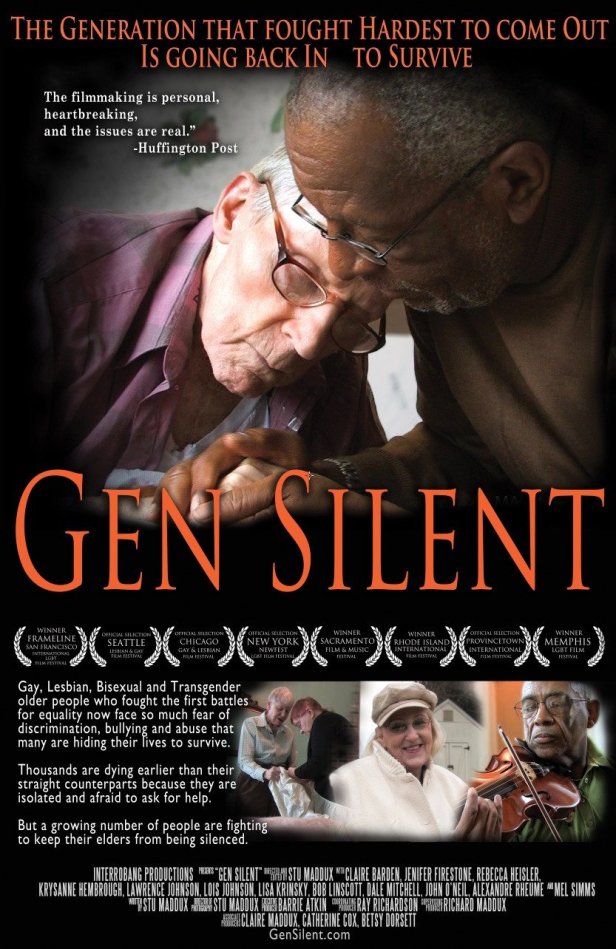
Sage–Advocacy and Services for LGBT Elders–published this article in Feb., 2018. Here is an excerpt from that article:
<<Regarding much-needed support in postretirement years, the resource center notes the following: Although 80 percent of long-term care in the U.S. is provided by family members, LGBT elders are twice as likely to be single and three to four times more likely to be without children than their heterosexual counterparts. Further, many professional caregivers are not accepting of LGBT elders and not trained to deal properly with their unique needs. Therefore, such caregivers might be hostile, discriminatory, or simply unaware that LGBT elders exist. For example, 8.3 percent of LGBT elders reported being neglected or abused by a caretaker due to their sexual orientation or gender identity.>>
Back in 2010, I wrote a column for Carnal Nation called Kink at the Old Folks Home which considered this topic from the standpoint of consensual kink among elders, and what can happen when care providers or social service providers are not adequately informed and trained to deal with alternative sexualities and genders. From my column:
<<…Clay Greene (age 88) and Harold Scull (age 77) [this link added 5/17/18] is a recent example of heavy handed intervention. When Harold Scull became injured, an avalanche of official interventions quickly buried both men, destroying what remained of their life together. Sonoma County officials portrayed Greene as Scull’s “roommate,” ignored the men’s mutual powers of attorney, and put both men into nursing homes, separate ones, and even though Greene was healthy! They also sold the men’s home and belongings, and even got rid of their pets without their permission. Authorities refused to let Greene visit Scull, even as Scull was dying. Greene sued the county with help from the National Center for Lesbian Rights and recently won his case.>>
What can you do?
Speak up! Don’t stand by and allow bullies to have their way! Here are some resources to help you understand the issue and what you can do about it.
The National Center for Assisted Living has a PDF booklet called Bullying Among Seniors to help assisted living providers to prevent and address this problem.
The University of Southern California has a Bullying Prevention Resource Guide which includes several resources specific to LGBTQIA communities and to seniors. (Scroll down.)
Today, May 17th, is International Day Against Homophobia, Transphobia, and Biphobia. Let’s celebrate it in style by preventing bullying every day of the year.
####

So, it feels like an odd form of slightly obsessive “soul retrieval” to be pulling my old Carnal Nation columns out of web.archive.org and putting them up here on my blog. It’s the kind of thing that is actually laborious and time consuming and that you don’t dare stop for fear you’ll loose interest.
It’s fun to revisit these – I’m not really reading them through as I go, but I’m picking out the choice bits and remember how great it felt to work with the editors (I had three) and to have an audience. I loved being able to go in the ‘back door” of the website and check my stats. A lovely, lovely feeling that!
So here’s the first half of 2010, from January to May.
The Semen Survey, Part 1 – 1/6/10
Excerpt: Suave, attractive men used to be known as “smoothies.” Now I know why. A male friend shared a lover’s delighted comment after fellatio: “It tastes like a milkshake!” His conclusion? “Pineapple juice really works!” That’s a glowing testimonial to the power of the “pineapple pay-off;” however, only twelve of ninety-seven semen taste survey respondents have actually tried pineapple juice to improve their own flavor.
[The next three columns were written in Hawai’i.]

Excerpt: In the old days, the clouds were forms of na akua (gods and goddesses). Each snowfall signified the appearance of Poliahu, the snow goddess of Mauna Kea. Rain and mist are evidence that Wakea, the sky father, is making love to his earthly consort, Papahanaumoku. This happens a lot in Hawai’i. It’s probably happening this very minute.

Skydancers & Lizard Women: Mo’o & Dakini – 1/20/10
Excerpt: [Miranda] Shaw quotes from the ancient Cakrasamvara commentary:
“If one who aspires to enlightenment
Generates anger toward a female messenger,
The merit accumulated over ten million eons
Will be destroyed in an instant.”
Doncha hate it when that happens? Dudes, a word to the wise…

The Hawai’i Yellow Page Blues – 1/27/10
Excerpt: “First they make us put on clothes, then they take theirs off!”
I’m talking story with one local guy and I’ve never heard a better summation of the first and most enduring insult inflicted on the Hawaiian people. From the dour Congregationalist missionaries of New England to the sun-kissed tourists whose “parts” are too well known, the foreigner’s knack of inflicting shame is a gift that keeps on giving.
The Semen Survey, Part II: Intimate Edibles – 2/3/10
Excerpt: I haven’t had this much fun since the last time I wrote a column! Googling around, I found “semen sautée[sic]” on the Urban Dictionary. Sounds like you can just fry up those li’l lip-smackin’ critters of love. My only question is “non-stick pan or a light coating of oil?” The semen cuisine craze can be found even on such far-flung websites as the DiscoverVancouver.com/forum. One Canadian describes his wife’s favorite hearty breakfast “i [sic]… jerk off and shoot my load all over the pan on med heat and it cooks up just like pancakes and it bubbles and forms into a flat pancake and my wife has eaten it scrambled even with syrup. its [sic] amazing how sperm cookes [sic] in cooking pans but the smell is horrible and haunting. it [sic] smells like fish eggs and sour milk and flesh blacch [sic].” Well, I suppose if you’re out of Canadian bacon…

Excerpt: Baristas take note. Natural Harvest: A Collection of Semen Based Recipes contains a recipe for “Cappuccino de Semi” (also referred to as “Cappuccino de Seme”). The author says, “Mixing the semen with the milk before steaming enhances the flavors of both the milk and the semen.”
Now I am well aware that in the brave new future of global warming and peak oil depletion, we might well be eating a number of things we’d normally reject today. I had a friend who was enthusiastic about road kill meals (he had anosmia—no sense of smell—so that explains a lot) and kept an armadillo in his freezer. Fortunately, he never got around to cooking it up for me, and for that I am deeply grateful.
Excerpt: A box of tissues and a capacious wastebasket—these are essential tools of my trade, second only to my cell phone and laptop. Handing out tissues is part of my job. People cry. I encourage them. Today, however, I’d misplaced the wastebasket. So tear-soaked tissues were strewn about my office like petals dropped from the magnolia trees that are blooming just now.

Hypnotic Erotic, Part 1 – 2/24/10
Excerpt: The erotic life of any human being is complex beyond belief. Anyone purporting to offer support or treatment in the realm of eros must have up-to-date knowledge as well as an acceptance of a variety of orientations, preferences, behaviors, etc.
Hypnotic Erotic, Part 2 – 3/3/10
Excerpt: Erotic hypnosis is used to create a direct experience of sexual pleasure in the hypnotic subject. It can create a “cum on command” or bring a person closer to a cherished fetish or kink. People have sought hypnosis in order to turn into an animal or adult baby; to heighten their ability to serve a mistress or master; or to free their gender expression from social fetters and inner constraints. And of course, hypnosis can immobilize a person without physical restraint.
Excerpt: Issues surrounding disparate ages and sex are extraordinarily charged, even if all involved parties have reached the age of legal consent. Adult lovers of disparate ages invariably conjure scenarios involving lust, predation, exploitation, and/or Oedipal complexes, none of which are necessarily the case. (Please note, “lust and predation” can be hot elements in a consensual relationship, a fact lost on those who feel called upon to comment or blog.) We feel completely justified in scrutinizing and questioning the motivations of people involved in “May/December” relationships, inevitably pathologizing them.

Kiss Me, I’m (sort of) Irish – 3/17/10
Excerpt: First of all, that Galway incident supposedly invoking an 1837 Unlawful Accommodation of Donkeys Act is apparently a hoax. However, I have seen, with my own eyes, photographic evidence of BDSM garden gnomes. Second, Kinky Devil, “Ireland’s largest adult shop,” emphatically does not sell Leprechaun-shaped vibrators, shamrock pasties or anything that might be associated with St. Patrick’s Day. In Ireland, St. Patrick is still a significant religious figure and his saint’s day is not an entirely secular celebration devoted to parades and beer, the way we think of it here in the United States.
Serving Up a Saucy SAR – 3/24/17
Excerpt: The more I experience learning through the SAR process, the more I feel committed to it as an essential modality for anyone who ventures to counsel or educate about sex. I know we’re all awash in sexual material these days, what with the internet and all that, but there’s still something about the choreography of the SAR that makes it all come together (no pun intended). I think the SAR allows people to figure out where they are in the picture, particularly when they are asked to professionally assist another person’s sexual integration or comment upon behavior.

Excerpt: Funny to be a disembodied voice, talking about sex and intimacy, bringing some of that good ol’ down-home San Francisco/Berkeley sex radical vibe into an entirely different area of the country. I don’t know what the listeners made of it but I had a blast doing this program. I still experience this fact with some degree of giddy surprise: I really, really love talking about sex!
Writing about it, too, in case you haven’t noticed! In fact, the minute I finish my weekly column, I can’t wait to do it all over again! I’m actually kind of…insatiable!
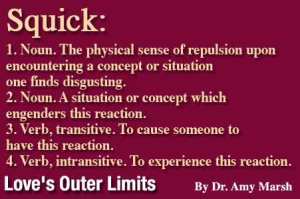
Excerpt: Disgusted reactions to all kinds of sexual behavior seem to combine visceral sensations with socially determined (but arbitrary) standards of behavior, personal likes and dislikes, ignorance, misunderstanding, a deeply ingrained sense of shame, all within the context of pervasive, cultural sex negativity. What’s not to like?
Squick is in the viscera of the beholder.
Excerpt: Sometimes strange bedfellows share good politics. And good politics sometimes makes for splendid ephemera, which may then be collected by one or both strange bedfellows. Such is the story of one small sliver of my life and of my brief but meaningful fling with the AOUON (“all of us or none”) Political Poster Archive which, with 25,000-plus posters, is one of the largest private collections of progressive political and counter-cultural posters in the world.
The Adventures of Dr. HemoGoblin – 4/21/10
Excerpt: Two weeks before our day of national bloodletting (April 15th), I whipped up a profile and made my debut at Vampire Chat City. As “HemoGoblin,” I stumbled through the virtual equivalent of saloon doors into what was clearly an off night.
Excerpt: “Sometime, I wish that instead of Pilgrims a bunch of hula dancing Hawaiians had first stepped on Pilgrim Rock. The moral equation of this nation might have been improved immeasurably.”
That’s a quote from the late Sammy Crowningberg Amalu, Honolulu columnist and con man extraordinaire, a man who claimed descent from high ranking Hawaiian ali’i (nobility). And from what I’ve read about Mr. Amalu, he’d be tickled by the irony of a posthumous revival at the hands of a sexologist writing from Northern California (a region that includes Folsom Prison, where he’d spent a deal of time).

Seventeen Reasons Why – 5/5/10
Excerpt: Like the large “17 Reasons Why!” sign that once loomed over Thrift Town at 17th and Mission in San Francisco, I find myself installed at the crossroads of sexological inquiry and practice. However no one (except me) really knows the whole story of “why.”
Excerpt: Here’s the reality or, rather, one piece of it: “In California, transgender female clients of publicly-funded counseling and testing sites have higher rates of HIV diagnosis (6%) than all other risk categories, including MSM (4%) and partners of people living with HIV (5%), and African American transgender women have a substantially higher rate of HIV diagnosis (29%) than all other racial or ethnic groups of transwomen (16). Estimates from California’s urban centers also suggest that HIV prevalence rates among transgender women are extremely high, especially for transgender women of color and African American transgender women in particular (2, 15)…” And that’s from a 2008 study called “Serving Transgender People in California: Assessing Progress, Advancing Excellence.”
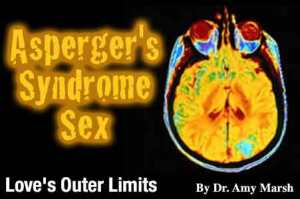
Asperger’s Syndrome Sex, Part 1 – 5/19/10
Excerpt: A couple of year’s ago I met someone at the Center for Sex and Culture who told me that this two-part column was pivotal for her understanding of her own sexuality. That was the most meaningful praise I’ve ever had for something I’ve written. The columns are somewhat dated now – and I’ve taken the phrase, “nothing about us without us,” more to heart, but they are still an interesting attempt at understanding.
Excerpt: As the study of human sexual behavior owes quite a lot to the gifts and determination of at least one Aspie researcher (and I am sure there are others!), it seems fitting that I chose Asperger’s Syndrome and sexuality as my own first foray into sex research.

Asperger’s Syndrome Sex, Part 2 – 5/26/10
Excerpt: The spirit of eugenics is apparently alive and well in New Hampshire. “Dear Abby” just this week ran a letter from the mother of a 24-year-old son with Asperger’s Syndrome (AS) and Attention Deficit Disorder (ADD). The son, “Jasper,” started dating and was eventually seen with a hickey on his neck. So the mother’s best friend, taking note of this badge of distinction, suggested the mother have Jasper “fixed”—as in “sterilized.” The mother writes to Dear Abby and asks, “How should I respond to my friend about her suggestion? When she made it, I didn’t know what to say.”
I dunno about your gut response, readers, but mine is to borrow a line I heard so often from three-year-olds in my children’s preschool. “You’re not my friend!” would do it for me, though “How dare you!” would be more adult.
Asperger’s Syndrome Sexuality, Part 3 – 6/2/10
Excerpt: Yet a certain number of adults on the autism spectrum—perhaps more than we might think—do share similar sensory variables and may choose to explore them through various forms of erotic sensation play, including BDSM. Do the parents know? Did they suspect? Were they realistically and intelligently prepared to witness the emergence of their adult children’s erotic nature and allow for variations in behavior that represent the individual’s own chosen accommodation to sensory needs and sociosexual desires?


Ever since viewing the documentary, Ke Kulana He Mahu – Remembering a Sense of Place, a few years ago, I’ve been an appreciative “fan” of Hinaleimoana Wong-Kalu, a kumu hula (hula teacher) and cultural/community activist from O’ahu. And so I’ve eagerly awaited the San Francisco Frameline Film Festival screening of the new documentary, Kumu Hina. Here’s the trailer:
The film screened yesterday in SF, and will be shown in Berkeley tonight. I was lucky to go yesterday with one of my hanai sisters, Therese Wonnacott aka Aunty Anita, who is herself a mahuwahine community and cultural activist. Among other things, she runs and promotes the California Panache pageant (a topic which deserves its own separate blog!). (And have to give a shout-out to Danielle Castro, my adopted niece!)
It was thrilling and emotionally moving to sit in the Castro Theater and hear the voice of San Francisco hula luminary, Kumu Patrick Makuakane, as he welcomed Kumu Hina with a chant, and to hear her voice ring out as she answered in kind. (After the film, some members of the audience stood up and offered I Ku Mau Mau, a chant often used to express solidarity.)
The film itself was glorious. Personally, I was in heaven as it combined two of my top passions – Hawaiian culture (and activism) and support for gender variant people. And, as the mother of two, including a recent college graduate who just happens to be a trans guy, the portrayal of Ho’onani, one of Kumu Hina’s young students, was very meaningful. The fact that this kid was able to take her “place in the middle” with the full support of her teacher (and perhaps the somewhat more cautious permission of her family) was outstanding. Honestly, this is so rare in the world! Ho’onani is not the only “in the middle” kid Kumu Hina has taught, but her story and presence was especially compelling.
Of course, opportunities for examination of all kinds of intersectionality abound in this film. And though this blog is not meant to be a film review as much as it is a tale of my experiencing of the film, I can’t avoid mentioning some of them. For one thing, though my heart was wide open, I was watching with non-Hawaiian eyes. And I had many lenses over these eyes: sexologist lens, parent of a trans person lens, former hula student lens, Hawaiian independence ally lens, partner of an elder Hawaiian independence activist and cultural practitioner lens, hapless citizen of the country occupying Hawai’i lens, younger partner of somewhat older person lens, feminist lens, settler-colonist of Turtle Island lens, and so on. Different parts of the film resonated with me on different levels and in different ways, while at other times I was aware of how profoundly different my life is from the experiences of the people in the film.
When Ho’onani opened up her voice and spirit and chanted, I was remembering how my oldest kid, as an eleven-year-old hula student, also used to chant with an intense spirit and voice. Watching the footage of rural Kaua’i, I hearken back to a certain off-grid plot of land in Waimea on Hawai’i island, where wild pigs, sheep, and dogs sometimes have roamed together. I also commiserated with the difficulties of long-distance relationships.
And when I came home late last night from the reception which followed the screening, I found a large pile of dishes in the sink – left for me to clean. So I recalled scenes from the film where Kumu Hina, an accomplished professional woman, copes at the end of the day with dinner and cleaning while her husband watches television. Her remarks about Polynesian men hit home too – and I responded to them as someone who has sometimes clashed with my (long-distance) Polynesian partner over issues which seem crystal clear to me as a white, feminist, urban Californian, but are far deeper and much more complex when taking so many other issues – and a whole other human being with a different genealogy and culture – into account.
Cultural clashes, intersections, and complexities are inevitable and not all binary, in spite of how I have written them here. In the Kumu Hina film there are many opportunities to explore elements which are either explicit or implicit (or both!) and which rub up against each other in various ways, causing sensations of pleasure, confusion, inspiration, or pain: in front of the camera/behind the camera; love/struggle; male/female; rural/urban; American/Hawaiian; gender conforming/gender variant; colonizer/colonized; compliant/resistant; commodified/authentic; educated/less educated; younger/older; professional/working class; this island/that island; student/teacher; parent/child; conservative/progressive; and so on.
And yet the main message of this film – kept real by Hinaleimoana Wong-Kalu’s honesty, integrity, and groundedness – was not just the explicit message of aloha (the deeper kind, not the touristy interpretation), but also an implicit one of teachability. The film seemed to trust that most of us who watched it (as well as those who were involved in the making and living of it) could and would experience many layers of learning through the film – learning which would lead us with more hopeful certainty to the possibility of understanding and experiencing aloha.
I am happy that Bay Area folks in LGBTQI etc, ally, Hawaiian, Pacific Islander, and Hawaiian music communities (often overlapping) combined to give Kumu Hina a welcome and a reception that was warm, loving, appreciative, and hospitable. She has many friends and sisters here, and they came out in force for her, cooked for her, played and sang for her, fetched more teriyaki sauce, and admired her copper colored sandals…
The rest of us who only knew of her, rather than knowing her personally, joined the standing ovations she and the film deserved. And I’m hoping some of us at least will also give to the film’s Kickstarter campaign (they’re trying to raise $10,000 and are about $7,000 short) and to Hinaleimoana Wong-Kalu’s OHA election campaign fund. OHA stands for “Office of Hawaiian Affairs” and she is running for election as a trustee.
I am also hoping that Halau Lokahi, the Hawaiian charter school where Kumu Hina teaches, will survive its current troubles. You can sign a petition supporting the school here and donate at the above link. These schools are super important for Kanaka Maoli (Native Hawaiian) kids, and deserve our support.