Category: Sex Counseling & Sexology

  • AASECT Refutes “Sex Addiction Therapy” in Newest Position Statement

    AASECT Refutes “Sex Addiction Therapy” in Newest Position Statement


    Perhaps some of the most heartbreaking clients who have approached me for sexuality counseling have been those who have already decided (or been told) that they are “sex addicts.” And while I have done my best to reference the experts I trust on this topic (David Ley, Marty Klein); loosen the constrictions of this label; and try to assist the clients to re-examine what’s going on that troubles them in their sexual behaviors, in some cases these have been confused or even displeased when I don’t join them in this label.

    And so it is extremely helpful to have a definitive statement on sex addiction now from AASECT – especially in a time when some U.S. policymakers and certain religious fringe groups seem to be hell-bent on dragging the general public back into a stone age of sexual ignorance.

    Here is the statement, which I believe is not only a practical tool, but may also end up a beacon for sexuality professionals in the stormy days ahead.

    AASECT Position Statement – Sex Addiction (Nov. 29, 2016)

    Founded in 1967, the American Association of Sexuality Educators, Counselors and Therapists (AASECT) is devoted to the promotion of sexual health by the development and advancement of the fields of sexual education, counseling and therapy. With this mission, AASECT accepts the responsibility of training, certifying and advancing high standards in the practice of sexuality education services, counseling and therapy. When contentious topics and cultural conflicts impede sexual education and health care, AASECT may publish position statements to clarify standards to protect consumer sexual health and sexual rights.

    AASECT recognizes that people may experience significant physical, psychological, spiritual and sexual health consequences related to their sexual urges, thoughts or behaviors. AASECT recommends that its members utilize models that do not unduly pathologize consensual sexual problems. AASECT 1) does not find sufficient empirical evidence to support the classification of sex addiction or porn addiction as a mental health disorder, and 2) does not find the sexual addiction training and treatment methods and educational pedagogies to be adequately informed by accurate human sexuality knowledge. Therefore, it is the position of AASECT that linking problems related to sexual urges, thoughts or behaviors to a porn/sexual addiction process cannot be advanced by AASECT as a standard of practice for sexuality education delivery, counseling or therapy.

    AASECT advocates for a collaborative movement to establish standards of care supported by science, public health consensus and the rigorous protection of sexual rights for consumers seeking treatment for problems related to consensual sexual urges, thoughts or behaviors.

    [Source: Aaron, Michael. AASECT Releases Historic Position Statement on Sex Addiction. Psychology Today. ]

    Dr. Aaron notes in his blog that there is a precursor to the above statement, which you may find below.

    AASECT Position on Sexual Expression Including Orientation and Identity (n/d)

    Sexual Expression Including Orientation and Identity: Treatment and Education Foundations

    It is the position of the American Association of Sexuality Educators, Counselors, and Therapists that we oppose any and all therapy models and interventions as well as any educational programs and curricula that seek to pathologize, dictate, or prescribe a person’s sexual orientation, identity, and/or consensual, sexual expression, whether or not it is conventional or atypical. Regardless of how such clinical interventions or educational programs are labeled or named, AASECT recommends all helping and educating professionals to utilize best practices and culturally relevant resources for foundation and reference.

    AASECT affirms that sexuality is central to the human experience and sexual rights must be honored in order for sexual health and overall well-being to be obtained. Informed by the best empirical research, AASECT recognizes human sexual experiences as diverse and supports the acceptance of sexual diversity while embracing consensual sexual expression within the framework of human rights and social justice.

    AASECT accepts the evidence that human sexual experience includes a vast spectrum of sexual expression, orientation, and identities. These sexualities, are typically not psychopathological behaviors. Indeed, recent peer-reviewed research on these sexual experiences shows no correlation to pathology.

    AASECT further asserts that all people seeking treatment and education about consensual sexual behavior, identity, or orientation deserve accurate information. AASECT accepts that the empirical evidence is reasonably complete on reparative and conversion therapies that attempt to change sexual orientation or identity and shows that these techniques are experimental at best and overwhelmingly ineffective, with harmful consequences for clients widely documented.

    AASECT takes the position that social justice plays an essential and foundational role in the organization’s mission. Individuals have the right to be free as possible from undue constraints (e.g. discrimination, stigmatization, oppression and violence) along with the freedom to consensual sexual expression. Destigmatizing human sexual expression and experiences as well as creating and maintaining safe space for those who have been traditionally marginalized are essential practices for AASECT members who are predominately mental health practitioners and educators. This overarching goal compels AASECT to disavow any therapeutic and educational effort that, even if unwittingly, violates or impinges on AASECT’s vision of human rights and social justice.

    [Source URL: https://www.aasect.org/position-sexual-expression-including-orientation-and-identity%5D

    I feel a personal and professional debt of gratitude to all who worked on developing and refining the above statements. I understand that key members of the team include Ian Kerner, Doug Braun-Harvey, Michael Aaron, Michael Vigorito and Russell Stambaugh.

    Today I am even happier and prouder to be an AASECT-certified sexuality counselor and member. Thank you, AASECT!

    Sexuality Counselor Renewal 2015-2018
    Sexuality Counselor Renewal 2015-2018
  • The Sexologist and the Wayback Machine, Part 2

    The Sexologist and the Wayback Machine, Part 2

    logosmall

    So, it feels like an odd form of slightly obsessive “soul retrieval” to be pulling my old Carnal Nation columns out of web.archive.org and putting them up here on my blog. It’s the kind of thing that is actually laborious and time consuming and that you don’t dare stop for fear you’ll loose interest.

    It’s fun to revisit these – I’m not really reading them through as I go, but I’m picking out the choice bits and remember how great it felt to work with the editors (I had three) and to have an audience. I loved being able to go in the ‘back door” of the website and check my stats. A lovely, lovely feeling that!

    So here’s the first half of 2010, from January to May.


    lol-semen-1

    The Semen Survey, Part 1 – 1/6/10

    Excerpt: Suave, attractive men used to be known as “smoothies.” Now I know why. A male friend shared a lover’s delighted comment after fellatio: “It tastes like a milkshake!” His conclusion? “Pineapple juice really works!” That’s a glowing testimonial to the power of the “pineapple pay-off;” however, only twelve of ninety-seven semen taste survey respondents have actually tried pineapple juice to improve their own flavor.


    [The next three columns were written in Hawai’i.]

    lol-hawaii

    Le’ale’a – 1/13/10

    Excerpt: In the old days, the clouds were forms of na akua (gods and goddesses). Each snowfall signified the appearance of Poliahu, the snow goddess of Mauna Kea. Rain and mist are evidence that Wakea, the sky father, is making love to his earthly consort, Papahanaumoku. This happens a lot in Hawai’i. It’s probably happening this very minute.


    lol-sky-dancers

    Skydancers & Lizard Women: Mo’o & Dakini – 1/20/10

    Excerpt: [Miranda] Shaw quotes from the ancient Cakrasamvara commentary:

    “If one who aspires to enlightenment
    Generates anger toward a female messenger,
    The merit accumulated over ten million eons
    Will be destroyed in an instant.”

    Doncha hate it when that happens? Dudes, a word to the wise…


    lol-hawaii-blue

    The Hawai’i Yellow Page Blues – 1/27/10

    Excerpt: “First they make us put on clothes, then they take theirs off!”

    I’m talking story with one local guy and I’ve never heard a better summation of the first and most enduring insult inflicted on the Hawaiian people. From the dour Congregationalist missionaries of New England to the sun-kissed tourists whose “parts” are too well known, the foreigner’s knack of inflicting shame is a gift that keeps on giving.


    The Semen Survey, Part II: Intimate Edibles – 2/3/10

    Excerpt: I haven’t had this much fun since the last time I wrote a column! Googling around, I found “semen sautée[sic]” on the Urban Dictionary. Sounds like you can just fry up those li’l lip-smackin’ critters of love. My only question is “non-stick pan or a light coating of oil?” The semen cuisine craze can be found even on such far-flung websites as the DiscoverVancouver.com/forum. One Canadian describes his wife’s favorite hearty breakfast “i [sic]… jerk off and shoot my load all over the pan on med heat and it cooks up just like pancakes and it bubbles and forms into a flat pancake and my wife has eaten it scrambled even with syrup. its [sic] amazing how sperm cookes [sic] in cooking pans but the smell is horrible and haunting. it [sic] smells like fish eggs and sour milk and flesh blacch [sic].” Well, I suppose if you’re out of Canadian bacon…


    lol-semen-cooking

    Melts In Your Mouth – 2/10/10

    Excerpt: Baristas take note. Natural Harvest: A Collection of Semen Based Recipes contains a recipe for “Cappuccino de Semi” (also referred to as “Cappuccino de Seme”). The author says, “Mixing the semen with the milk before steaming enhances the flavors of both the milk and the semen.”

    Now I am well aware that in the brave new future of global warming and peak oil depletion, we might well be eating a number of things we’d normally reject today. I had a friend who was enthusiastic about road kill meals (he had anosmia—no sense of smell—so that explains a lot) and kept an armadillo in his freezer. Fortunately, he never got around to cooking it up for me, and for that I am deeply grateful.


    lol-rose

    Said to the Rose – 2/17/10

    Excerpt: A box of tissues and a capacious wastebasket—these are essential tools of my trade, second only to my cell phone and laptop. Handing out tissues is part of my job. People cry. I encourage them. Today, however, I’d misplaced the wastebasket. So tear-soaked tissues were strewn about my office like petals dropped from the magnolia trees that are blooming just now.


    lol-hypno

    Hypnotic Erotic, Part 1 – 2/24/10

    Excerpt: The erotic life of any human being is complex beyond belief. Anyone purporting to offer support or treatment in the realm of eros must have up-to-date knowledge as well as an acceptance of a variety of orientations, preferences, behaviors, etc.


    lol-hypno2_0

    Hypnotic Erotic, Part 2 – 3/3/10

    Excerpt: Erotic hypnosis is used to create a direct experience of sexual pleasure in the hypnotic subject. It can create a “cum on command” or bring a person closer to a cherished fetish or kink. People have sought hypnosis in order to turn into an animal or adult baby; to heighten their ability to serve a mistress or master; or to free their gender expression from social fetters and inner constraints. And of course, hypnosis can immobilize a person without physical restraint.


    lol-gerontophilia_0

    Gerontophilia? – 3/10/10

    Excerpt: Issues surrounding disparate ages and sex are extraordinarily charged, even if all involved parties have reached the age of legal consent. Adult lovers of disparate ages invariably conjure scenarios involving lust, predation, exploitation, and/or Oedipal complexes, none of which are necessarily the case. (Please note, “lust and predation” can be hot elements in a consensual relationship, a fact lost on those who feel called upon to comment or blog.) We feel completely justified in scrutinizing and questioning the motivations of people involved in “May/December” relationships, inevitably pathologizing them.


    lol-kiss-me

    Kiss Me, I’m (sort of) Irish – 3/17/10

    Excerpt: First of all, that Galway incident supposedly invoking an 1837 Unlawful Accommodation of Donkeys Act is apparently a hoax. However, I have seen, with my own eyes, photographic evidence of BDSM garden gnomes. Second, Kinky Devil, “Ireland’s largest adult shop,” emphatically does not sell Leprechaun-shaped vibrators, shamrock pasties or anything that might be associated with St. Patrick’s Day. In Ireland, St. Patrick is still a significant religious figure and his saint’s day is not an entirely secular celebration devoted to parades and beer, the way we think of it here in the United States.


    lol-saucy-sar

    Serving Up a Saucy SAR – 3/24/17

    Excerpt: The more I experience learning through the SAR process, the more I feel committed to it as an essential modality for anyone who ventures to counsel or educate about sex. I know we’re all awash in sexual material these days, what with the internet and all that, but there’s still something about the choreography of the SAR that makes it all come together (no pun intended). I think the SAR allows people to figure out where they are in the picture, particularly when they are asked to professionally assist another person’s sexual integration or comment upon behavior.


    lol-shakti

    Shakti Shake – 3/31/10

    Excerpt: Funny to be a disembodied voice, talking about sex and intimacy, bringing some of that good ol’ down-home San Francisco/Berkeley sex radical vibe into an entirely different area of the country. I don’t know what the listeners made of it but I had a blast doing this program. I still experience this fact with some degree of giddy surprise: I really, really love talking about sex!

    Writing about it, too, in case you haven’t noticed! In fact, the minute I finish my weekly column, I can’t wait to do it all over again! I’m actually kind of…insatiable!


    lol-sex-squicks

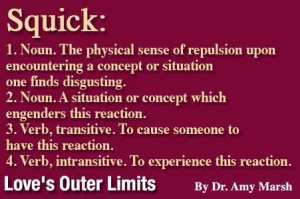
    Sex Squicks – 4/7/10

    Excerpt: Disgusted reactions to all kinds of sexual behavior seem to combine visceral sensations with socially determined (but arbitrary) standards of behavior, personal likes and dislikes, ignorance, misunderstanding, a deeply ingrained sense of shame, all within the context of pervasive, cultural sex negativity. What’s not to like?

    Squick is in the viscera of the beholder.


    lol-eros-in-action

    Eros in Action – 4/14/10

    Excerpt: Sometimes strange bedfellows share good politics. And good politics sometimes makes for splendid ephemera, which may then be collected by one or both strange bedfellows. Such is the story of one small sliver of my life and of my brief but meaningful fling with the AOUON (“all of us or none”) Political Poster Archive which, with 25,000-plus posters, is one of the largest private collections of progressive political and counter-cultural posters in the world.


    lol-hemogoblin

    The Adventures of Dr. HemoGoblin – 4/21/10

    Excerpt: Two weeks before our day of national bloodletting (April 15th), I whipped up a profile and made my debut at Vampire Chat City. As “HemoGoblin,” I stumbled through the virtual equivalent of saloon doors into what was clearly an off night.


    lol-golden-gate_0

    Lady Golden Gate – 4/28/10

    Excerpt: “Sometime, I wish that instead of Pilgrims a bunch of hula dancing Hawaiians had first stepped on Pilgrim Rock. The moral equation of this nation might have been improved immeasurably.”

    That’s a quote from the late Sammy Crowningberg Amalu, Honolulu columnist and con man extraordinaire, a man who claimed descent from high ranking Hawaiian ali’i (nobility). And from what I’ve read about Mr. Amalu, he’d be tickled by the irony of a posthumous revival at the hands of a sexologist writing from Northern California (a region that includes Folsom Prison, where he’d spent a deal of time).


    lol-sexology

    Seventeen Reasons Why – 5/5/10

    Excerpt: Like the large “17 Reasons Why!” sign that once loomed over Thrift Town at 17th and Mission in San Francisco, I find myself installed at the crossroads of sexological inquiry and practice. However no one (except me) really knows the whole story of “why.”


    lol-step-up

    Step Up Your Game – 5/12/10

    Excerpt: Here’s the reality or, rather, one piece of it: “In California, transgender female clients of publicly-funded counseling and testing sites have higher rates of HIV diagnosis (6%) than all other risk categories, including MSM (4%) and partners of people living with HIV (5%), and African American transgender women have a substantially higher rate of HIV diagnosis (29%) than all other racial or ethnic groups of transwomen (16). Estimates from California’s urban centers also suggest that HIV prevalence rates among transgender women are extremely high, especially for transgender women of color and African American transgender women in particular (2, 15)…” And that’s from a 2008 study called “Serving Transgender People in California: Assessing Progress, Advancing Excellence.”


    lol-aspergers-sex

    Asperger’s Syndrome Sex, Part 1 – 5/19/10

    Excerpt: A couple of year’s ago I met someone at the Center for Sex and Culture who told me that this two-part column was pivotal for her understanding of her own sexuality. That was the most meaningful praise I’ve ever had for something I’ve written. The columns are somewhat dated now – and I’ve taken the phrase, “nothing about us without us,” more to heart, but they are still an interesting attempt at understanding.

    Excerpt: As the study of human sexual behavior owes quite a lot to the gifts and determination of at least one Aspie researcher (and I am sure there are others!), it seems fitting that I chose Asperger’s Syndrome and sexuality as my own first foray into sex research.


    lol-aspergers-sex2

    Asperger’s Syndrome Sex, Part 2 – 5/26/10

    Excerpt: The spirit of eugenics is apparently alive and well in New Hampshire. “Dear Abby” just this week ran a letter from the mother of a 24-year-old son with Asperger’s Syndrome (AS) and Attention Deficit Disorder (ADD). The son, “Jasper,” started dating and was eventually seen with a hickey on his neck. So the mother’s best friend, taking note of this badge of distinction, suggested the mother have Jasper “fixed”—as in “sterilized.” The mother writes to Dear Abby and asks, “How should I respond to my friend about her suggestion? When she made it, I didn’t know what to say.”

    I dunno about your gut response, readers, but mine is to borrow a line I heard so often from three-year-olds in my children’s preschool. “You’re not my friend!” would do it for me, though “How dare you!” would be more adult.


    lol-aspergers-sex3

    Asperger’s Syndrome Sexuality, Part 3 – 6/2/10

    Excerpt: Yet a certain number of adults on the autism spectrum—perhaps more than we might think—do share similar sensory variables and may choose to explore them through various forms of erotic sensation play, including BDSM. Do the parents know? Did they suspect? Were they realistically and intelligently prepared to witness the emergence of their adult children’s erotic nature and allow for variations in behavior that represent the individual’s own chosen accommodation to sensory needs and sociosexual desires? 

    floating_apple

  • Men With Smaller Penises and the Partners Who Love Them (#SmallisSexy)

    Men With Smaller Penises and the Partners Who Love Them (#SmallisSexy)

    Since moving to Hawai’i I’ve gotten a fair number of calls from men (cisgendered*) who are concerned about the size of their penises and worry that they are “too small.” In some cases, these men have told me that this worry has blighted, and even prevented, their pursuit of sexual relationships. This makes me feel sad. No one should suffer from body shame.

    Panocho1000, 12/15/2009. Creative Commons. Wikimedia Commons.
    Detail from Michaelangelo’s David.

    Popular culture is unfortunately a major conduit for delivering body shame. Smaller sized penises are objects of scorn and curiosity. Donald Trump’s portrait with a “micropenis” is a staple of this year’s political humor. Vogue, Cosmopolitan, and other magazines and websites routinely publish articles about men with smaller penises, and tips for dating them. When I wrote the “penis slang and invective” entry for the Cultural Encyclopedia of the Penis (Kimmel, Milrod & Kennedy), I did include a number of derogatory terms for smaller penises. And I hate to admit that I did snicker at a few, including “hung like a cashew.”

    However, the anguish of the men who contact me about such matters makes me a little ashamed of this. And I wish I had more positive resources to offer them.

    Large penises weren’t always the rage. Consider the modest members immortalized on classical Greek and Roman statues (and later works such as Michaelangelo’s David, above). Most writers agree that the Ancient Greeks (and Romans too) considered smaller penises to be more desirable and refined than larger ones, and of course, such statues are also quite wonderful examples of male beauty (unlike the Trump portrait mentioned above).

    But none of this matters to contemporary men who must cope with the “Supersize Me” standards of pop culture and porn. Just as many women feel compelled to surgically alter their breasts and labia, many men feel desperate to measure up, and miserably anticipate rejection and ridicule based on their genitals when they think they don’t.

    There isn’t that much positive information for men with smaller penises. An article called All the Good Things About Having a Small Penis was mostly sarcastic, though it did mention two real-life benefits:

    1. better for receiving oral sex (a smaller penis can be easier and more fun to suck).
    2. less reliance on penis penetration as the main (or only) way to please a partner – in other words, motivation to become a better, more versatile lover.

    I would also suggest the following possible advantages:

    1. Some women with uterine prolapse might have less discomfort if they have sexual intercourse with a smaller penis partner.
    2. Anal sex may be more comfortable with a smaller penis partner.

    While many articles and documentaries focus on heterosexual men, worries about penis size also affect men who are gay, bisexual, and/or queer or who simply have sex with other men.  Gay men may experience “life with a small penis” as “a debilitating source of shame, anger, displeasure, and resentment” (Is Small Beautiful, Erik Piepenburg, OUT Magazine, 4/17/2005).

    At least two men have made documentaries about coping with a smaller penis: Brian Spitz released UnHung Hero (trailer) in 2013, and Lawrence Barraclough released My Penis and I (entire movie) in 2005. I’ve watched both, and they’re both good.

    But what I’d really like to see is a documentary that’s an all-out, sex-positive celebration of the possibilities and advantages of the smaller penis, something that includes classical statues AND rave reviews from lovers.

    Suggestions for men with smaller penises: if you haven’t already done so, please consider exploring:

    1. tantra or Healing Tao practices to ramp up your sexual/spiritual energy and connection with your partners;
    2. erotic massage;
    3. erotic hypnosis;
    4. any kinky interests you might have;
    5. the wide world of sex toys, for your own pleasure as well as your partner’s;
    6. and any other erotic interests that seem fun (e.g. aphrodisiac cooking, cosplay, etc.)

    For partners, I’d like to suggest enthusiasm, tact, and even erotic worship of your partner’s penis – as well as the above. Yep, that’s right! Become a phallus whisperer and tell that penis how wonderful it is. You can even incorporate this into an erotic hypnosis session! Such words of affirmation and appreciation could become a gift of sexual healing, as well as a creative exercise in pillow talk.

    I’m also launching the #SmallisSexy hashtag as a sexological crusade to promote acceptance and end the shaming of people with smaller cocks. The men who have called me, and others like them, deserve more chances at love and sexual pleasure than they’ve gotten and I frankly just can’t stand the fear and sorrow they are living with. It’s so unnecessary. So wrong.

    Here are just a few articles and resources. I’d love to find more. If you know of any, please do send in the comments section!

    Measurection.com is a helpful site for people discussing smaller penises.

    The Condom Review offers 6+ Best Condom Options for Small Penises: Slimmer Fit Condoms for Better Sex.

    Small Penis Sex: How to Make It Work, Adriana, Bad Girl’s Bible, 2/24/2014.

    Eight Positions to Enhance Sex When He Has a Small Penis, Sujiery Gonzalez, Latina, 9/12/2015.

    So Why Do Ancient Sculptures Have Such Small Penises, Ashley Uzer, Galore, May 17, 2015.

    Why Do Classical Sculptures Have Such Small Penises? Kalli Holloway, Alternet, May 14, 2016.

    Why Do Greek Statues Have Such Small Penises?, Olivia Goldhill, Quartz, May 21, 2016.

    Prolapse and Sex – Facts and Tips Women Want to Know, Michelle Kenway, Pelvic Exercises, April 9, 2011.

    *Cisgendered: When gender assigned at birth is congruent with an individual’s gender identity.

    (FYI – Matters concerning trans and intersex genitals will be the focus of a future blog or two or three.)

  • Another OMTimes Podcast with Dr. Martha Tara Lee – August 20th

    Another OMTimes Podcast with Dr. Martha Tara Lee – August 20th

    You can find the show here. Listen in at 1 PM PSDT or 4 PM EST. Thanks!

    Erotic hypnosis workshops taught by Dr. Amy Marsh
    Erotic hypnosis workshops taught by Dr. Amy Marsh
  • “I Don’t Get Out Much” – But I’ll Be at These Fall Conferences

    “I Don’t Get Out Much” – But I’ll Be at These Fall Conferences

    Erotic hypnosis workshops taught by Dr. Amy Marsh
    Erotic hypnosis workshops taught by Dr. Amy Marsh

    I’m excited to be presenting at CatalystCon West this year. My topic: Hot and Hypnotic – Five Ways Erotic Hypnosis Can Rock Your Sex Life.  (Sept. 11-13, Burbank, CA). My Twitter hashtag for this event is #cconhot. 

    I’ve also been asked to present at the third annual Western Erotic Hypnosis Unconference, (Oct. 8-12 in Belmont, CA) but this is not yet confirmed. Part of the delay in confirmation apparently has to do with my request that the conference add “please be considerate and refrain from using fragrances” language to their awareness, website, etc.

    (CatalystCon already has “fragrance-free” as a standing policy for their entire conference! Why is this important? See this link to the late Julia Kendall’s list of the most common toxic chemicals found in scented products. )

  • IASHS and Aaron Glantz: Sensationalism Triggers an Investigation

    IASHS and Aaron Glantz: Sensationalism Triggers an Investigation

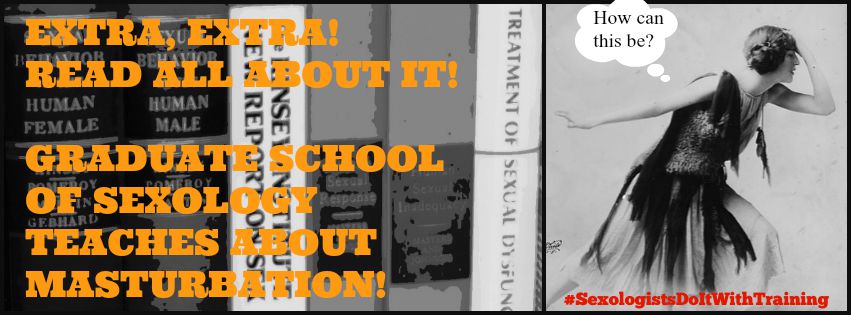
    HowCanThisBe

    On July 17, 2015, six U.S. senators, [Dianne Feinstein (D-Calif.), Dick Durbin (D-Ill.), Richard Blumenthal (D-Conn.), Sherrod Brown (D-Ohio), Chris Murphy (D-Conn.), and Tom Carper (D-Del.)] issued a press release and letter, calling on Secretary of Veterans Affairs, Robert McDonald, to “investigate allegations that a number of questionable unaccredited educational institutions have received G.I. Bill benefits despite federal regulations to prevent it.”

    [Update: as of July 20, 2015, two more senators have joined in asking for an investigation: Jack Reed (D-RI) and Patty Murray (D-Wash.]
    The letter to McDonald, which accompanies the press release announcement on Senator Feinstein’s website, references “GI bill pays for unaccredited sex, Bible, and massage schools,” by Aaron Glantz in Reveal: “The report documents a number of educationally questionable, and in some instances morally repugnant, institutions that have inexplicably received VA education benefits. These include an unlicensed massage therapy school, an institute whose parent organization is a listed hate group, and an institute on human sexuality claiming to be in possession of child pornography.”

    That last school is my alma mater and former employer, the Institute for Advanced Study of Human Sexuality (IASHS) in San Francisco, CA. I am a two-time IASHS grad (2008, 2011). I served as Dean of Students from August 2014 to March 2015. For four years I created and taught a 150-hour online segment of a 300-hour dual-certificate course. As of March, 2015, I resigned abruptly and am no longer associated with IASHS in any professional or personal way. I have facts, and I have perspective.

    The senators say, “The VA is charged with protecting our veterans from unscrupulous entities by enforcing federal regulations allowing only those institutions whose instruction is ‘consistent in quality, content, and length’ with accredited institutions.”

    Glantz’s article purports to uncover a scandal of using G.I. Bill funds to provide education and training to veterans at nonaccredited vocational and educational institutions, a practice which is actually allowed with certain guidelines. However the article does not measure up as investigative reporting. Glantz builds his case against IASHS on the basis of embarrassing and unprofessional comments and actions by the school’s founder, Dr. Ted McIlvenna. However, the article does not present a strong factual case for including the institute in the investigation, given the above criteria of measuring a program’s “consistent quality, content, length.” Aside from the fact that “sex sells,” there does not seem to be a good reason for Glantz to include IASHS in his expose. There are no complaints against the school on the U.S. Department of Veterans Affairs website and very few veterans have actually studied at IASHS using “taxpayer money.”

    With regard to IASHS, Glantz did not present much of substance. His chief beef with IASHS seems to be the fact that such a graduate school acutally exists, that it includes masturbation in the curriculum (as all college level human sexuality programs will), and that it contains the above mentioned restricted materials in its library (though the materials are under lock and key, inaccessible to the public, apparently allowed to be there under CA penal code 311-312.7). That it takes G.I. bill funds seems secondary in Glantz’s treatment of the school. Please note: there are no complaints against IASHS noted on the U.S. Department of Veterans Affairs website.

    I cannot judge the merits of Glantz’s investigation of the other schools in his article, but are many problems with his journalistic treatment of IASHS.

    In order to generate reader outrage, Glantz refers to IASHS as a “sex school” – barely acknowledging its actual status as a private graduate school permitted to grant academic and professional degrees by the State of California since 1976 (approved, but not accredited). (IASHS was previously accredited, but the agency went out of business.)

    More importantly, Glantz also fails to mention that CA law SB1247 (September 2014) has forced IASHS and other non-accredited schools to either seek accreditation pronto or go out of business. In spite of Dr. Ted’s personal feelings about accreditation (as expressed in the article), IASHS has complied with SB1247 by submitting a plan to seek accreditation to the CA Bureau of Private Postsecondary Education (PBBE). In June, 2015, the BPPE approved the school’s plan to apply for accreditation through WASC Senior College and University Commission. (FYI, the school has not operated without oversight. BPPE conducts periodic inspections. Here is an inspection report from July 2014.) IASHS must now commit itself to a complex, expensive, time-consuming process lasting several years before achieving accreditation. Or die trying.

    I am also surprised by the following:

    Glantz does not interview any graduates of the school, or take note of the many leaders in the field of human sexuality who have attended, graduated, and/or lectured at IASHS. He does not mention publications, books, or educational programs and institutions created by IASHS alumni.

    Glantz does not mention that the student body usually consists of medical and mental health professionals, authors, counselors, and community sex educators, as well as bodyworkers, veterans, and others attracted to the field of human sexuality. G.I. bill students are not in the majority.

    Glantz does not mention that IASHS courses and degrees are accepted by the nationally respected American Association of Sexuality Educators, Counselors and Therapists (AASECT) as meeting their educational requirements for those who seek AASECT certification. Many IASHS graduates apply for and achieve AASECT certification after a process which includes supervision and a certain number of clinical or educational practice hours. I have heard that about half of AASECT’s presidents have been IASHS-trained.
    Glantz covers infractions, bankruptcies, and other unethical behavior associated with other schools and school owners and managers in his article. But he fails to make a similar case against IASHS – except for his conversation with the school’s founder.

    Glantz does not examine or compare the IASHS human sexuality curriculum with programs in accredited institutions – such as the new human sexuality Ph.D. program at the California Institute of Integral Studies. He does compare the number of hours IASHS students accrue in various sexuality courses, as compared with the number of hours required by AASECT. If he had, he would have discovered that IASHS course hours exceed AASECT requirements. Glantz does not discuss what is required to earn a certificate, or either a professional or academic degree at the school. He does not provide examples of dissertation topics.

    Glantz offers no information or statistics as to employment or self-employment of alumni in general or veterans in particular.

    Glantz does not examine the professional organizations and ethics that govern graduates in their clinical practice.

    Glantz doesn’t mention what clinical sexologists actually do – which is help people to manage sexual dysfunctions and create more and better intimacy in their lives. Veterans, having many addtional challenges and disruptions to family life and intimacy (not to mention injuries which may cause dysfunction), are a group of people who generally have a proven need for trained assistance in this area.

    Glantz has also chosen to portray the school’s founder and president, Dr. Ted McIlvenna, in the worst possible light. Unfortunately, “Dr. Ted” made this easy for him. On his home turf, Dr. Ted frequently demonstrates a tendency to go for shock value when he could be more mindful of occasions requiring professionalism and gravitas. Dr. Ted forgets that what he says and does may reflect on the students and alumni of the school – in this case, very poorly – or that he may alienate potential students. In the interview with Glantz, Dr. Ted says that only a doctorate will open the door to the restricted materials, then proceeds to reveal them to Glantz, a journalist (who to my knowledge does not the have requisite doctorate). All of this shows remarkably inept judgment from someone who should know better. In any other organizational structure, Dr. Ted’s behavior would probably lead to a reprimand or even a call for resignation, given that his remarks are now prompting a call for a federal investigation into the school. But IASHS is family owned and operated.

    In their letter, the senators referred to “morally repugnant” institutions. And here I must share my own feelings of personal and professional repugnance and dismay. I have always considered IASHS to be a school which promotes a humane understanding of the broadest possible range of human sexual behavior. As students and professionals, we are challenged to examine our own prejudices, fears, and desires – and are expected to refrain from inflicting shame on anyone who comes to us for help, but who may have very different desires and behaviors than our own. IASHS education challenged me to forge a set of standards, practices and ethics which I would adhere to in the service of sexology and my clients. I knew pretty quickly that I would not work with sexual offenders, particularly pedophiles. I made a conscious choice to work only with adult clients who are engaged in consensual behavior.

    Every IASHS student is told that the restricted materials are allowed on the campus for serious research purposes only (most likely under CA penal code 111-112.7, though the code is never named).

    So it sickens me that these materials are exploited as conversational shock value by the IASHS founder, and bandied about as such by the article’s writer. For me, this is where the charge of institutionally morally repugant behavior has some merit. If such materials do have bonafide research value to people seeking to understand and treat sexual offenders, then these materials should be respected (just as we would respect the historical value of materials documenting genocide and other reprehensible human tragedies). We cannot argue that these are important academic documents, and then trivialize them in this manner. These materials were created through cruelty and suffering. We should remember that real people, real children, were made to submit to abuse and sexual violence in order to create such images. We should not make the documentation of their pain and powerlessness a joke or a source of cheap conversational titillation, under any circumstances – including the “let’s make it viral” promotion of a piece of journalism. I condemn Dr. Ted’s, and the writer’s, treatment of this subject.

    So I worry that lack of Dr. Ted’s gravitas in the treatment of these materials will undermine the legal argument that he has them on the premises for legitimate educational purposes. If this is not true, it creates a potential risk for students who may not be protected by CA penal code 311-312.7 after all.

    Aside from this matter, if IASHS is included in an investigation led by the Secretary of Veteran’s Affairs, then let it be included for the right reasons: to assess its curriculum, materials, operations, and policies in accordance with the standards set in place for educational excellence, particularly as compared to other graduate level human sexuality programs. Let the veterans who have trained there make a case for the school, or against. Let other graduates add their voices, opinions, and experiences.

    It is my fervent hope that the upcoming accreditation process (through WASC) will provide IASHS with an opportunity to reform, to update its curriculum, and to correct deficiencies in staffing and policies. I hope an Academic Dean will be hired (there hasn’t been one for many years). I hope the current Dean of Students is allowed to thrive and grow in her position. I hope that a truly independent governing board will be established (as required by WASC), one which can implement high standards of professional management. I hope that the school will refocus its mission and financial resources on the needs of the students. It is my hope that one day the operations of the school will no longer be governed by personal foibles.

    IASHS is unique. It has a treasure trove of historical material, including decades of lectures by many of “the greats” of sexology. Though the school has seen vastly better days, and is in dire need of updated curricula and programs, the people who continue to enroll and graduate are usually stellar and go on to become dedicated clinicians, educators, and advocates who are trained to work compassionately with people in an area too often neglected or glossed over by other professionals. Though the school is in need of reform, it does not deserve to be condemned through a puritanical promotional stunt or subjected to a political witchhunt.

    I’d like my tax dollars to be spent some other way, thank you.

    7/20/15 UPDATE:

    Dr. Michael Ra Bouchard, also an IASHS-trained sexologist, has posted the following in LinkedIn and also given permission for me to share his thoughts here:

    Thanks for superbly articulating a measured response to this disturbing article, Amy.

    For the record, as both a graduate and faculty member of IASHS, I know for a fact that no one involved with the Institute, including Dr. Ted of all people, would ever make light of anyone’s suffering at the hand of sexual abuse or for that matter any other form of cruelty or abuse.

    On the contrary, the Institute’s “Sexual Bill of Rights” which Dr. Ted helped to create is quite specific that sexual abuse, constraint, coercion, exploitation, violence, fraud, and all nonconsensual actions imposed upon others are incompatible with our values and are therefore always reprehensible.

    Sensationalizing sexuality and going for the lowest common denominator are long time favorites of journalists, and why not, as such a tact often succeeds in garnering much sought-after attention to their story.

    In this instance the writer’s apparent tendency for sensationalism and Ted’s own propensity for shock value combusted when the highly inflammatory topic of sexual abuse was mixed in. While unfortunate, no real harm was done except to the Institute and Dr. Ted’s reputation.

    Human beings are notoriously fallible; despite the article’s flippant portrayal of Dr. Ted, anyone who knows him knows that he is a good man who has dedicated his life to the betterment of his fellow man. He and the Institute deserve much better than this hatchet job.

    There is no need for a congressional witch hunt of the Institute as there are no witches there to find, let alone burn. If there is to be any congressional investigation, let it be on how we can improve the sexual health and happiness of our people.

    Just imagine all the good that could be done for America should our government and the Institute actually work together towards the betterment of all Americans by designing sound national policies and comprehensive sexuality education programs that promote the sexual health and wellbeing of everyone throughout the country.

    Now wouldn’t that be wonderful!

     

  • Dearth of Representation – Images of Black Lovers in Sexology

    Dearth of Representation – Images of Black Lovers in Sexology

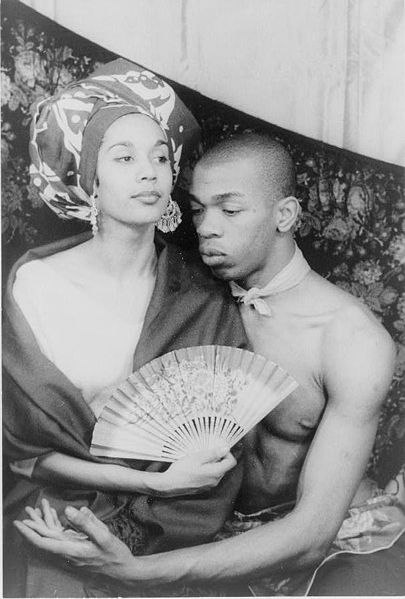
    Geoffrey & Carmen Holder, March 3, 1955 by Carl Van Vechten (1880-1964). Public Domain.
    Geoffrey & Carmen Holder, March 3, 1955 by Carl Van Vechten (1880-1964). Public Domain.

    As a sexologist who teaches, and who in course of teaching creates slideshow presentations and other materials, I’ve been frustrated by the overwhelming pervasiveness of white images and the lack of good quality, sex-positive images of black people and other people of color. Due to financial constraints, and because I have a finicky aesthetic, I search Wikimedia Commons for public domain and creative commons images in the categories of fine or erotic arts. In these categories (and even in the “human couples” category), beautiful and evocative images of loving black couples, such as the fine photograph  by Carl Van Vechten (above), are difficult to find. You can find loving black couples on public health posters however, and I understand the reasons for this. However, I wish that these images weren’t “always” so entwined with the context of disease prevention, know what I mean? Or maybe you don’t. I’m having a hard time expressing the nuances here. The image below is positive, sweet, caring, very attractive – all the things it should be in a public health message for safer sex – but I guess I wish we saw these same types of images more often in other mass media contexts, including ads for all kinds of products. As an educator, I want more portrayals of positive, intimate black relationships, of all genders and persuasions, to choose from. As a citizen, ditto.

    A_black_couple_lie_on_a_bed_together_smiling;_advertisement_Wellcome_L0052208

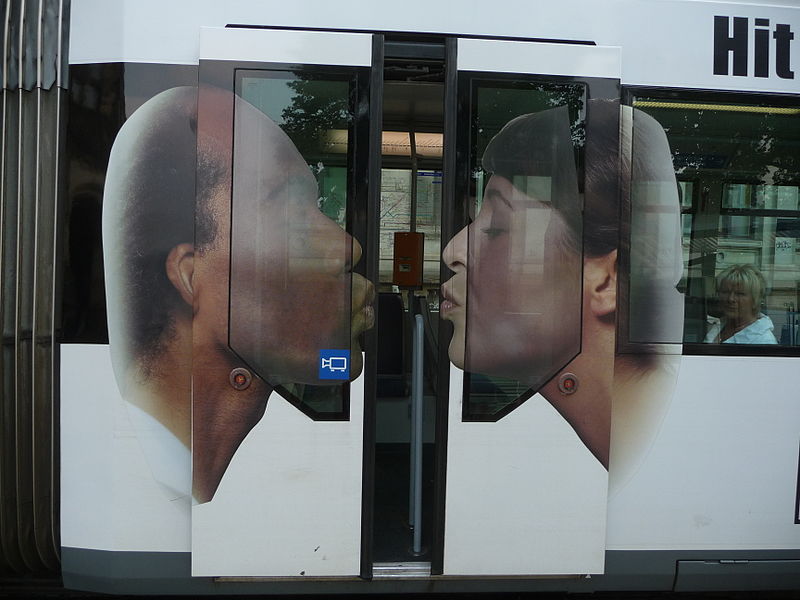
    I am delighted to find this series of photographs, below. The kissing couple below adorns a tram door. I think the this art piece is wonderful.

    800px-Tram_Bremen_01
    #1 Kissing couple on the doors of a tram in Bremen, Germany. Photo by Immanuel Giel, May 2009. Public domain.
    800px-Tram_Bremen_02
    #2 Kissing couple on the doors of a tram in Bremen, Germany. Photo by Immanuel Giel, May 2009. Public domain.
    Tram_Bremen_03
    #3 Kissing couple on the doors of a tram in Bremen, Germany. Photo by Immanuel Giel, May 2009. Public domain.

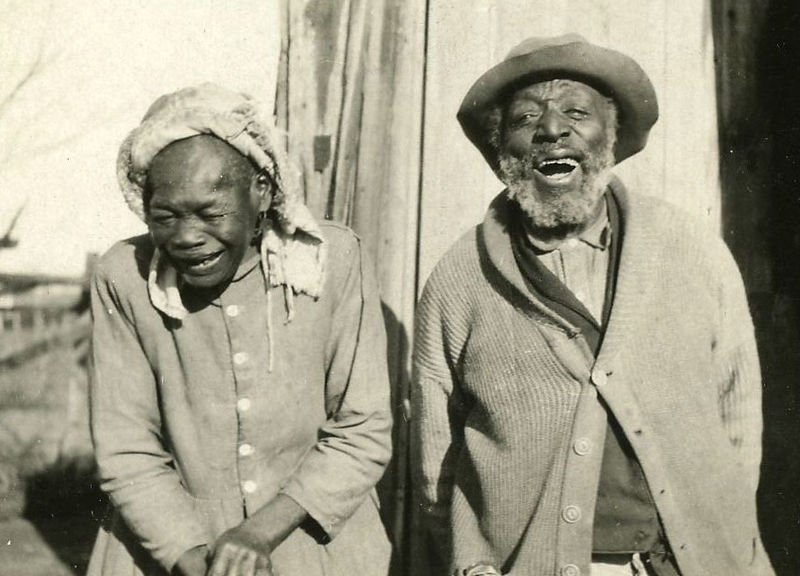
    I also like this photograph of an elderly couple laughing. There’s joy here.

    800px-Oklahoma_Sharecroppers-1914
    Oklahoma Sharecroppers, 1914. Found in a box of photographs and submitted to Wikimedia Commons by “Father of Don O’Brien.” Creative Commons.

    And below is a quiet, peaceful interlude in the lives of two people (and their pet). But the photo was taken for an Environmental Protection Agency report and discusses the growing disparity between black and white income levels in Chicago.

    405px-BLACK_COUPLE_AND_THEIR_DOG_IN_THEIR_APARTMENT_IN_SOUTH_SIDE_CHICAGO._FROM_1960_TO_1970_THE_PERCENTAGE_OF_CHICAGO..._-_NARA_-_556171
    Black couple and their dog in their apartment in South Side of Chicago. Photograph by John H. White (1945- ). Taken June, 1973. Copyright. Photo archived by EPA, given to Wikimedia by the National Archives and Records Administration.

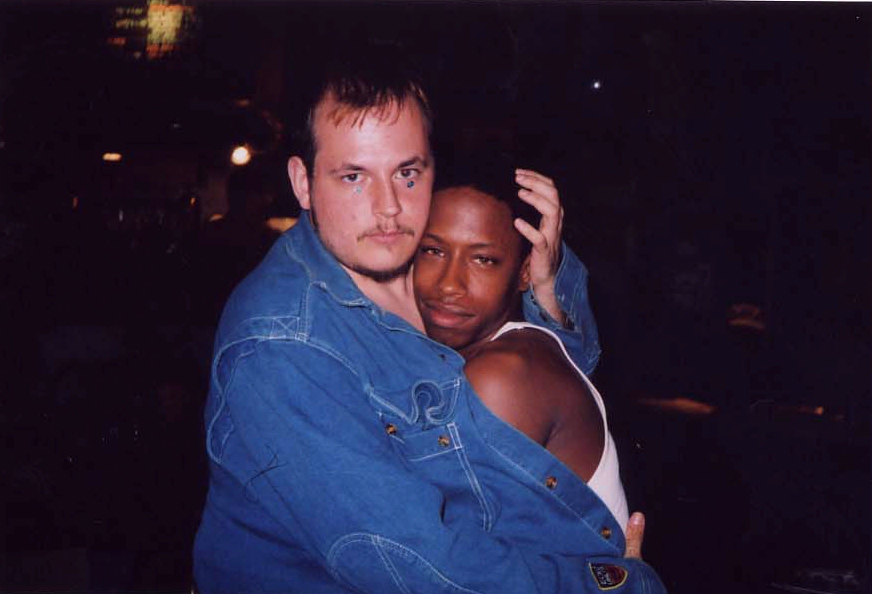
    The photo below is also poignant, loving, cherishing.

    TwoMenHugging2
    Photo by Pacien, April 2005. Creative Commons.

    Though portrayals of black lovers are rare (aside from shots of celebrity couples), it’s even harder to find a good anatomical drawing or image that is not white. Sure, a few people have posted genital photographs on Wikimedia Commons, but they are mostly unsuitable for sex education materials. I’m automatically suspicious, for example, of any shaved images on posted on Wikimedia, even though shaving is a common practice.

    Of course, if I put on my erotologist hat, I can say all kinds of things about various images and forms of representation – but at the moment, I’m writing strictly about the difficulty of finding good, free, respectful sex, body, and relationship images that convey sexual, gender, cultural, ethnic, etc. diversity (without being fetishized or exoticized). I will also note that at IASHS, where I currently serve as Dean of Students, we have an enormous amount of erotic books, films, and artwork. But, due to a donation of a massive collection of gleaming sculpture, there’s currently a heavy emphasis on the female form in our common areas. And even so, we don’t seem to display much that isn’t white and hetero- (and cis-) centric. I’m on the lookout for a wider variety of images for my own office, as this lack of visual diversity troubles me.

    More to come on related topics.

  • WOCSHN – Women of Color Sexual Health Network

    WOCSHN – Women of Color Sexual Health Network

    Today I simply want to present the link to this excellent article/essay by the Women of Color Sexual Health Network which challenges human sexuality professionals to (1) recognize their complicity with myriad manifestations of structural, systemic, (and yes, even personal) racism and to (2) actually do something about this.

    I’d like the above article to speak first, before I offer a response. Also, here is the link to the WOCSHN Statement of Solidarity.

    Tomorrow (or maybe the day after), I will write about how I want to take action and address the challenges in the article.

  • Resigned as Dean of Students, IASHS

    Resigned as Dean of Students, IASHS

    UPDATE March 29, 2015:

    In August 2014, I announced my new position as Dean of Students for the Institute for Advanced Study of Human Sexuality in San Francisco. At that time I was very excited to have the opportunity to work at the place where I’d studied. I’m devoted to sexology, and was aware of IASHS as a unique resource. As a volunteer grad, I redesigned the IASHS website and created custom graphics and YouTube videos for the school. I even set up Twitter and other social media accounts so that the school could reach out to the internet generation.

    At the time I was hired as Dean, I assumed that my innovative volunteer efforts and my “internet saavy” was one of the reasons I’d been approached about the job.

    During the time I worked the Dean’s desk, I enjoyed engaging with enrolled and prospective students. I created communication procedures of complete transparency so that any member of the staff would be able to access (a) the email I used for student communication and (2) track follow-up communication in bi-monthly reports.

    I was also given the task of sorting through potential accrediting agencies and procedures as IASHS is now mandated, under CA law SB-1247, to submit a plan for accreditation to the Bureau of Private Post-Secondary Education by July 1, 2015.

    Unfortunately, I was not able to do the good work that I wanted to do for the school – including bringing a logical, strategic and pro-active approach to preparing for the upcoming accreditation process. Because I actually examined websites and manuals for several potential agencies – and they all mandated institutional self-reflection, assessment, and sometimes procedural or curricula changes as part of the long (and costly) process – I saw an immediate need to upgrade certain curricula materials. (Students have been complaining about outdated materials for years). I had hoped to convince IASHS that this could easily be done through “print on demand” technology. So I put in countless hours of my own time to update and redesign a draft of a core textbook (The SARguide), as an example of what could be done for almost no money at all (since I was prepared to continue donating my time on that particular book). I also began to construct “demo” courses using Moodle, so that IASHS core courses could be available online, as well as upgraded and updated. This was also mostly done on my own time.

    Unfortunately, I was not allowed a chance to present the demo materials, or to explain how they could help advance the cause of accreditation, not to mention making the students happier and prospective students more likely to enroll. When I understood that these efforts were unwelcome, I knew it was time to move on.

    In my job, as long as I saw the potential for contributing to a “new, improved” IASHS, I could feel good about talking to prospective students. As it is, I can no longer recommend or promote the school until it has made important improvements to materials and certain policies that affect the students. When that day comes, I will be happy to once again Tweet and FB the glad tidings.

    I hope the next Dean – whoever it may be – has more success in contributing to the organization’s future. Like many other students and graduates, I’d like to see IASHS continue and shine.

  • Multicultural Competence is Essential

    Multicultural Competence is Essential

    Any truly ethical “helping professional” will make great effort to attain a measure of “multicultural competency” in order to effectively assist people who are of different backgrounds, religions, ethnicities, countries, cultures, etc. than the person who is doing the “helping.” This is important because offending a person – intentionally or otherwise – means the “helping” is less likely to happen. There will be no trust, and without trust, no rapport, and without rapport nothing can be achieved on behalf of the client, student, patient, consumer.

    Helping professionals include licensed clinical social workers, medical personnel (doctors, nurses, clinic staff, etc.), mental health professionals, licensed professional counselors, sex therapists, sexologists, sexuality educators, sexual health educators, physical therapists, case managers, and so on. Many of these folks will spend time and money on training to improve multicultural competency, either through academic or continuing education venues, such as conferences, workshops, etc. Professional and scientific literature also proves and endorses the importance of multicultural competency and awareness in ethical clinical practice.

    To get a rough sense of the range of multicultural ethical considerations and practice expectations which affect the competency of helping professionals, check out these links. In some cases these documents represent decades of work.

    Multicultural Issues in Social Work, Vol. 2 – book description.

    The Ethics of Cultural Competence by Michael Paasche-Orlow, MD, MPH, MA (PDF of the entire article). Here’s a quote from the abstract: Though rarely stated explicitly, the essential principles of cultural competence are (1) acknowledgement of the importance of culture in people’s lives, (2) respect for cultural differences, and (3) minimization of any negative consequences of cultural differences. Culturally compe- tent clinicians promote these principles by learning about culture, embracing pluralism, and proactive accommoda- tion. Generally, culturally competent care will advance patient autonomy and justice.

    AMCD Multicultural Counseling Competencies – PDF of guidelines. Here’s a quote: Culturally skilled counselors understand and have knowledge about sociopolitical influences that impinge upon the life of racial and ethnic minorities. Immigration issues, poverty, racism, stereotyping, and powerlessness may impact self esteem and self concept in the counseling process.

    American Psychological Association Guidelines for Providers of Psychological Services to Ethnic, Linguistic, and Culturally Diverse Populations.
    A Review of APA & ACA Cultural Guidelines Implementing Multicultural Health Care Standards, which mentions the need to “develop culturally appropriate materials and programs.”
    Note: This blog was revised on May 7th after the May 6th announcement that the controversial “hula” STD alert app will receive a name change in the near future. I thank Qpid.me CEO Ramin Bastani for his decision to do the right thing and for his willingness to learn from the Native Hawaiians who contacted him.