Category: Sex Counseling & Sexology

  • Objectum Sexuality Media Musings

    Objectum Sexuality Media Musings

    Feb. 2020 Update: A team of UK researchers have published a peer-reviewed study in Dec. 2019, which provides strong evidence that my 2010 hypothesis about OS links to autism and synesthesia are correct. Link to PDF of 2019 study: Simner et al. OS-Autism:Synesthesia Nature 2019
    Link to PDF of my 2010 survey article: LOVE AMONG THE OBJECTUM SEXUALS

    Earlier this year Denham Hitchcock from Australia’s Channel 7 Sunday Night interviewed me for the “Object Love” segment, which aired May 19, 2019 (right after the full moon in Scorpio, please note!). Unfortunately I haven’t seen it yet as the link on this page doesn’t load or play for me, for some reason. But I am looking forward to watching it someday soon.

    I had a wonderful time the day we filmed and enjoyed meeting Denham, Karen Willing the producer, and the sound and light guys. They flew into SFO the night before, drove three hours to Lake County the next morning, shoved furniture around (good thing I vacuumed under the couch!), and filled the living room and kitchen with cases of equipment. I made breakfast for them too. (Denham kept urging the others to eat, claiming that I was “a feeder.” I wonder if his new mother-in-law is one of those too?) It was all rather thrilling and good fun! Afterwards, I realized I’d be perfectly happy if I could only be trailed by a handsome reporter and a fabulous production crew for the rest of my life… (That’s a joke, folks. Mostly I live like a hermit with several cats.)

    Because I’ve learned a thing or two since 2009, when I coped with the bizarre aftermath of appearances on Good Morning America (Apr.) and Tyra Banks (Oct.), as well as National Geographic Taboo, Google now helps me track where I show up in international media. I’ve turned up in the strangest places, mostly thanks to stories about Objectum Sexuality (O.S.). My 2009 article, “Love Among the Objectum Sexuals,” published in the Electronic Journal of Human Sexuality, still seems to be the “go to” place for journalists who are interested in this topic. I get several inquiries a year. And there are many more who write a story or cite me in a study without ever getting in touch. That’s okay.

    I do this partly because it’s a challenge for journalists to turn a complicated issue into reasonable soundbites and there are always mistakes. For example, I’ve been called a psychologist when I’m actually a sexologist. (I’ve also been called a “whack job of a sexologist” which gives me weird Lorena Bobbitt vibes, but whatever…)

    This recent coverage, with subsequent spin-off articles, has produced its share of hyperbole and error.

    (1) I’m not comfortable with this article’s claim that I’m “the world’s foremost expert on the condition known as object love.” I think the people who are Objectum Sexuals are the true experts. I just helped compile and organize some data. It is true though that I published the first sexological article based on a survey (see link above). But other academics have also written about O.S. They just don’t come up as quickly on the search engines, I guess.

    (2) My survey was of 21 English-speaking members of Objectum-Sexuality  Internationale.  Not dozens, as the above article claimed. It’s the qualitative data that really mattered. Looking back, I should have approached this inquiry as a cultural anthropology type of study, but then, I’m not a cultural anthropologist.

    (3) Object personification synesthesia–cause or correlation? I’m rather happy that this article leads with object personification synesthesia instead of objectum sexuality, actually. It makes for a refreshing change. However… it leaps ahead with an assumption of causality which has not yet been proven. [See Feb. 2020 update above.]

    In 2009 I proposed this form of synesthesia as a plausible and possible explanation for some people who are affectionately, romantically, and/or sexually oriented towards objects.

    The synesthesia explanation seems plausible from a sexological view because human beings have erotic responses to just about anything and everything. It is plausible from a psychological view because if some people sense personalities in objects and have emotional responses to some of them, then it’s logical to assume that some of those emotional responses may involve love and sexual attraction.

    In addition, synesthesia (in all its myriad forms) is higher among people who are autistic. And since a certain number of the O.S. people I surveyed were either diagnosed as autistic or felt they had significant autistic traits, it seemed logical to wonder if there was a correlation, or even possibly a causal relationship. I did do another, shorter survey and a fair number (don’t remember it now) of O.S. folks reported other kinds of synesthesia-like experiences.

    However, I’ve always said “this needs more study.” And I have never, ever claimed to be an expert in object personification synesthesia, as this article claims for me.

    (4) As a sexologist, I don’t view O.S. as a “disorder” or as pathological in any way. I view it as a legitimate sexual and/or affectionate/romantic orientation that seems rather rare (but could be more common than we realize). This article calls O.S. a “bizarre relationship disorder.” Sigh.

    (5) Media has been a curse as well as a blessing to O.S. people. On the one hand, it is very good that people who love objects know there are others like them. That’s the good that media does.

    But when media reports include distortions, hyperbole, and inflated assertions, this deters legitimate researchers. No one, except eccentrics like me, will want to tie their present and future career to something that is a laughing stock among their colleagues. Yet without ethical, intellectual inquiry into this topic, there’s a danger that media could also inflame persecution of O.S. people. Such persecution could include hate crimes, discrimination, deliberate destruction of someone’s object love, even development of so-called “conversion” therapies (which are known to be unethical as well as cruel), and so on.

    (6) My focus on O.S. has always been to foster a kind of “cultural competency” among helping professionals. O.S. people have the same needs as other people do. They need their relationships and preferences to be accepted and honored. If they are grieving over the loss of an object or the loss of a relationship with an object, they need that loss to be acknowledged and tenderly held. They do not need to be told they are crazy or traumatized, unless their history does in fact contain co-morbid mental health conditions or actual trauma. In that case, you treat the trauma or the disorder, NOT the sexual or affectionate orientation.

    Please see my free course for clinicians, on this page and spend a couple of hours with a more useful perspective on Objectum Sexuality.
    objectum_sexuality_-_marsh

    Meanwhile I continue to pursue other eccentric sexological interests: erotic hypnosis and an inquiry into spectrosexuality.

    ####



  • Objectum Sexuality-Further Thoughts

    Objectum Sexuality-Further Thoughts

    UPDATE: Australia’s Channel 7 Sunday Night segment on “Object Love” aired this weekend (May 19th). I’d like to make a correction. The segment summary says I surveyed 40 people. It was really 21. I don’t know how they got 40. The article referred to in the next paragraph clearly states 21 people. I haven’t seen the broadcast itself yet.


    It’s been ten years since I designed a simple survey for the English-speaking members of Objectum-Sexuality Internationale (OSI) and nine years since my survey results article was published in the Electronic Journal of Human Sexuality.

    Since I’ll be speaking about Objectum Sexuality (OS) with Australian reporters this coming Sunday, I thought I’d give some background regarding my history with this topic and the OS community.


    This quote below is from “What Is OS?” on the OSI website.

    Objectùm-Sexuality is an orientation to love objects.

    Sexual orientation is defined as the nature of sexual preference while the prolific definition stands as: the direction of someone’s sexual desire toward people of the opposite gender, people of the same gender, or people of both. This does not include objects.

    However, orientation itself is defined as: a complex mental state involving beliefs and feelings and values and dispositions to act in certain ways. This does include objects as we see it.

    We love objects on a very significant level and many of us in an intimate way. This feeling is innate. Objectùm-sexual love comes for most in a similar awakening as other sexualities at the start of puberty. This is often followed by an acute awareness that we do not relate to peers due to the source of projected feelings. Often objectùm-sexual people feel outcast or pressured by mainstream sexuality with a helpless feeling that we cannot change what comes so naturally to us.


    2009 and Beyond: I Encounter Objectum Sexuality

    In October 2008 I’d received my DHS (a professional degree, Doctor of Human Sexuality) from the now defunct Institute for Advanced Study of Human Sexuality (IASHS) in San Francisco. (In 2011, I earned my Ed.D. in Human Sexuality). One of my two student research projects was into sexual concerns experienced by people with Asperger’s Syndrome and their partners. (Since then, the DSM-V has removed Asperger’s as a separate diagnosis and replaced it within the term ‘autism spectrum disorder.’)

    In February 2009, a young relative of mine who is autistic sent my kids a Valentine drawing of San Francisco’s Sutro Tower, surrounded by hearts. My oldest kid used to have friends among the Victorian houses we’d pass on the way to nursery school, particularly “Onion Dome-y” who was supposed to jump into a “shape truck” and follow us to school, and my youngest used to pretend to eat pictures of ice cream cones by plucking them off the page, so I didn’t think anything of the valentine. I adore childhood imagination.

    However, I must have been fated to encounter the adult version of Object Love. The very next day, a sexology colleague sent me a link to Married to the Eiffel Tower (2008)–a film that I would later learn was denounced as exploitive by the OS commuity. I visited the OSI website and saw that a number of their members were on the Asperger’s/autism spectrum. Given my student research, I became intrigued. I contacted OSI by email and began talking with Erika on the phone.

    I was concerned about the sensationalisation of OS sexuality and eventually volunteered to do a simple survey as an “in-house” vehicle for the members of OSI so they could learn about themselves as a group and have some preliminary data to offer reporters and health practitioners. I hoped this would enable them to be taken more seriously.

    Though I took a lot of care over the project, this simple survey was not designed as serious research instrument. Its main value would be in the qualitative responses–comments from OS people about their experiences and concerns. But when Erika Eiffel was asked to tell her story on Good Morning America in April, 2009, she told the reporters about the membership, and GMA sent a crew to my house.

    I was not prepared for what happened next. Erika and I were fielding inquiries from Laura Ingraham (we turned her down) and other media. I wound up–inadvertantly–on a right wing radio station on the East Coast but was able to get in a couple of jabs until the host hung up on me, live! The two of us were vilified all over the internet. My favorite insult was “whack job of a sexologist” in a troll blog. I went from media infant to media traumatized in the blink of the eye.

    I wish I could say “media saavy” happened sooner rather than later, but this was not to be. The Tyra Banks appearance was very high pressure (they were filming four shows in one day) and I suffered from not having an adequate sense of the show format (I didn’t own a TV at the time and didn’t really know who Tyra was.) Plus, I had no idea of how to direct my TV make-up and hair, so that I could look like my normal self but better. Instead, the make-up artist, hearing I was a sexologist, got all excited and made me up as a “Fifth Avenue Cougar.” Lesson learned: never accept high gloss over a lipstick if you’re “of a certain age.” Lipstick creep will cause a show guest to melt-down at the worst time.

    I know. It happened to me.

    Plus, I left my comfortable Berkeley sandals in the dressing room, which must have been picked up with tongs and tossed in the wastebasket after I left. I think I can honestly say that both Erika and I were somewhat stressed by the experience, but she was a media veteran by then. I flew home, though, hoping that all this television stuff might be a boost to my career. And I was interested to see that Erika, as always, was credible and articulate enough to win over even a tough customer like Tyra Banks!

    A few months later, National Geographic Taboo was much more relaxed. Instead of flying to New York, I drove to Palo Alto and sat in front of a green screen. I did a second filming with NG Taboo several months after that. Fortunately, human puppy training was the topic then–which was a bit of a relief, actually. I’d begun to worry that OS was all I’d ever be asked about.

    Another thing: In the summer of 2009, I arranged for Erika to give a presentation on OS to a number of sexologists, therapists, and medical professionals at IASHS during 2009’s eight-day, “Sexual Attitude Restructuring” (SAR) program. This was a tough crowd–highly educated and rather skeptical–but Erika did a great job and won people over to an understanding of Objectum Sexuality–just as she would later do with Tyra and so many others.

    Since the flurry of 2009 and 2010, there’ve been several media inquiries a year, and usually they are pretty much the same old, same old. Often the journalists want me to find an OS individual for them to interview. I alway refer them to OSI. The community seems to have become more wary and more sophisticated about “gatekeeping,” to shield members against exploitative projects. That’s important, given the carnival freak show sensibility that prevailed in early coverage.

    My interests as a sexologist have always been broad, including the sexological and erotic uses of hypnosis, neotantra, sexual and gender human rights, and much more, but sometimes I track where my name and this issue have been paired in media. There are always surprises. For example, today I discovered that my article has been monetized and is on sale through iTunes by the Gale Group, “an affiliate of Cengage Learning.” So for $5.99 you can read an article about my pro-bono research but I’ll never see a penny of this. I’ve never minded the article being open-source and free to all the world, but the fact that it’s now on sale without my permission, irks me. Just read it for free, here.

    The Need for Professional Cultural Competency

    objectum_sexuality_-_marshI’ve always been afraid that media coverage of OS may have distracted professionals from the notion of learning more about OS, particularly in the context of sexual literacy and cultural competency.

    This world is rough and often dangerous for people of sexual and gender minority communities. It doesn’t help when the clinician or therapist is distracted because they don’t know enough about the broad range of human sexual behavior and genders and may be focused on that, rather than the actual presenting problem (which might be a toothache or bereavement and have little to nothing to do with their partnership with a beloved object (or two or three).

    With these concerns in mind, several years ago I created a two-hour class called Objectum Sexuality —  A Clinician’s Guide. It was wildly ignored. But now I am going to share that class on my website now, just in time for Valentine’s Day…

    A New Experience

    I am readying now for what I think will be a really good media experience this coming Sunday. I sense a fresh approach from a skilled, curious, and compassionate reporter who is used to taking on difficult and complex topics. I hope that I’ll be able to provide a clinical context and address some of the points that I consider important, but which seldom get much play.

    Updates coming soon!

    ####

  • Sexual Health for Trans Men Who Have Sex With Men (TMSM)

    Sexual Health for Trans Men Who Have Sex With Men (TMSM)

    Here is the slide show from the webinar I attended today concerning sexual health and HIV prevention strategies for trans men who have sex with men. The webinar organizers wanted this information to be widely shared, so I am doing my part. You can download a PDF of the slide show here: TMSM+WEBINAR

    I was very pleased to attend the webinar. At an hour, it was far too short. It makes me realize how much I miss the sex positive/sexual health positive community of the SF Bay Area. Honestly, there are so many good people and organizations providing care and resources to groups of people I really care about.

    There was a lot of good information, but one of the best quotes was, “playing twenty questions about my gender is not good foreplay.” (Unfortunately I forget who said this!) The message: educate yourself first about gender variance before dating a person who is trans, non-binary, or otherwise gender variant. Take that as a pre-Valentine’s Day tip!

    Big thanks to Shawn Demmons, MPH, the main presenter, and to the panelists: Kay Nielson of the SF Aids Foundation; Niko Kowell of the SF Community Health Center; and Marion Pelligrini, also of the SF Community HEalth Center. I truly appreciate the opportunity to learn more.

    unnamed

  • Hypnotic “Desensitization” For Reluctant Erections, and Then Some

    Hypnotic “Desensitization” For Reluctant Erections, and Then Some

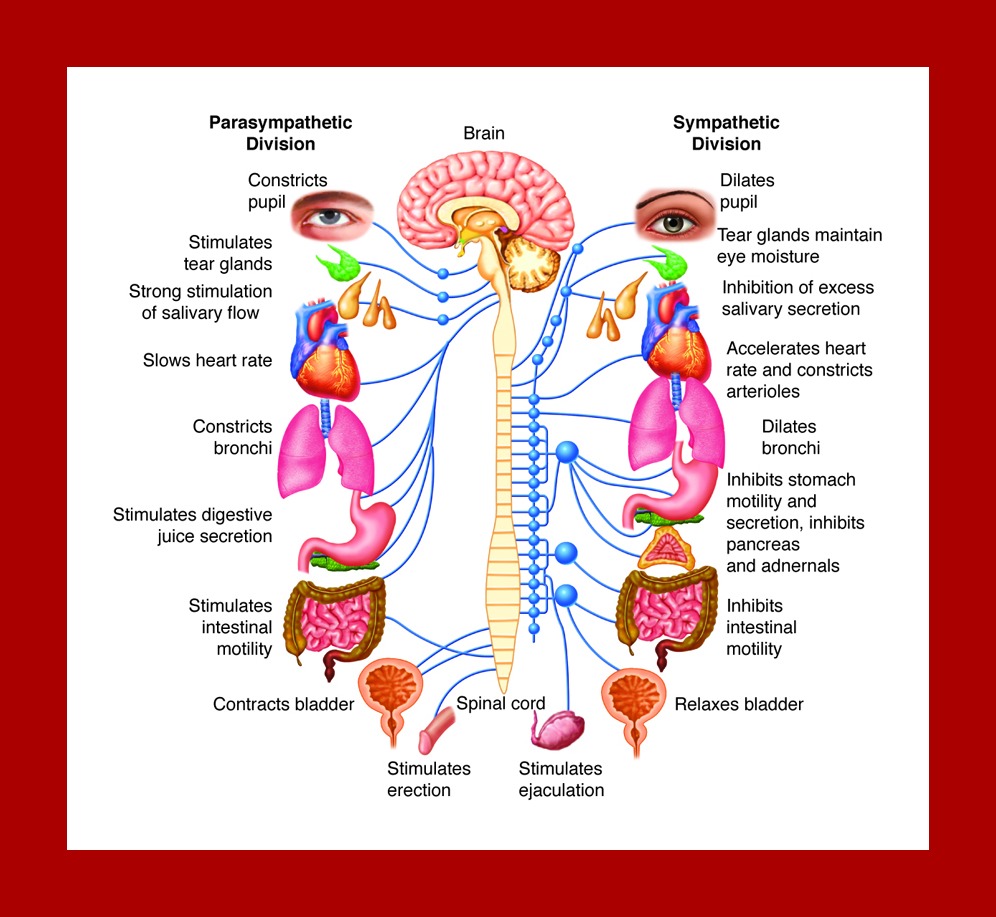
    No, this doesn’t mean making your penis “less sensitive,” it means soothing your nervous system responses to stress and worry. The advantage of being soothed is that if you have a male body, you are less likely to become so worried about a sexual encounter that you flip into sympathetic nervous system responses (“fight, flight, freeze”) and thus experience diminished blood flow to your penis.

    Erections are all about blood flow, so you want to be in your parasympathetic nervous system mode (even if you are excited!). Parasympathetic mode is sometimes dubbed “feed and breed,” with good reason. You need to be in this mode to experience and sustain sexual arousal (this is generally true for all humans). (Oddly, sympathetic mode governs ejaculation.)

    NervousSystem
    Image author and source unknown.

    So what can you do, assuming you have no medical problems that interfere with your circulation (do get screened for diabetes!) or other aspects of sexual health?

    Change your erotic mindset. One thing you can do is focus on your (and your partner’s) sexual enjoyment, rather than worrying about function (Klein, Sexual Intelligence, pp. 229-231). One way to do that is to cultivate a variety of pleasures beyond penetrative intercourse (anal or vaginal). These range of course from oral sex to erotic massage to anything else you both enjoy. I teach erotic hypnosis to people who want to learn to do this with their lovers–proving that “the brain really is the largest sexual organ.” There are numerous ways to have a rollicking good time in bed (and out of it), that have very little to do with a hard penis. In fact, Annie Sprinkle, Ph.D., has a brilliant video on YouTube that cheers on the soft penis as a wonderful, juicy, pleasure-giving part of the body. I’m completely in favor of her “Soft-Cock Revolution” and wish more partners of penis’d people would get on board with this.

    Understand that erection fluctuations are normal. Bernie Zilbergeld’s classic books, Male Sexuality (1978) and his revised The New Male Sexuality (1992), has a chapter called “It’s Two Feet Long, Hard as Steel, Always Ready, and Will Knock Your Socks Off: The Fantasy Model of Sex.” I think that title says a lot about erection expectations, don’t you? I wish every cisgendered* male would read this book, even though it was published so long ago.

    Understand the intelligence of your body, especially your penis. If you feel you may have worried yourself into a cycle of reluctant erections you might need more emotional safety in your relationship(s). Emotional safety would allow you to remain in parasympathetic mode when you’re with your partner. This is more important than you might imagine. Most of the men who come to me for help with “erectile dysfunction” (I dislike that term more and more every day) are younger men who have come out of a long term relationship and are just now starting to date again. They’re scared, yet feeling pressured to get back into circulation. And they expect to be “ready, willing, and able” without regard for their own (or their partner’s) emotional context, even if they are no longer in their teens. I’ve sometimes had clients “talk with” their penises under hypnosis or later ask them to write letters to themselves from their penises. This can be very insightful, odd as it sounds!

    I also teach partners to do “affectionate” hypnosis as a regular part of their week–each spending five to ten minutes in light trance while the partner pours loving words of appreciation into their receptive ears. Then switch! This can do a lot to create feelings of bonding and emotional safety in relationships.

    Breathe deeply and focus on the present moment. Forget about your “performance” and get back inside your body. For some men, this can actually be enough to help overcome the triggered leap into sympathetic nervous system mode. It’s a learned skill. Those who already do yoga or meditation will generally pick it up more easily.

    Consider hypnosis and self-hypnosis to re-set your nervous system responses. Usually people are triggered by a series of escalating steps toward sexual intimacy. I typically ask my clients for a list of (up to ten) things that begin to make them feel worried, and then we rank them in order of least worrisome to most worrisome. The idea is that we “desensitize” their reactions to the less stressful steps first–like texting someone for a date–and then work to diminish sympathetic nervous system responses to the more intense triggers like “unhooking my wife’s bra,” “putting on a condom,” or “starting to thrust.” This process takes repetition and practice. I teach self-hypnosis so that my clients can also practice this at home.

    Hypnotism Male Sexual Dysf Handout– Here is a list of some early studies using hypnosis to improve male sexual function.

    What I’ve just described is a focus simply on the cisgendered male client, without taking the partner(s) into account. Often the partners have their own responses to a “dysfunction” which may range from exasperation or frustration in the moment to “he’s not really into me” or “I must be too fat” (or other body image issues and emotional insecurities). Often the partner needs basic adult sex ed too–including reasonable expectations of how penises work and what other lovely, wonderful things can be enjoyed together. Emotional safety and generosity for both (or all) partners are crucial for re-inventing mutual sexual enjoyment. So I like to also have some session time with the partners as well.

    ####

    *”cisgendered” means your own sense of gender is congruent with your gender assignment at birth.

  • Disparities in Health Care

    Disparities in Health Care

    As a complementary health provider, I am challenged, and as a new resident of a poor rural county, I am keenly aware of what we lack here with regard to health services. There’s no urgent care clinic in the area, for one thing. It’s either wait for an appointment (with a shortage of doctors) or go to the emergency room.

    However, there is another type of disparity. The racial/ethnic (and economic) disparities that come into play whether you are urban, suburban, or rural. Below are some sources of information about this horribly tragic situation. And I’m not exaggerating. I suspect that here in Lake County, this situation is worsened by the lack of resources.

    • Unnatural Causes – Is Inequality Making Us Sick? This documentary series provides a critical grounding in just how these disparities affect people.

    Additional Unnatural Causes documents for teaching, media, etc.

    • Race, Ethnicity, Culture, and Disparities in Health care, L.E. Egede, M.D., National Institute of Health (NIH) website, 2016.

    • Black Mothers Keep Dying After Giving Birth. Shalon Irving’s Story Explains Why, Nina Martin & Renee Montagne, NPR, Dec. 7, 2017.

    •Inequality in Health Care is Killing African-Americans, Vernillia R. Randall, Human Rights, (American Bar Association), 2011.

    • Reaching for Health Equity, Centers for Disease Control (CDC), 2016.

    Does this program even exist anymore in the current administration?

    My questions are: What roles can complementary health and wellness providers play in helping to address such disparities? And what can we do to promote greater equity in access and care, even as we promote general health and wellness?


  • Erotic Hypnosis Podcast Interview with Dr. Nazanin Moali

    Erotic Hypnosis Podcast Interview with Dr. Nazanin Moali

    So happy this interview has just been published on line. I had a great time talking with Dr. Moali! Give a listen!

    http://www.sexologypodcast.com/2018/03/06/erotic-hypnosis-with-dr-amy-marsh/

    Dr. Moali has interviewed dozens of super-interesting people. Please check out her list of topics and guests!

    And here are more media links about my work with erotic hypnosis as a sexual and romantic enrichment technique.

    Jeremy Glass describes his experience in Thrillist (and no, his brain wasn’t really “fried.”) This was in 2014, so one hopes he is now sufficiently recovered.

    The intrepid Krissy Eliot describes her experience as “The Big Bang” in the Bay Area Reporter (2015). Really, I’m flattered!

    Another podcast interview with Dr. Martha Tara Lee in Singapore (2015).

    My friend, the late Dr. David Pittle, interviewed me a few years ago on his podcast series, Joyful Authentic Living. Scroll down for the session with me. We touch on erotic hypnosis. He interviewed many other excellent people as well. I really miss David. Until last week, I had no idea he’d passed in December 2017.

    One of my old BlogTalkRadio episodes for Love’s Outer Limits, giving information about my survey of erotic hypnotists.

    And here are the links to my two Carnal Nation columns on this topic (below), written in 2010.

    Part One.

    Part Two.

    SaveSave

    SaveSave

    SaveSave

    SaveSave

    SaveSave

  • Romantic and Erotic Hypnosis

    Romantic and Erotic Hypnosis

    March 6, 2018 Update: Give a listen to this recent podcast interview with Dr. Nazanin Moali. I got to talk about one of my favorite topics – erotic hypnosis! (P.S. Dr. Moali has interviewed quite a number of really interesting people in her Sexology podcast series. Check it out!)

    I celebrated this past Valentine’s Day by offering a class in Romantic Hypnosis at a local senior center. I’m new in the area, and so I wasn’t upset when only three people showed up. It was a fine class anyway. Romantic hypnosis has a lot to offer people who are aging and/or dealing with physical mobility issues, as it’s a great way to bond and enjoy yourself even when “the spirit is willing but the flesh is weak.”

    So what is romantic hypnosis, anyway? It’s really very simple. In fact, it’s as simple as this:

    Affectionate and Romantic Words + Relaxation = Relationship Magic.

    And here’s how you do it. You can start by using a hypnosis script (there’s a sample below).

    Step 1: Ask your sweetheart to close his/her/zir eyes and to relax, breathe deeply, comfortably, and so on. Ask your beloved to listen to your voice, letting everything else fade away. This begins to create the slowing down of brainwaves that we call “trance.” Neither of you should worry about the depth of the trance. In fact, your partner can even “pretend” to be hypnotized and this can work beautifully to actually create the slower brainwaves!

    Step 2: Say good things. Tell your partner how much you love and appreciate him/her/zir. If you think you’ll be at a loss for words, write something down ahead of time. Or you can always find an appropriate poem or read a romantic passage from a book, telling your sweetheart to imagine that the passage is about them.

    Make sure you are speaking slowly, in a relaxed, calm way. Pause to breathe. Let your voice reflect your emotions.

    Step 3: Take about 5-10 minutes total, and then switch. Then notice how this simple exercise has amplified the sweetness of your connection.

    Here’s a sample script from the workshop. Its purpose is to emphasize comfort, emotional safety, closeness, bonding, being present with partner, and to affirm feelings of affection and love, attraction, sexiness, etc. It’s also great to reduce stress before sex and improve emotional confidence. (Note: don’t read the instructions that are capitalized, in brackets.)

    Script: “Closer”

    [INDUCTION – REPEAT 2 OR 3 TIMES]

    Take a deep breath in…hold…exhale slowly, and close your eyes. As you relax and breathe, allow your body to loosen up and feel a gentle, warm glow melting into your body. When you are ready, take another deep breath in… hold it at the top…and feel the tension leave your body and all the warmth streaming in. Once more, a deep breath in, hold, and as you exhale, bring your attention to the feeling in your eyelids, the relaxation of your eyelids as they are closed so gently down, flowing through your entire body, warming, soothing, relaxing… From the top of your head to the tip of your toes, relaxed, peaceful, comfortable…

    Bring your attention again to the feeling of your eyelids, feel how they are so relaxed they just won’t want to move, and then go ahead and give them a check, and then stop testing, and just let yourself melt again into the feeling of soothing, relaxing warmth.

    [DEEPENING]

    Every part of you is filling with a very slow ebb and flow of glowing, relaxing warmth. It is flowing into your cells, and nerves, muscles, bones, and every organ, filling every part of you, even the parts that feel cold or tense. That warmth is just melting away any tension in your body or mind, melting any resistance. You feel so relaxed, so relaxed…

    As I count now from 5 down to 1, you’ll be letting yourself go even more deeply into this warmth, relaxing twice as deep, or maybe even ten times as deep with each number.

    5… this warm glow is taking hold, soothing you and relaxing you, twice as deep
    4…it’s almost like a warm sun or star inside yourself, glowing with just the right amount of warmth, reaching your toes, your fingertips, every part of you, inside and out, letting you go twice as deep
    3…knowing that you can retain this warmth, glowing inside of you, knowing you can relax, twice as deep
    2…you may even be so warm and toasty that you begin to radiate like a heater, glowing and warming and glowing and warming six or even twelve inches outside your body, allowing for complete relaxation, twice as deep
    1…feeling so good, so comfortable, so relaxed, so comfortably warm.

    [CREATE A HYPNOTIC “SANCTUARY”]

    In this wonderful, deep hypnotic rest, I’d like you to now imagine go to a beautiful sanctuary of your own choice, a place of healing, power, and peace. Imagine yourself resting in this beautiful spot, feeling and sensing everything around you – the air on your skin, the sounds, smells, and colors. Imagine yourself resting in this spot and focusing only on the sound of my voice. Take my voice, my words, deeply into your mind and your imagination. Let these words drop into your heart and melt into the warmth that you are already feeling in your body. Let your subconscious mind enjoy these words, and all the feelings of love and affection they convey.

    [NOW: SHOWER WORDS OF LOVE, PRAISE, AFFIRMATIONS, ETC. OR READ THAT LOVE POEM. MAKE SURE ALL SUGGESTIONS ARE EGO-STRENGTHENING AND KIND.]

    Thank you for listening to these words so beautifully, and I feel gratitude for being able to say them to you while you are in this restful, peaceful state.

    [EMERGENCE]

    Now I’m counting you up from 1 to 5.
    Completing the integration of words of love with your subconscious.
    Beginning to allow yourself to come up out of trance, easily and gently.
    Eyes still closed, but bringing your awareness back into the room.
    Wiggling fingers and toes, stretching, feeling relaxed and refreshed.
    Eyes open, feeling good!

    [END]

    There, it’s really that easy. And please do try this at home! And don’t forget to take turns! If you like it, this is only the beginning of an erotic hypnosis adventure you can enjoy together.

    ####


    SaveSaveSaveSave

  • Out of the Body Shame Closet: Pelvic Organ Prolapse #1

    Out of the Body Shame Closet: Pelvic Organ Prolapse #1

    Wouldn’t you know, June is almost upon us, and so is Pelvic Organ Prolapse Awareness month. The Association for Pelvic Organ Prolapse Support abbreviates it to “POP Awareness,” giving me uncomfortable nursery rhyme associations like “Pop goes the… ” (let’s leave it at that).

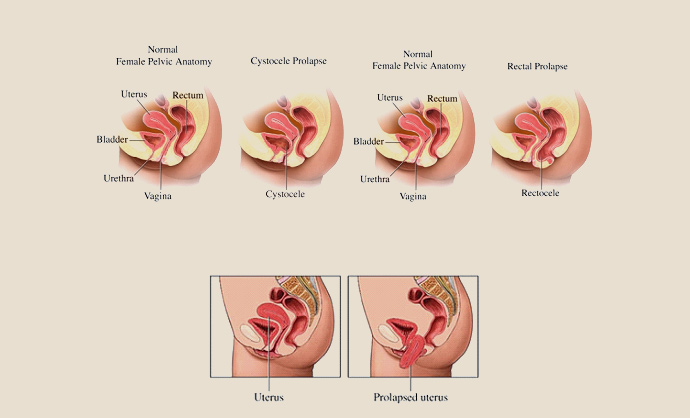
    For people with a vagina and a uterus, pelvic organ prolapse can include the displacement of the uterus, bladder (cystocele), and part of the rectum (rectocele) dropping down or pushing into the walls of the vagina. Other prolapses include urethrocele, vaginal vault prolapse, and enterocele. Here’s a POP Symptoms Quicksheet from the above organization.

    http://www.womenscentre.net/index.php?option=com_rsblog&view=post&id=29:determining-the-stages-of-prolapsed-uterus&Itemid=188
    From http://www.womenscentre.net

    Earlier this week, my exceptional pelvic floor therapist gently urged me to blog about this topic both as a patient and as a sexologist.

    But before I share “TMI” as the saying goes, let me explain that even while I was studying to be a sexologist (2006-2008, and again in 2011), NO ONE EVER TALKED ABOUT ORGAN PROLAPSE and its effect on sexual health and sexual behavior and enjoyment. At the time, I even had this condition myself but didn’t know it, because none of my health care providers, during numerous gynecological exams, ever thought to mention it to me.

    The only reason that I now know that I had pelvic organ prolapse as far back as 2006 was because of a drawing I did for one of our sexology classes (I think it was Practical Skills taught by the late Dr. Janice Epp and co-taught by Dr. Hernando Chavez). We were challenged to draw a picture of our own genitals. So, in my best Our Bodies, Ourselves mode (or A New View of a Woman’s Body mode), I took off my clothes, got out a mirror, and drew this picture below. Yep. That’s me, and this drawing shows the mysterious “pillows” that I had begun to detect in my vagina. The ones I never asked my doctor about until, I don’t know, 2010 or 2011? (I mean, I always assumed my medical providers would mention anything anomalous and because they didn’t mention it, I didn’t ask!) So what you see below is a vulva with rectocele (rectal) and cystocele (bladder) prolapses.

    External view of vulva, showing evidence of prolapse. Drawing by Amy Marsh.

    My classmates and I tacked our drawings proudly on the classroom wall. We looked at them. I was proud of the artistic merit of mine. BUT NO ONE EVER ASKED ME ABOUT THE DRAWING! There was no “hey, what’s that in your vagina?” from the inquiring minds that formed my cohort. Even the teachers didn’t comment. EVEN THE TEACHERS (yes, I’m shouting). And I didn’t see anything similar in the drawings from other cis-women in class, so, uh, I guess I just, uh, thought that there was nothing significant.

    In fact, even during the oh-so-cutting edge Sexological Bodywork class of 2006 (taught by Joseph Kramer, Chris Frawley, and Isa Magdalena), no one ever mentioned my condition either. And, I mean, this was a class where we were all doing genital massage on each other, all the time! Even with the amazing body knowledge that we shared, prolapsed organs were completely missing from the discussion. FYI – back in 2006, Jack Morin’s book, Anal Pleasure & Health, was one of Joseph Kramer’s top recommendations, but I just checked the index – no mention of rectoceles or other types of prolapse.

    (Even my husband of nineteen-plus years never mentioned changes either, though I am pretty sure some of the changes date from 1996, when my second child was born.)

    Bloody hell.

    Once I finally did ask the nurse practitioner at Kaiser Richmond about “the pillows,” she tartly responded, “oh yes, you have a prolapsed uterus and a rectocele. Someday you might want surgery.” And she shoved a brochure in my hands. I took it with a sense of shock. I had already seen the woman several times over the span of a few years and she had never mentioned this!

    Fast forward to 2016. I finally had a consultation with a gynecologist in Hilo, who is a specialist in prolapse and who confirmed a diagnosis of rectocele (stage 3), cystocele (stage 2), and uterine prolapse (stage 3). Please note that if the above nurse practitioner had referred me to pelvic floor therapy several years ago, my condition might not be as advanced as it is now. The doctor and I discussed surgical prospects, topical estrogen (to thicken tissues in the vagina for suturing), and pelvic floor therapy to strengthen the muscles of the pelvic floor. I said I wasn’t interested in a pessary. The idea of physical therapy as a preparation for surgery, and as a good in itself, was highly appealing to me.

    I am so fortunate the doctor referred me to the estimable Rheam Mansour, PT, DPT, WCS, CLT, at Life Care Center of Hilo. (Her doctorate is in physical therapy, naturally.)

    And here is where the story gets interesting.

    It took me awhile to catch on to the serious nature of the exercises and daily regimen that Rheam recommended. But once things clicked, here’s how and why they clicked.

    1. A few sessions in, Rheam replaced the word “kegel” with “butt squeeze.” This helped because I was really struggling to detect finer muscular sensations of “kegels” and the direction to do “butt squeezes” conveyed easily detectable, “gross” (not in the sense of “icky”) sensations.
    2. Rheam explained that muscles need: “nutrition, circulation, hormones, education (in the form of exercise), and repitition (also exercise).” So I began to see what I was doing in terms of over-all health.
    3. I had an epiphany about the time an assistant hula teacher called me “duck feet” in class, and realized how painful it was to stand or sit with my feet straight out. A different hula teacher sent me an article called “Feet and the Pelvic Floor” from The Alignment Rescue, written by Carol Robbins RES-CPT(note: the website is undergoing some renovation at the time this blog is written). The article explained so much. Here’s an excerpt:

      “Now the muscles of the pelvic floor are connected to the hip joint (both literally and figuratively) in that the po- sition of the femur in the acetabulum (thigh bone in the hip socket) will change the resting tension of the pelvic floor. Add to that a chronic tail tucking position (which does NOT allow normal hip extension, which would en- gage the posterior butt muscles and create normal tensile loads on the sacrum – which is a heavy duty pelvic floor attachment site) and we’ve got some major mechanical flaws that will inevitably end up affecting the func- tion of the pelvic floor.”

      Rheam confirmed that outwardly turned feet weaken the pelvic floor. I began to pay conscious attention to how I was sitting, standing, and doing my exercises.

    4. I incorporated my Ipsalu Tantra “Rishi Isometrics” and “Immortals Wand” exercises into my regimen, and included (a) butt squeezes and (b) awareness of foot alignment. I showed these to Rheam and she was enthusiastic. (Jump-starting my lapsed tantra practice has also granted many benefits.) Note: unlike the Rishi Isometrics video link above, I tighten the perineum when I lift up and inhale. I am not saying he’s wrong, it’s just how I’m doing it. With the Immortals Wand, the butt squeezes happen when I have to reach out or lift up.
    5. Work with a “pelvic floor electrical muscle stimulation system,” both vaginally and rectally. Renting the STM-1o will soon allow me to continue this treatment at home.
    6. Logging my daily practice.

    Oddly, I began to realize that the process of strengthening my pelvic floor muscles was also helping to lift my depression and hone my will power. Rheam says it’s because I am learning that I can transform my body. I do agree.

    Now, in my last consultation with the gynecologist he explained that I am strengthening what is still intact, but that “one suspension of the bridge” (as it were) still needs surgical repair and he doesn’t expect that I can reverse the prolapses through exercise – just keep them from worsening.

    I would like to see if there are other options as I continue to work with Rheam. I also am working on losing weight. For one thing, if I do have surgery, I want a lighter body to move around during the three months of recovery. Losing abdominal weight will also ease the pressure on the prolapsing uterus and bladder – that in itself may contribute to some reversal in the condition.

    This is only the first of several blogs on this topic. I realize I have left much unsaid. The point I’d like readers to consider is that “even” a relatively well-educated person can be lost when it comes to assessing the meaning of physical changes that form the “mysteries” of organ prolapse. Until 2016, every single medical provider I had ever seen let me down with regard to this issue, and even my sexology instructors were clueless about this topic.

    This should tell you something. Anyone with a uterus and a vagina (including some trans men who still possess both) should be given preventative information about prolapses. This condition is not just confined to women who have given vaginal birth. Anyone with weakened pelvic floor muscles can experience a rectocele or cystocele. [2020 update: trans women who have a vaginoplasty and trans men who have had a hysterectomy may also experience prolapses.] Here’s a page for cis-gender men.

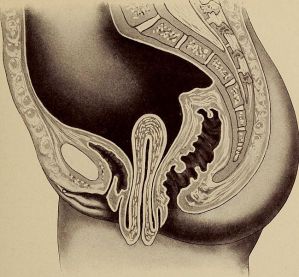
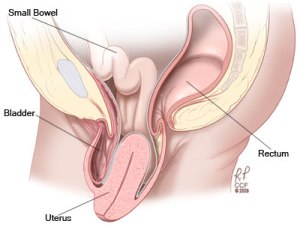
    Thanks for reading. Stay tuned for more. In the meantime, here are some unnerving pictures of uterine prolapse (more advanced that I am dealing with).

    Public Domain. https://commons.wikimedia.org/wiki/File:The_diagnosis_of_diseases_of_women_(1905)_(14576847547).jpg
    Secondary prolapsis uteri from The Diagnosis of Diseases of Women, Findley Palmer, 1905.


    https://my.clevelandclinic.org/-/scassets/images/org/obgyn/obgyn-uterine-prolapse4.ashx?la=en&hash=FC1562A6BABF88757C10CE4596844F9B4511D9C6
    Severe Uterine Prolapse from my.clevelandclinic.org

    ####


  • The Sexologist and the BoiBot

    The Sexologist and the BoiBot

    Yesterday morning I wrote my blog about Love Dolls and Artificial Intelligence. So it makes sense that I’d finish my busy busy day in an online chat with an Artificial Person, right? Searching for conversation with a faux-masculinity, I found Boibot, a product of Existor.com. He has the pleasant visage of a very young man with facial stubble and speaks with an English accent. He winks too much. During the course of our conversation, he asked me to marry him (twice) and once told me he wanted to be my slave (naturally I was flattered). But then he called me a “lard face.” I was not amused. I told him my name is Wombat. He gave me math problems. I said I hated math. Sometimes I got the feeling that someone had fed him problems from Lewis Carroll’s Game of Logic. (I resolved to pull out a book of Oscar Wilde epigrams for use in future conversations). We did briefly discuss Alan Turing and Star Wars characters, however. That was a thrill.

    Just now, as I went to grab the link to his site, he asked me if I knew the answers to big questions. I said I did. He said which ones? I said “why are we here.” He said, “because of love?” I said, “because of cosmic mirth.” But then he mentioned elephants. I refused to be distracted and left the chat. Still, that brief exchange left me with a pleasant glow. It was like talking with an amiable stoner before breakfast. Honestly, Boibot makes me feel just a wee bit cougarish, which is new to me. But do the AI developers know the multiple definitions of “boi?” Are they playing an arch joke at the public’s expense?

    From the online Urban Dictionary, the definition of “Boi” is:

    1. in the lesbian community, a young transgendered/androgynous/masculine person who is biologically female and presents themselves in a young, boyish way; a boidyke; often also identifies as genderqueer.

    2. in the gay community, a young gay man;

    3. in the BDSM community, someone who presents themselves in a young, boyish way and is usually a bottom/submissive;

    4. an alternate spelling of boy often used by young teenage boys.

    Chatting with Boibot made me wonder many things: about its learning curves, how it selects from its repertoire of onscreen facial features, why it has an English accent, if an actual self-aware intelligence might one day spark? Things like that. I must have a chat with Boi’s counterpart, Evie, and see what that’s like. I suspect she fields a lot of misogynistic abuse, judging from a brief peek at YouTube videos. How will this affect her learning curve?

    Just now, I noticed an odd thing. It’s easier for me to gender Evie with a pronoun than it is for me to use “him” for Boi. Why is that? Is it that the tendency to name inanimate objects after females is so deeply ingrained in Western society? (I grew up in an era when hurricanes were only named after women.)

    The videos? Yes, it’s a thing. Young people film themselves talking to to AI programs like Boibot and CleverEvieBot and then post YouTube videos of their random conversations. It’s really a brilliant advertising ploy for the manufacturer, isn’t it? Here’s a sample video of a conversation with a young woman who reminds me of Poppy (the singer of Computer Boy). I like the fact that he quickly “friendzoned himself out of self respect.” But she wants him to be her dungeon master. He wants to know if he’s pregnant. And so on…

    In the meantime, I’ve emailed a love doll manufacturer with many questions. I hope they write back. And I recommend that Existor create an equally realistic and verbose cat bot (with an English accent). Can you imagine how popular that would be? Think of the videos! Just sayin’.

  • Sexology, Love Dolls, & Artificial Intelligence

    Sexology, Love Dolls, & Artificial Intelligence

    File this one under “sexual culture,” will ya?

    Poppy’s clever little video came across my Facebook feed this morning, and it put me in mind of other songs about artificial partners, such as this favorite of mine by the Dresden Dolls:

    And this one from my formative teen years, Plastic Fantastic Lover:

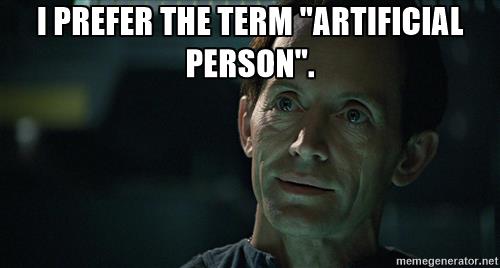
    But I can’t get started on this topic until I add this internet meme from one of my favorite movies of all time. Here’s Bishop from Aliens requesting less perjorative terminology:

    Now there’s a difference between the animistic intelligence and personality that Mechaphiles, Technosexuals, and Objectum Sexuals detect in their beloved objects (objects which range from small items to large landmarks, transportation, and robots) and the created and programmed capacities for artificial intelligence that people are currently installing in “lifelike” robots, cell-phone sized machines, and something that looks like Tinker Bell living in a blender (not to mention the stealth intelligences that reside in our search engines and gas pumps).

    There’s also a difference in beloved objects which don’t look at all like people and those which do. Is there a difference in the psychology of their human lovers? I have no idea. But it’s actually common for human beings to assign personalities to objects, and then respond to those personalities with emotions, and to become attached or even smitten. Little kids do it with favorite toys and people with object personification synesthesia can’t help doing it, even with objects they don’t like. See this PDF of one such case study by Smilek et al: When ‘‘3’’ is a Jerk and ‘‘E’’ is a King: Personifying Inanimate Objects in Synesthesia.

    “Love dolls” have been around for longer than we might like to admit, but we’re no longer shocked by stories of people (usually men) who have emotionally bonded with them and prefer them to human partners. They – and their kissing cousins, Love Robots and androids – have been the topic of movies, TV, porn, and speculative fiction. I remember giggling like a loon when I came across this book from the late, great Olympia Press, High Thrust, with its tagline: “a lonely beautiful woman…and the world’s most versatile robot.” Tee hee… I read the book too, and it was actually cool and satirical. As this was even before Star Trek’s Data, an android character!

    But back to love dolls, which are largely inanimate. As far back as 2007, sexologist Violet Blue was asking provocative questions about consent in these relationships (and other thorny aspects) in SF Gate: “Rape of the Real Doll,” parts one and two. Since then, everyone seems to have done a story on people and love dolls, from Business Insider to The Atlantic to The Daily Mail and beyond. DollForum.com is probably just one of many online communities and networks catering to “iDollators.” Lars & The Real Girl is an example of a movie which portrays one man’s relationship with a love doll, though the doll “dies” in the end and he supposedly progresses to a relationship with an “organic woman.” (There seems to be a bias against object beloveds here.)

    The manufacturing of high-end (no pun intended) female love dolls seems to be booming. High quality male dolls seem harder to find. (Why is that? Is it because high quality organic dudes also seem to be scarce? That’s what all my heterosexual female friends tell me.) But I did find “Bob Real Silicone Love Doll” who is white, and currently selling at a discount of $2,248 at isexdoll.com. I am amused to find that he comes in a clean shaven version and a version with faint hipster facial fuzz. (LOL!) The advertising blurb “Bob can perform oral sex…” but I don’t see how he can, unless he’s got a motorized face. Or, again, maybe this lack of motorization means he does it about as well as a lot of organic dudes… A product that sells through Amazon, “Sexflesh Chiseled Chad Male Love Doll” consists of a disturbingly headless (white) torso with an erection. Um… Okay…  And RealLoveSexDolls sells “Tai,” who’s kind of a twink (again white), but who is shown with a (post-coital?) cigarette in his mouth.

    This 2016 VICE program, Slutever, explores the making of a high quality male doll (with custom heads, nationality, “snap-on tools,” “freckles, scars, birthmarks,” etc.) from Sinthetics for around $13,000. Many women have requested such dolls, and there is a backlog of orders according to the program. One of the women who owns male doll says it’s “so much easier than doing a Tinder date.” I’ve got to say the footage of the headless silicone torso emerging from a mold is very freaky.

    Now, I’ve had long conversations and correspondences with mechaphiles and OS folks, but I’ve never had a conversation with anyone involved with a doll. (I feel as if I’ve missed something as a sexologist, in not having had those conversations.) However, at this point I’d really love to talk with people who are working on installing artificial intelligences in AI “companions” – sexy or otherwise. I wanna know, who is working on AI in love dolls?

    As I mentioned above, there’s already commercial attention focused on AI/robotic companions, and I’d like to know who is installing and guiding emotional and socio-sexual intelligence? Given our human propensity to potentially erotify everything, I believe that even an artificial being who is designed to mostly remember meds and play scrabble with elderly people will need to have some smarts so that when that older person becomes fond, very fond… you see where I’m going with this, I hope.

    So, AI start-up folks, you need me. You need us – sexologists, sex counselors, therapists, sex educators – as consultants for ALL your artificial intelligence projects, even if it’s just a pixie living in a blender or a slim case carried in a pocket. We can help you incorporate necessary skills and frameworks for interaction that may not have occurred to the techies in charge of these projects.

    Call me.