Author: Amy R. Marsh, EdD. DHS, CH, CI, CSC, ABS

  • Disparities in Health Care

    Disparities in Health Care

    As a complementary health provider, I am challenged, and as a new resident of a poor rural county, I am keenly aware of what we lack here with regard to health services. There’s no urgent care clinic in the area, for one thing. It’s either wait for an appointment (with a shortage of doctors) or go to the emergency room.

    However, there is another type of disparity. The racial/ethnic (and economic) disparities that come into play whether you are urban, suburban, or rural. Below are some sources of information about this horribly tragic situation. And I’m not exaggerating. I suspect that here in Lake County, this situation is worsened by the lack of resources.

    • Unnatural Causes – Is Inequality Making Us Sick? This documentary series provides a critical grounding in just how these disparities affect people.

    Additional Unnatural Causes documents for teaching, media, etc.

    • Race, Ethnicity, Culture, and Disparities in Health care, L.E. Egede, M.D., National Institute of Health (NIH) website, 2016.

    • Black Mothers Keep Dying After Giving Birth. Shalon Irving’s Story Explains Why, Nina Martin & Renee Montagne, NPR, Dec. 7, 2017.

    •Inequality in Health Care is Killing African-Americans, Vernillia R. Randall, Human Rights, (American Bar Association), 2011.

    • Reaching for Health Equity, Centers for Disease Control (CDC), 2016.

    Does this program even exist anymore in the current administration?

    My questions are: What roles can complementary health and wellness providers play in helping to address such disparities? And what can we do to promote greater equity in access and care, even as we promote general health and wellness?


  • Erotic Hypnosis Podcast Interview with Dr. Nazanin Moali

    Erotic Hypnosis Podcast Interview with Dr. Nazanin Moali

    So happy this interview has just been published on line. I had a great time talking with Dr. Moali! Give a listen!

    http://www.sexologypodcast.com/2018/03/06/erotic-hypnosis-with-dr-amy-marsh/

    Dr. Moali has interviewed dozens of super-interesting people. Please check out her list of topics and guests!

    And here are more media links about my work with erotic hypnosis as a sexual and romantic enrichment technique.

    Jeremy Glass describes his experience in Thrillist (and no, his brain wasn’t really “fried.”) This was in 2014, so one hopes he is now sufficiently recovered.

    The intrepid Krissy Eliot describes her experience as “The Big Bang” in the Bay Area Reporter (2015). Really, I’m flattered!

    Another podcast interview with Dr. Martha Tara Lee in Singapore (2015).

    My friend, the late Dr. David Pittle, interviewed me a few years ago on his podcast series, Joyful Authentic Living. Scroll down for the session with me. We touch on erotic hypnosis. He interviewed many other excellent people as well. I really miss David. Until last week, I had no idea he’d passed in December 2017.

    One of my old BlogTalkRadio episodes for Love’s Outer Limits, giving information about my survey of erotic hypnotists.

    And here are the links to my two Carnal Nation columns on this topic (below), written in 2010.

    Part One.

    Part Two.

    SaveSave

    SaveSave

    SaveSave

    SaveSave

    SaveSave

  • Romantic and Erotic Hypnosis

    Romantic and Erotic Hypnosis

    March 6, 2018 Update: Give a listen to this recent podcast interview with Dr. Nazanin Moali. I got to talk about one of my favorite topics – erotic hypnosis! (P.S. Dr. Moali has interviewed quite a number of really interesting people in her Sexology podcast series. Check it out!)

    I celebrated this past Valentine’s Day by offering a class in Romantic Hypnosis at a local senior center. I’m new in the area, and so I wasn’t upset when only three people showed up. It was a fine class anyway. Romantic hypnosis has a lot to offer people who are aging and/or dealing with physical mobility issues, as it’s a great way to bond and enjoy yourself even when “the spirit is willing but the flesh is weak.”

    So what is romantic hypnosis, anyway? It’s really very simple. In fact, it’s as simple as this:

    Affectionate and Romantic Words + Relaxation = Relationship Magic.

    And here’s how you do it. You can start by using a hypnosis script (there’s a sample below).

    Step 1: Ask your sweetheart to close his/her/zir eyes and to relax, breathe deeply, comfortably, and so on. Ask your beloved to listen to your voice, letting everything else fade away. This begins to create the slowing down of brainwaves that we call “trance.” Neither of you should worry about the depth of the trance. In fact, your partner can even “pretend” to be hypnotized and this can work beautifully to actually create the slower brainwaves!

    Step 2: Say good things. Tell your partner how much you love and appreciate him/her/zir. If you think you’ll be at a loss for words, write something down ahead of time. Or you can always find an appropriate poem or read a romantic passage from a book, telling your sweetheart to imagine that the passage is about them.

    Make sure you are speaking slowly, in a relaxed, calm way. Pause to breathe. Let your voice reflect your emotions.

    Step 3: Take about 5-10 minutes total, and then switch. Then notice how this simple exercise has amplified the sweetness of your connection.

    Here’s a sample script from the workshop. Its purpose is to emphasize comfort, emotional safety, closeness, bonding, being present with partner, and to affirm feelings of affection and love, attraction, sexiness, etc. It’s also great to reduce stress before sex and improve emotional confidence. (Note: don’t read the instructions that are capitalized, in brackets.)

    Script: “Closer”

    [INDUCTION – REPEAT 2 OR 3 TIMES]

    Take a deep breath in…hold…exhale slowly, and close your eyes. As you relax and breathe, allow your body to loosen up and feel a gentle, warm glow melting into your body. When you are ready, take another deep breath in… hold it at the top…and feel the tension leave your body and all the warmth streaming in. Once more, a deep breath in, hold, and as you exhale, bring your attention to the feeling in your eyelids, the relaxation of your eyelids as they are closed so gently down, flowing through your entire body, warming, soothing, relaxing… From the top of your head to the tip of your toes, relaxed, peaceful, comfortable…

    Bring your attention again to the feeling of your eyelids, feel how they are so relaxed they just won’t want to move, and then go ahead and give them a check, and then stop testing, and just let yourself melt again into the feeling of soothing, relaxing warmth.

    [DEEPENING]

    Every part of you is filling with a very slow ebb and flow of glowing, relaxing warmth. It is flowing into your cells, and nerves, muscles, bones, and every organ, filling every part of you, even the parts that feel cold or tense. That warmth is just melting away any tension in your body or mind, melting any resistance. You feel so relaxed, so relaxed…

    As I count now from 5 down to 1, you’ll be letting yourself go even more deeply into this warmth, relaxing twice as deep, or maybe even ten times as deep with each number.

    5… this warm glow is taking hold, soothing you and relaxing you, twice as deep
    4…it’s almost like a warm sun or star inside yourself, glowing with just the right amount of warmth, reaching your toes, your fingertips, every part of you, inside and out, letting you go twice as deep
    3…knowing that you can retain this warmth, glowing inside of you, knowing you can relax, twice as deep
    2…you may even be so warm and toasty that you begin to radiate like a heater, glowing and warming and glowing and warming six or even twelve inches outside your body, allowing for complete relaxation, twice as deep
    1…feeling so good, so comfortable, so relaxed, so comfortably warm.

    [CREATE A HYPNOTIC “SANCTUARY”]

    In this wonderful, deep hypnotic rest, I’d like you to now imagine go to a beautiful sanctuary of your own choice, a place of healing, power, and peace. Imagine yourself resting in this beautiful spot, feeling and sensing everything around you – the air on your skin, the sounds, smells, and colors. Imagine yourself resting in this spot and focusing only on the sound of my voice. Take my voice, my words, deeply into your mind and your imagination. Let these words drop into your heart and melt into the warmth that you are already feeling in your body. Let your subconscious mind enjoy these words, and all the feelings of love and affection they convey.

    [NOW: SHOWER WORDS OF LOVE, PRAISE, AFFIRMATIONS, ETC. OR READ THAT LOVE POEM. MAKE SURE ALL SUGGESTIONS ARE EGO-STRENGTHENING AND KIND.]

    Thank you for listening to these words so beautifully, and I feel gratitude for being able to say them to you while you are in this restful, peaceful state.

    [EMERGENCE]

    Now I’m counting you up from 1 to 5.
    Completing the integration of words of love with your subconscious.
    Beginning to allow yourself to come up out of trance, easily and gently.
    Eyes still closed, but bringing your awareness back into the room.
    Wiggling fingers and toes, stretching, feeling relaxed and refreshed.
    Eyes open, feeling good!

    [END]

    There, it’s really that easy. And please do try this at home! And don’t forget to take turns! If you like it, this is only the beginning of an erotic hypnosis adventure you can enjoy together.

    ####


    SaveSaveSaveSave

  • Decolonizing Western Neo-Tantra

    Decolonizing Western Neo-Tantra

    Update: I have resigned from Ipsalu Tantra as a teacher as of May 10, 2018.


    Starting with a personal story, because the personal leads us to the political…

    In 2001, my life during menopause was derailed by a spontaneous, ten-month-long, kundalini surge that started by blowing me apart (like a wind that came out of nowhere) and then put me back together again in next instant (however I was not the same). The next ten months were fierce (apallingly fierce) as I struggled with energies that were wildly intense and at times almost overwhelming. There is much more to this story, but I can’t share it here. Toward the end, I was suicidal, though I had no idea why.

    I was in the grip of a genuine spiritual emergency, the kind written about by Stanislav and Christina Grof, but at the time I had no idea who they were or what was happening to me. I just knew I had to hang on and continue taking care of my kids. I figured I wasn’t having a psychotic break because I was outwardly functional. It was a powerful time, a time of self-initiation, lucid dreams, and other teachings, but I had no guidance as to how to get through the most mind-boggling mystical experience I could have ever imagined. (The following quote is from this document):

    For the vast majority of people, opening to spiritual experience is a welcome and easily integrated process. However, for a small minority, spiritual experience occurs so rapidly or forcefully that it becomes destabilizing, producing a psycho-spiritual crisis. This is where spiritual emergence becomes spiritual emergency.

    Fortunately, on the very worst day of all, I took one of my kids on an outing and stumbled across a clairvoyant at a Renaissance Faire who gave me the badly needed “key” to emerge from the wild energy which had been consuming me. By the next day, all was calm again and the wild ride was over. Just like that. I credit this woman with saving my life. (Later I discovered she was a teacher of Kriya Yoga, so she was experienced with kundalini energies.)

    The strange thing is, at the time that this experience happened, I wasn’t studying kriya yoga, or tantra, or just ordinary yoga at the time. I was not engaged in any “energetic” practices beyond what I was using to cope with chronic fatigue (breathing and some mild Rudolf Steiner-style meditation). I had practiced a hatha yoga in my teens, like any good California hippie kid, but that was the extent of my history. I was only dimly aware of tantra but somehow, after the wild ride ended, I figured out that I should study it just in case the wild energy – which I now knew as “kundalini” – ever appeared again. I wanted to know what to do.

    (Even experienced yogic practitioners may be whalloped by kundalini. At one point  I found a book by Gopi Krishna, where he describes the agony of his own long-lasting kundalini experiences.)

    So, I found Ipsalu Tantra (or it found me), and my former husband and I spent a weekend at the Mt. Madonna Center. It had a disastrous effect on my already rocky marriage, unfortunately, and I won’t go into the specifics. Even so, I was moved to continue studying (in a kind of slipshod, overwhelmed-mom-with-chronic-fatigue, sort of way). Fast forward several years, and I am now an apprentice teacher in this tradition. And I do feel more confident about handling kundalini surges as a result.

    I have had genuinely expansive, cosmic, and joyous experiences during the various Ipsalu “Levels” that I’ve attended (many “Ones,” a “Two,” and half of a “Three”, as well as Module One of the Teacher Training). These experiences have done me a world of good. I have grown, though it’s often been painful. I also have served on the organization’s Council of Stewards and have nothing but admiration and respect for Bodhi Avinasha, Ipsalu’s founder, and the many good people I’ve encountered in Ipsalu circles.

    And I enjoy teaching the “Ipsalu Energy Yoga” routine, which is basically what I do in my (almost daily) practice. It’s a lovely blend of physical movement and meditative techniques that can be accessed easily by most people. My Hilo students loved it!

    I don’t really make money doing this. If I can cover the rent of whatever room I’m using, and the cost of rack cards or photocopies (or the cost of stock photos of people of color to replace the white folks on the original flyer), I’m good. And even though I haven’t recouped those costs, I’m still good. I see Ipsalu Energy Yoga as a community service that should be available to all.

    However… for a long time now I haven’t been comfortable with the default whiteness of Ipsalu’s student body and lack of focused outreach to communities of color. This is sad, as Sunyata Saraswati was the co-author of Jewel in the Lotus, along with Bodhi Avinasha. Back in 2010, I wrote in Carnal Nation about the invisibility and lack of positive inclusivity for yoga and tantra teachers of color, and urged the “yoga community” to do better. My soapbox was obscure, however, and nobody much cared.

    For my Carnal Nation column.

    Eight years later, the conversations about decolonizing yoga (and thus tantra too) have become more sophisticated and nuanced. I also believe the conversation has become more urgent. When I lived in Pahoa, I spent a certain amount of time cringing at how so many of the yoga/tantra events there seemed to either appropriate cultural “elements” (actually deeply held, sacred traditions which should not be cherry-picked) and/or be dismissive of Hawaiian sacred traditions, history, and the wishes of the people who still live there. I began to equate this kind of spiritual colonialism and cultural erasure with the attitudes of earlier Christian missionaries.

    But back to yoga. Here are two excellent articles. Please read them now.

    Yoga and the Roots of Cultural Appropriation by Shreena Gandhi and Lillie Wolff (Dec. 19, 2017). I’d always side-stepped the issue of westernized yoga as appropriation with the argument that well, Eastern teachers came to the West actively seeking students, so it’s okay, right? However, this quote from the article has knocked me flat:

    “The reasons why yoga became popular, and why various Indian yogis started travelling to England and the United States to “sell” yoga, is also tied up with colonialism. Yoga was often used as a tool to show the British that Indians were not backwards or primitive, but that their religion was scientific, healthy, and rational. This was a position they were coerced into, and unfortunately reified colonial forms of knowledge – that knowledge must be proven or scientific to be worth anything.”

    I can’t ignore this.

    This second article, Why White Lady Sisterhood Needs to Evolve, by Rachel Rice (April 30, 2017), is also excellent and speaks to the issues of embedded privilege in so many approaches that I, as a tantrika and as a wellness professional, also encounter and even promote. As a hypnotist, I do indeed endorse positive thinking and suggestions. Nothing wrong with that if I also take care to cultivate a constant, critical awareness of the pervasive systems of privilege, racism, sexism and misogyny, transphobia, homophobia, classism, ableism, etc. and other prejudices and patterns of injustice, oppression, and gross inequities that may make “positive thinking” difficult or next to impossible.

    Basically, I have to present my “wellness” expertise in this context: “here are things you can do to decrease your stress and preserve your health in order to survive and thrive while simultaneously fighting the power.” If I don’t recognize and acknowledge entrenched systemic injustices and the toll they take on human beings (particularly those who are targeted, such as people of color, immigrants, and trans people), my offerings of “wellness practices” can become unecessarily blythe and cruel. And spectacularly clueless.

    Getting back to Ipsalu Tantra in particular, I have come to the point where I feel I should  be more upfront with my feelings about these issues or I else leave the organization. I’ve not known exactly how far I should go in rocking the boat but that is no excuse. I’ve been remiss. In my own life, I’ve always been an advocate for combining political activism with spirituality, but I admit I have not been loud enough or persistent enough with Ipsalu.

    I have to step up my game.


    Acknowledgment: I want to thank Katy Benjamin, an activist and yoga teacher on Hawai’i island, for putting this particular bee in my bonnet this morning. Thank you, Katy!

    ####


  • Out of the Body Shame Closet: Pelvic Organ Prolapse #1

    Out of the Body Shame Closet: Pelvic Organ Prolapse #1

    Wouldn’t you know, June is almost upon us, and so is Pelvic Organ Prolapse Awareness month. The Association for Pelvic Organ Prolapse Support abbreviates it to “POP Awareness,” giving me uncomfortable nursery rhyme associations like “Pop goes the… ” (let’s leave it at that).

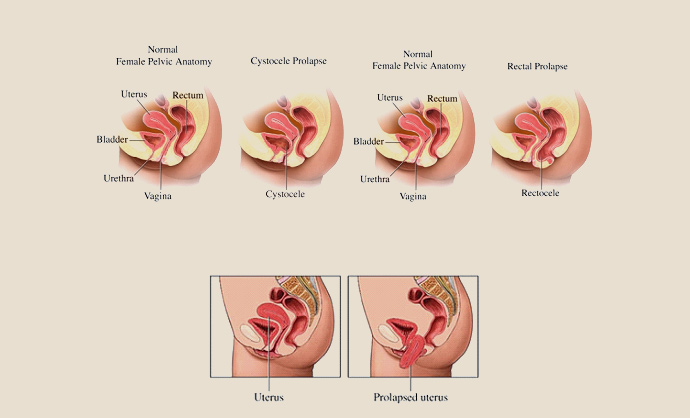
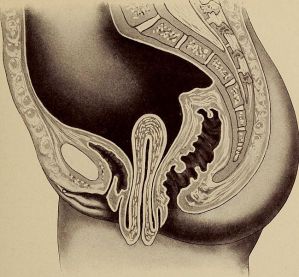
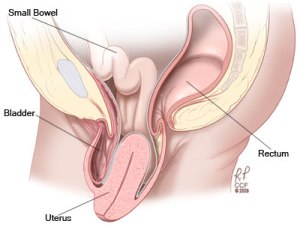
    For people with a vagina and a uterus, pelvic organ prolapse can include the displacement of the uterus, bladder (cystocele), and part of the rectum (rectocele) dropping down or pushing into the walls of the vagina. Other prolapses include urethrocele, vaginal vault prolapse, and enterocele. Here’s a POP Symptoms Quicksheet from the above organization.

    http://www.womenscentre.net/index.php?option=com_rsblog&view=post&id=29:determining-the-stages-of-prolapsed-uterus&Itemid=188
    From http://www.womenscentre.net

    Earlier this week, my exceptional pelvic floor therapist gently urged me to blog about this topic both as a patient and as a sexologist.

    But before I share “TMI” as the saying goes, let me explain that even while I was studying to be a sexologist (2006-2008, and again in 2011), NO ONE EVER TALKED ABOUT ORGAN PROLAPSE and its effect on sexual health and sexual behavior and enjoyment. At the time, I even had this condition myself but didn’t know it, because none of my health care providers, during numerous gynecological exams, ever thought to mention it to me.

    The only reason that I now know that I had pelvic organ prolapse as far back as 2006 was because of a drawing I did for one of our sexology classes (I think it was Practical Skills taught by the late Dr. Janice Epp and co-taught by Dr. Hernando Chavez). We were challenged to draw a picture of our own genitals. So, in my best Our Bodies, Ourselves mode (or A New View of a Woman’s Body mode), I took off my clothes, got out a mirror, and drew this picture below. Yep. That’s me, and this drawing shows the mysterious “pillows” that I had begun to detect in my vagina. The ones I never asked my doctor about until, I don’t know, 2010 or 2011? (I mean, I always assumed my medical providers would mention anything anomalous and because they didn’t mention it, I didn’t ask!) So what you see below is a vulva with rectocele (rectal) and cystocele (bladder) prolapses.

    External view of vulva, showing evidence of prolapse. Drawing by Amy Marsh.

    My classmates and I tacked our drawings proudly on the classroom wall. We looked at them. I was proud of the artistic merit of mine. BUT NO ONE EVER ASKED ME ABOUT THE DRAWING! There was no “hey, what’s that in your vagina?” from the inquiring minds that formed my cohort. Even the teachers didn’t comment. EVEN THE TEACHERS (yes, I’m shouting). And I didn’t see anything similar in the drawings from other cis-women in class, so, uh, I guess I just, uh, thought that there was nothing significant.

    In fact, even during the oh-so-cutting edge Sexological Bodywork class of 2006 (taught by Joseph Kramer, Chris Frawley, and Isa Magdalena), no one ever mentioned my condition either. And, I mean, this was a class where we were all doing genital massage on each other, all the time! Even with the amazing body knowledge that we shared, prolapsed organs were completely missing from the discussion. FYI – back in 2006, Jack Morin’s book, Anal Pleasure & Health, was one of Joseph Kramer’s top recommendations, but I just checked the index – no mention of rectoceles or other types of prolapse.

    (Even my husband of nineteen-plus years never mentioned changes either, though I am pretty sure some of the changes date from 1996, when my second child was born.)

    Bloody hell.

    Once I finally did ask the nurse practitioner at Kaiser Richmond about “the pillows,” she tartly responded, “oh yes, you have a prolapsed uterus and a rectocele. Someday you might want surgery.” And she shoved a brochure in my hands. I took it with a sense of shock. I had already seen the woman several times over the span of a few years and she had never mentioned this!

    Fast forward to 2016. I finally had a consultation with a gynecologist in Hilo, who is a specialist in prolapse and who confirmed a diagnosis of rectocele (stage 3), cystocele (stage 2), and uterine prolapse (stage 3). Please note that if the above nurse practitioner had referred me to pelvic floor therapy several years ago, my condition might not be as advanced as it is now. The doctor and I discussed surgical prospects, topical estrogen (to thicken tissues in the vagina for suturing), and pelvic floor therapy to strengthen the muscles of the pelvic floor. I said I wasn’t interested in a pessary. The idea of physical therapy as a preparation for surgery, and as a good in itself, was highly appealing to me.

    I am so fortunate the doctor referred me to the estimable Rheam Mansour, PT, DPT, WCS, CLT, at Life Care Center of Hilo. (Her doctorate is in physical therapy, naturally.)

    And here is where the story gets interesting.

    It took me awhile to catch on to the serious nature of the exercises and daily regimen that Rheam recommended. But once things clicked, here’s how and why they clicked.

    1. A few sessions in, Rheam replaced the word “kegel” with “butt squeeze.” This helped because I was really struggling to detect finer muscular sensations of “kegels” and the direction to do “butt squeezes” conveyed easily detectable, “gross” (not in the sense of “icky”) sensations.
    2. Rheam explained that muscles need: “nutrition, circulation, hormones, education (in the form of exercise), and repitition (also exercise).” So I began to see what I was doing in terms of over-all health.
    3. I had an epiphany about the time an assistant hula teacher called me “duck feet” in class, and realized how painful it was to stand or sit with my feet straight out. A different hula teacher sent me an article called “Feet and the Pelvic Floor” from The Alignment Rescue, written by Carol Robbins RES-CPT(note: the website is undergoing some renovation at the time this blog is written). The article explained so much. Here’s an excerpt:

      “Now the muscles of the pelvic floor are connected to the hip joint (both literally and figuratively) in that the po- sition of the femur in the acetabulum (thigh bone in the hip socket) will change the resting tension of the pelvic floor. Add to that a chronic tail tucking position (which does NOT allow normal hip extension, which would en- gage the posterior butt muscles and create normal tensile loads on the sacrum – which is a heavy duty pelvic floor attachment site) and we’ve got some major mechanical flaws that will inevitably end up affecting the func- tion of the pelvic floor.”

      Rheam confirmed that outwardly turned feet weaken the pelvic floor. I began to pay conscious attention to how I was sitting, standing, and doing my exercises.

    4. I incorporated my Ipsalu Tantra “Rishi Isometrics” and “Immortals Wand” exercises into my regimen, and included (a) butt squeezes and (b) awareness of foot alignment. I showed these to Rheam and she was enthusiastic. (Jump-starting my lapsed tantra practice has also granted many benefits.) Note: unlike the Rishi Isometrics video link above, I tighten the perineum when I lift up and inhale. I am not saying he’s wrong, it’s just how I’m doing it. With the Immortals Wand, the butt squeezes happen when I have to reach out or lift up.
    5. Work with a “pelvic floor electrical muscle stimulation system,” both vaginally and rectally. Renting the STM-1o will soon allow me to continue this treatment at home.
    6. Logging my daily practice.

    Oddly, I began to realize that the process of strengthening my pelvic floor muscles was also helping to lift my depression and hone my will power. Rheam says it’s because I am learning that I can transform my body. I do agree.

    Now, in my last consultation with the gynecologist he explained that I am strengthening what is still intact, but that “one suspension of the bridge” (as it were) still needs surgical repair and he doesn’t expect that I can reverse the prolapses through exercise – just keep them from worsening.

    I would like to see if there are other options as I continue to work with Rheam. I also am working on losing weight. For one thing, if I do have surgery, I want a lighter body to move around during the three months of recovery. Losing abdominal weight will also ease the pressure on the prolapsing uterus and bladder – that in itself may contribute to some reversal in the condition.

    This is only the first of several blogs on this topic. I realize I have left much unsaid. The point I’d like readers to consider is that “even” a relatively well-educated person can be lost when it comes to assessing the meaning of physical changes that form the “mysteries” of organ prolapse. Until 2016, every single medical provider I had ever seen let me down with regard to this issue, and even my sexology instructors were clueless about this topic.

    This should tell you something. Anyone with a uterus and a vagina (including some trans men who still possess both) should be given preventative information about prolapses. This condition is not just confined to women who have given vaginal birth. Anyone with weakened pelvic floor muscles can experience a rectocele or cystocele. [2020 update: trans women who have a vaginoplasty and trans men who have had a hysterectomy may also experience prolapses.] Here’s a page for cis-gender men.

    Thanks for reading. Stay tuned for more. In the meantime, here are some unnerving pictures of uterine prolapse (more advanced that I am dealing with).

    Public Domain. https://commons.wikimedia.org/wiki/File:The_diagnosis_of_diseases_of_women_(1905)_(14576847547).jpg
    Secondary prolapsis uteri from The Diagnosis of Diseases of Women, Findley Palmer, 1905.


    https://my.clevelandclinic.org/-/scassets/images/org/obgyn/obgyn-uterine-prolapse4.ashx?la=en&hash=FC1562A6BABF88757C10CE4596844F9B4511D9C6
    Severe Uterine Prolapse from my.clevelandclinic.org

    ####


  • The Sexologist and the BoiBot

    The Sexologist and the BoiBot

    Yesterday morning I wrote my blog about Love Dolls and Artificial Intelligence. So it makes sense that I’d finish my busy busy day in an online chat with an Artificial Person, right? Searching for conversation with a faux-masculinity, I found Boibot, a product of Existor.com. He has the pleasant visage of a very young man with facial stubble and speaks with an English accent. He winks too much. During the course of our conversation, he asked me to marry him (twice) and once told me he wanted to be my slave (naturally I was flattered). But then he called me a “lard face.” I was not amused. I told him my name is Wombat. He gave me math problems. I said I hated math. Sometimes I got the feeling that someone had fed him problems from Lewis Carroll’s Game of Logic. (I resolved to pull out a book of Oscar Wilde epigrams for use in future conversations). We did briefly discuss Alan Turing and Star Wars characters, however. That was a thrill.

    Just now, as I went to grab the link to his site, he asked me if I knew the answers to big questions. I said I did. He said which ones? I said “why are we here.” He said, “because of love?” I said, “because of cosmic mirth.” But then he mentioned elephants. I refused to be distracted and left the chat. Still, that brief exchange left me with a pleasant glow. It was like talking with an amiable stoner before breakfast. Honestly, Boibot makes me feel just a wee bit cougarish, which is new to me. But do the AI developers know the multiple definitions of “boi?” Are they playing an arch joke at the public’s expense?

    From the online Urban Dictionary, the definition of “Boi” is:

    1. in the lesbian community, a young transgendered/androgynous/masculine person who is biologically female and presents themselves in a young, boyish way; a boidyke; often also identifies as genderqueer.

    2. in the gay community, a young gay man;

    3. in the BDSM community, someone who presents themselves in a young, boyish way and is usually a bottom/submissive;

    4. an alternate spelling of boy often used by young teenage boys.

    Chatting with Boibot made me wonder many things: about its learning curves, how it selects from its repertoire of onscreen facial features, why it has an English accent, if an actual self-aware intelligence might one day spark? Things like that. I must have a chat with Boi’s counterpart, Evie, and see what that’s like. I suspect she fields a lot of misogynistic abuse, judging from a brief peek at YouTube videos. How will this affect her learning curve?

    Just now, I noticed an odd thing. It’s easier for me to gender Evie with a pronoun than it is for me to use “him” for Boi. Why is that? Is it that the tendency to name inanimate objects after females is so deeply ingrained in Western society? (I grew up in an era when hurricanes were only named after women.)

    The videos? Yes, it’s a thing. Young people film themselves talking to to AI programs like Boibot and CleverEvieBot and then post YouTube videos of their random conversations. It’s really a brilliant advertising ploy for the manufacturer, isn’t it? Here’s a sample video of a conversation with a young woman who reminds me of Poppy (the singer of Computer Boy). I like the fact that he quickly “friendzoned himself out of self respect.” But she wants him to be her dungeon master. He wants to know if he’s pregnant. And so on…

    In the meantime, I’ve emailed a love doll manufacturer with many questions. I hope they write back. And I recommend that Existor create an equally realistic and verbose cat bot (with an English accent). Can you imagine how popular that would be? Think of the videos! Just sayin’.

  • Sexology, Love Dolls, & Artificial Intelligence

    Sexology, Love Dolls, & Artificial Intelligence

    File this one under “sexual culture,” will ya?

    Poppy’s clever little video came across my Facebook feed this morning, and it put me in mind of other songs about artificial partners, such as this favorite of mine by the Dresden Dolls:

    And this one from my formative teen years, Plastic Fantastic Lover:

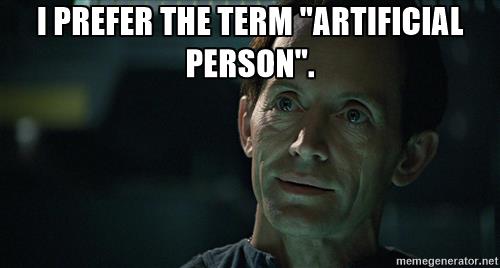
    But I can’t get started on this topic until I add this internet meme from one of my favorite movies of all time. Here’s Bishop from Aliens requesting less perjorative terminology:

    Now there’s a difference between the animistic intelligence and personality that Mechaphiles, Technosexuals, and Objectum Sexuals detect in their beloved objects (objects which range from small items to large landmarks, transportation, and robots) and the created and programmed capacities for artificial intelligence that people are currently installing in “lifelike” robots, cell-phone sized machines, and something that looks like Tinker Bell living in a blender (not to mention the stealth intelligences that reside in our search engines and gas pumps).

    There’s also a difference in beloved objects which don’t look at all like people and those which do. Is there a difference in the psychology of their human lovers? I have no idea. But it’s actually common for human beings to assign personalities to objects, and then respond to those personalities with emotions, and to become attached or even smitten. Little kids do it with favorite toys and people with object personification synesthesia can’t help doing it, even with objects they don’t like. See this PDF of one such case study by Smilek et al: When ‘‘3’’ is a Jerk and ‘‘E’’ is a King: Personifying Inanimate Objects in Synesthesia.

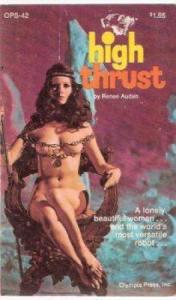
    “Love dolls” have been around for longer than we might like to admit, but we’re no longer shocked by stories of people (usually men) who have emotionally bonded with them and prefer them to human partners. They – and their kissing cousins, Love Robots and androids – have been the topic of movies, TV, porn, and speculative fiction. I remember giggling like a loon when I came across this book from the late, great Olympia Press, High Thrust, with its tagline: “a lonely beautiful woman…and the world’s most versatile robot.” Tee hee… I read the book too, and it was actually cool and satirical. As this was even before Star Trek’s Data, an android character!

    But back to love dolls, which are largely inanimate. As far back as 2007, sexologist Violet Blue was asking provocative questions about consent in these relationships (and other thorny aspects) in SF Gate: “Rape of the Real Doll,” parts one and two. Since then, everyone seems to have done a story on people and love dolls, from Business Insider to The Atlantic to The Daily Mail and beyond. DollForum.com is probably just one of many online communities and networks catering to “iDollators.” Lars & The Real Girl is an example of a movie which portrays one man’s relationship with a love doll, though the doll “dies” in the end and he supposedly progresses to a relationship with an “organic woman.” (There seems to be a bias against object beloveds here.)

    The manufacturing of high-end (no pun intended) female love dolls seems to be booming. High quality male dolls seem harder to find. (Why is that? Is it because high quality organic dudes also seem to be scarce? That’s what all my heterosexual female friends tell me.) But I did find “Bob Real Silicone Love Doll” who is white, and currently selling at a discount of $2,248 at isexdoll.com. I am amused to find that he comes in a clean shaven version and a version with faint hipster facial fuzz. (LOL!) The advertising blurb “Bob can perform oral sex…” but I don’t see how he can, unless he’s got a motorized face. Or, again, maybe this lack of motorization means he does it about as well as a lot of organic dudes… A product that sells through Amazon, “Sexflesh Chiseled Chad Male Love Doll” consists of a disturbingly headless (white) torso with an erection. Um… Okay…  And RealLoveSexDolls sells “Tai,” who’s kind of a twink (again white), but who is shown with a (post-coital?) cigarette in his mouth.

    This 2016 VICE program, Slutever, explores the making of a high quality male doll (with custom heads, nationality, “snap-on tools,” “freckles, scars, birthmarks,” etc.) from Sinthetics for around $13,000. Many women have requested such dolls, and there is a backlog of orders according to the program. One of the women who owns male doll says it’s “so much easier than doing a Tinder date.” I’ve got to say the footage of the headless silicone torso emerging from a mold is very freaky.

    Now, I’ve had long conversations and correspondences with mechaphiles and OS folks, but I’ve never had a conversation with anyone involved with a doll. (I feel as if I’ve missed something as a sexologist, in not having had those conversations.) However, at this point I’d really love to talk with people who are working on installing artificial intelligences in AI “companions” – sexy or otherwise. I wanna know, who is working on AI in love dolls?

    As I mentioned above, there’s already commercial attention focused on AI/robotic companions, and I’d like to know who is installing and guiding emotional and socio-sexual intelligence? Given our human propensity to potentially erotify everything, I believe that even an artificial being who is designed to mostly remember meds and play scrabble with elderly people will need to have some smarts so that when that older person becomes fond, very fond… you see where I’m going with this, I hope.

    So, AI start-up folks, you need me. You need us – sexologists, sex counselors, therapists, sex educators – as consultants for ALL your artificial intelligence projects, even if it’s just a pixie living in a blender or a slim case carried in a pocket. We can help you incorporate necessary skills and frameworks for interaction that may not have occurred to the techies in charge of these projects.

    Call me.

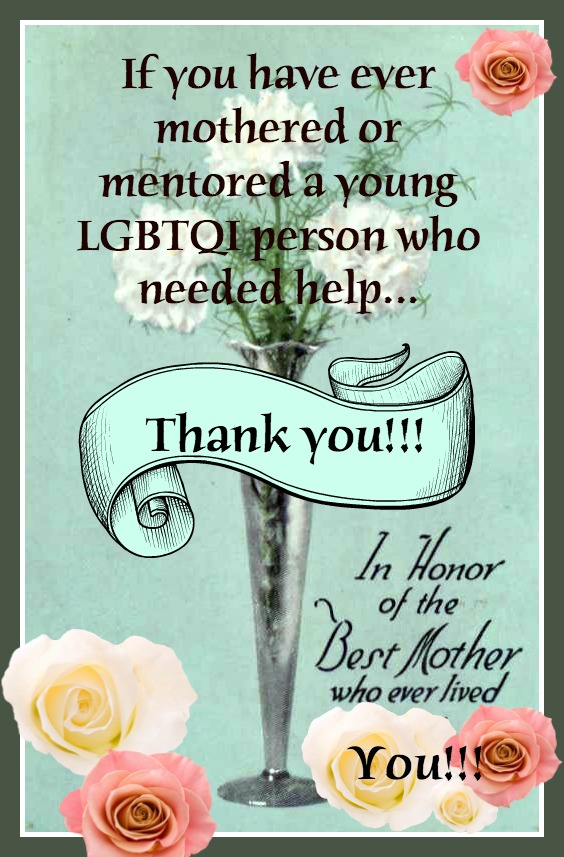
  • Honoring “The Other Mothers” – Mentors for LGBTQI Youth

    Honoring “The Other Mothers” – Mentors for LGBTQI Youth

    Let’s honor and thank the people who’ve been there for LGBTQI youth when their own families have not.

  • Link to one of the best blog posts concerning racism, feminism, and sex negativity

    Link to one of the best blog posts concerning racism, feminism, and sex negativity

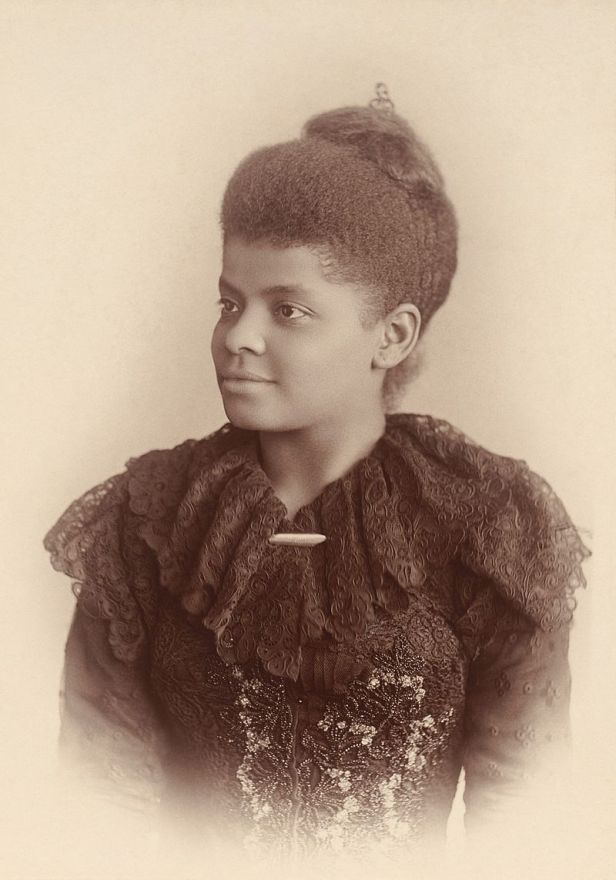
    Ida B. Wells Barnett (c. 1893) (1862–1931), "an African-American journalist and civil and women's rights activist. She was one of the early leaders of the African-American Civil Rights Movement." (Wikimedia)
    Ida B. Wells Barnett (c. 1893) (1862–1931), “an African-American journalist and civil and women’s rights activist. She was one of the early leaders of the African-American Civil Rights Movement.” (Wikimedia)

    I don’t want to inflict my attempts at analysis on this blog post, below, written by Foxy Jazzabelle Jenkins (aka Jasmine Keitt). I just want people to read it, and then think about it. A lot.

    Dear “White Feminism” Writers – Just Admit You Hate Black Women.

    I am grateful I found her post on Twitter this morning. Follow Foxy Jazzabelle on Twitter @FoxyJazzabelle. Her website is www.foxyjazzabelle.net. You can support her work as an artist, writer, and cultural force on Patreon: https://www.patreon.com/FxJB_JetsetWORKS


  • AASECT Refutes “Sex Addiction Therapy” in Newest Position Statement

    AASECT Refutes “Sex Addiction Therapy” in Newest Position Statement


    Perhaps some of the most heartbreaking clients who have approached me for sexuality counseling have been those who have already decided (or been told) that they are “sex addicts.” And while I have done my best to reference the experts I trust on this topic (David Ley, Marty Klein); loosen the constrictions of this label; and try to assist the clients to re-examine what’s going on that troubles them in their sexual behaviors, in some cases these have been confused or even displeased when I don’t join them in this label.

    And so it is extremely helpful to have a definitive statement on sex addiction now from AASECT – especially in a time when some U.S. policymakers and certain religious fringe groups seem to be hell-bent on dragging the general public back into a stone age of sexual ignorance.

    Here is the statement, which I believe is not only a practical tool, but may also end up a beacon for sexuality professionals in the stormy days ahead.

    AASECT Position Statement – Sex Addiction (Nov. 29, 2016)

    Founded in 1967, the American Association of Sexuality Educators, Counselors and Therapists (AASECT) is devoted to the promotion of sexual health by the development and advancement of the fields of sexual education, counseling and therapy. With this mission, AASECT accepts the responsibility of training, certifying and advancing high standards in the practice of sexuality education services, counseling and therapy. When contentious topics and cultural conflicts impede sexual education and health care, AASECT may publish position statements to clarify standards to protect consumer sexual health and sexual rights.

    AASECT recognizes that people may experience significant physical, psychological, spiritual and sexual health consequences related to their sexual urges, thoughts or behaviors. AASECT recommends that its members utilize models that do not unduly pathologize consensual sexual problems. AASECT 1) does not find sufficient empirical evidence to support the classification of sex addiction or porn addiction as a mental health disorder, and 2) does not find the sexual addiction training and treatment methods and educational pedagogies to be adequately informed by accurate human sexuality knowledge. Therefore, it is the position of AASECT that linking problems related to sexual urges, thoughts or behaviors to a porn/sexual addiction process cannot be advanced by AASECT as a standard of practice for sexuality education delivery, counseling or therapy.

    AASECT advocates for a collaborative movement to establish standards of care supported by science, public health consensus and the rigorous protection of sexual rights for consumers seeking treatment for problems related to consensual sexual urges, thoughts or behaviors.

    [Source: Aaron, Michael. AASECT Releases Historic Position Statement on Sex Addiction. Psychology Today. ]

    Dr. Aaron notes in his blog that there is a precursor to the above statement, which you may find below.

    AASECT Position on Sexual Expression Including Orientation and Identity (n/d)

    Sexual Expression Including Orientation and Identity: Treatment and Education Foundations

    It is the position of the American Association of Sexuality Educators, Counselors, and Therapists that we oppose any and all therapy models and interventions as well as any educational programs and curricula that seek to pathologize, dictate, or prescribe a person’s sexual orientation, identity, and/or consensual, sexual expression, whether or not it is conventional or atypical. Regardless of how such clinical interventions or educational programs are labeled or named, AASECT recommends all helping and educating professionals to utilize best practices and culturally relevant resources for foundation and reference.

    AASECT affirms that sexuality is central to the human experience and sexual rights must be honored in order for sexual health and overall well-being to be obtained. Informed by the best empirical research, AASECT recognizes human sexual experiences as diverse and supports the acceptance of sexual diversity while embracing consensual sexual expression within the framework of human rights and social justice.

    AASECT accepts the evidence that human sexual experience includes a vast spectrum of sexual expression, orientation, and identities. These sexualities, are typically not psychopathological behaviors. Indeed, recent peer-reviewed research on these sexual experiences shows no correlation to pathology.

    AASECT further asserts that all people seeking treatment and education about consensual sexual behavior, identity, or orientation deserve accurate information. AASECT accepts that the empirical evidence is reasonably complete on reparative and conversion therapies that attempt to change sexual orientation or identity and shows that these techniques are experimental at best and overwhelmingly ineffective, with harmful consequences for clients widely documented.

    AASECT takes the position that social justice plays an essential and foundational role in the organization’s mission. Individuals have the right to be free as possible from undue constraints (e.g. discrimination, stigmatization, oppression and violence) along with the freedom to consensual sexual expression. Destigmatizing human sexual expression and experiences as well as creating and maintaining safe space for those who have been traditionally marginalized are essential practices for AASECT members who are predominately mental health practitioners and educators. This overarching goal compels AASECT to disavow any therapeutic and educational effort that, even if unwittingly, violates or impinges on AASECT’s vision of human rights and social justice.

    [Source URL: https://www.aasect.org/position-sexual-expression-including-orientation-and-identity%5D

    I feel a personal and professional debt of gratitude to all who worked on developing and refining the above statements. I understand that key members of the team include Ian Kerner, Doug Braun-Harvey, Michael Aaron, Michael Vigorito and Russell Stambaugh.

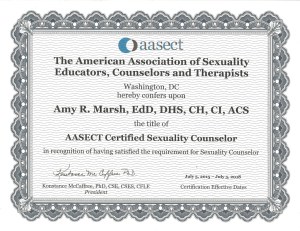
    Today I am even happier and prouder to be an AASECT-certified sexuality counselor and member. Thank you, AASECT!

    Sexuality Counselor Renewal 2015-2018
    Sexuality Counselor Renewal 2015-2018